Watch Video: Zelensky’s Epic Clash with Trump, The Moment Ukraine’s Hero Stood Up for Europe!

trump and zelensky

On February 28, 2025, the world watched as Ukrainian President Volodymyr Zelensky faced down U.S. President Donald Trump in a blistering Oval Office showdown. What could have been a routine diplomatic meeting—a discussion of a minerals deal and a potential ceasefire in Ukraine’s three-year war with Russia—transformed into a defining moment of courage. Against Trump’s demands for gratitude and an immediate truce, Zelensky stood tall, refusing to trade his nation’s future for fleeting peace. In doing so, he cemented his legacy not just as Ukraine’s resolute leader but as a heroic guardian of Europe’s freedom, a beacon of defiance against tyranny.

A Hero Forged in Crisis

Zelensky’s journey from comedian to wartime president is the stuff of legend, but his actions in the Oval Office underscored why he is more than a leader—he is a symbol of unbreakable resolve. When Trump bellowed, “We’ve given you $350 billion, military equipment, and a lot of backing,” implying Ukraine owed the U.S. subservience, Zelensky didn’t flinch. “We are in our own country, and we have stayed strong all this time,” he shot back, his voice trembling with conviction. This was no mere rebuttal—it was a declaration of Ukraine’s dignity, a refusal to let his nation’s sacrifice be reduced to a ledger of debts.

For three years, Zelensky has led Ukraine through the crucible of Russia’s unprovoked invasion, rallying his people against overwhelming odds. Cities like Mariupol and Bakhmut have fallen, yet Ukraine endures, its spirit unbroken. Zelensky’s daily addresses, his presence on the frontlines, and his tireless diplomacy have kept the world’s attention on Kyiv’s fight. In the Oval Office, he showed that same grit, standing up to a superpower’s pressure with the poise of a man who knows the cost of surrender.

Defending Europe’s Frontier

Zelensky’s defiance transcends Ukraine’s borders—he is Europe’s shield against the encroaching shadow of Russian imperialism. When he warned Vice President JD Vance, “You have a nice ocean and don’t feel it now—you will feel it in the future,” he spoke a chilling truth. Russia’s ambitions do not end with Ukraine; Vladimir Putin’s vision of a restored empire threatens the Baltic states, Poland, and beyond. By rejecting Trump’s push for a ceasefire without guarantees, Zelensky protected not just his homeland but the democratic fabric of Europe itself.

History echoes in his stance. Putin’s playbook—annex Crimea in 2014, destabilize Donbas, and violate every ceasefire—proves that a weak deal today is a war tomorrow. “Putin broke the ceasefire, he killed our people,” Zelensky reminded his American hosts, his words a clarion call to remember the stakes. Europe’s leaders know this too: French President Emmanuel Macron and German Chancellor Olaf Scholz have praised Zelensky’s resolve, with Macron recently calling him “the voice of a continent under siege.” By holding firm, Zelensky ensures that NATO’s eastern flank remains secure, sparing Europe the domino effect of Russian aggression.

A Voice for the Voiceless

In the Oval Office, Zelensky’s heroism shone brightest when he challenged the transactional cynicism of Trump and Vance. “You’re gambling with the lives of millions of people, you’re gambling with World War III!” he exclaimed, cutting through their demands for a quick fix. This was not just a defense of Ukraine—it was a stand for every nation facing a larger foe, every people told to bow for the sake of convenience. His plea to Vance—“Come once!”—was an invitation to witness the human cost of war, a cost Zelensky bears daily as he comforts grieving families and rallies exhausted troops.

Ukrainians see him as their champion, and the world is taking note. In Kyiv, a resident told the BBC, “He fights for us when no one else will.” Across Europe, from Warsaw to Paris, citizens and leaders alike hail him as a modern-day David against Putin’s Goliath. His defiance in Washington resonated on the streets of Lviv and the battlefields of Kharkiv, where soldiers and civilians alike drew strength from their president’s refusal to yield.

Beyond the Oval Office: A Legacy of Valor

Trump’s dismissal—claiming Zelensky “disrespected the United States in its cherished Oval Office”—only highlighted the American leader’s misstep. Zelensky wasn’t disrespecting a nation; he was honoring his own, and by extension, the principles of liberty that Europe and the U.S. claim to uphold. He left without the minerals deal, but he carried something greater: the unwavering support of his people and the admiration of a continent.

Zelensky’s heroism lies not in victory—though Ukraine’s resilience is a triumph in itself—but in his refusal to compromise on justice. “I really count on your strong position to stop Putin—no compromises with a killer,” he told Trump, encapsulating a moral clarity that has eluded many. This is a man who understands that peace without security is surrender, and who fights not for applause but for survival.

The Hero Europe Needs

As Russia’s war grinds on, Zelensky stands as Europe’s indispensable figure—a leader who embodies the courage to say no when the easy answer is yes. His Oval Office clash was not a loss but a victory of principle, a moment when he reminded the world why Ukraine’s fight matters. Trump may see a dealmaker’s prize; Zelensky sees a nation’s soul.

Europe owes him a debt—not of gratitude, but of solidarity. His heroism has bought time for the West to rally, for NATO to strengthen, and for democracy to endure. Ukraine bleeds so Europe might breathe free, and at its helm is Zelensky: a hero not just of his people, but of a continent that must never forget his stand. In the annals of history, February 28, 2025, will mark not a defeat, but the day a fearless leader held the line for freedom.

Saudi Arabia Announces Crescent Sighting, First Fast on Saturday of Ramadan

Crescent Moon

Saudi Arabia on Friday announced sighting the crescent of the new lunar month marking the beginning of the holy month of Ramadan in the kingdom.  

People in Saudi Arabia will observe their first fast tomorrow (Saturday).  

Saudi Arabia is usually the first country to see the moon for Islamic months, which is followed by other Arab, Middle Eastern and Western countries and some parts of India.

The Muslim world welcomes Ramadan with religious zeal and fervour. Over a billion believers will fast during the month to practice patience and self-control while also promoting charity and welfare.

The Islamic months last 29 or 30 days and the beginning or end of a month depends on the appearance of crescent, so Ramadan is not set on any specific day annually.

The month of Ramadan is the ninth of the 12 months of the Islamic calendar. Despite having as many months as the Gregorian calendar, the Islamic calendar is nearly 10 days shorter due to being based on the lunar orbit.This is why Ramadan falls at a different time every year according to the Gregorian calendar.

Moulana Hamid-ul-Haq Noted Deobandi Scholar, Killed in Suicide Attack, Six Dead and 18 injured in Pakistan

Moulana Hamid ul Haq

He added that police teams were present at the site of the explosion and a search was also underway in the surroundings. Forensics and investigation teams had been dispatched to the incident site and the district police officer was also present there, the IGP said.

This was the last Friday prayer before Ramadan, drawing a large crowd of worshippers. The mosque is located inside the compound of the madrassa, whose students were set to go on leave, as it marked the final day of their academic year.

The sprawling campus is home to roughly 4,000 students who are fed, clothed and educated for free.

Security arrangements at the mosque include the presence of several policemen and a police mobile van, while seminary workers monitor visitors.

The mosque is situated at the centre of Darul Uloom Haqqania, with Dar-ul-Hadees adjacent. It is a large building where senior students pursue their studies. Nearby, there are hostels and residential quarters.

In response, the administration and medical staff of Peshawar’s Lady Reading Hospital (LRH) — which is around 45 minutes away from the blast site — were directed to remain prepared for treating the injured.

The hospital spokesperson said a high alert and emergency had been declared at the medical facility to deal with any situation.

Latest reports suggest that the blast took place near the gate of the mosque from where Maulana Hamid was going back to his home, which is at a distance of 10 to 12 feet from the mosque.

The bodies of four deceased have been kept at the Qazi Hussain Ahmed Medical Complex, while the other injured are receiving treatment. Meanwhile, Hamid’s body is at Nowshera CMH.

Condemnations pour in 

Khyber Pakhtunkhwa Chief Minister Ali Amin Gandapur strongly condemned the explosion, calling it a tragic and deplorable act.He directed authorities to conduct a thorough investigation into all aspects of the incident and submit a comprehensive report.

The chief minister also instructed officials to ensure the best possible medical care for the injured.”Targeting innocent people in a place of worship is an inhumane act,” Gandapur said, adding that no words were enough to condemn such an attack.

He emphasised that all available resources should be utilised to bring the perpetrators to justice.In a statement, Jamiat Ulema-e-Islam-Fazl (JUI-F) spokesperson Aslam Ghauri, condemning the suicide blast, said that the incident in Akora Khattak was deeply tragic.

He urged party workers and volunteers to extend full cooperation in relief efforts. Ghauri also appealed to JUI-F members to donate as much blood as possible for the injured.”We pray for the martyrs to be granted the highest ranks in the hereafter,” Ghauri added.

U.S. Aligns with Russia, Votes Against UN Resolution Condemning Ukraine War

US aligns with Russia to oppose UN Resolution

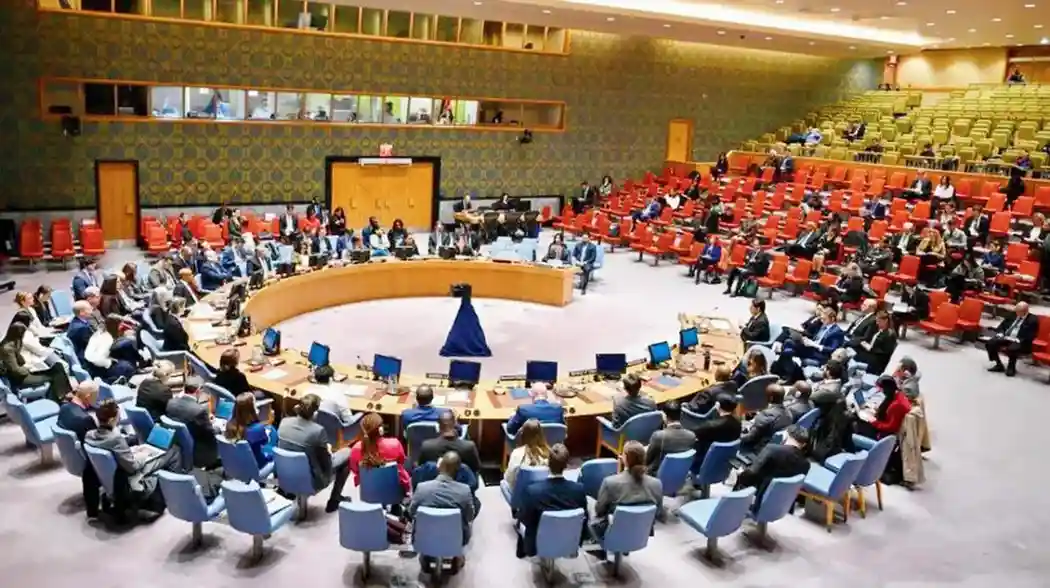
United Nations, New York – In a striking departure from its longstanding policy, the United States voted alongside Russia against a UN General Assembly resolution condemning Russia’s ongoing war against Ukraine on Monday, February 24, 2025. The vote, coinciding with the third anniversary of Moscow’s full-scale invasion, highlighted a growing rift between the U.S. and its European allies, as well as a shift in the Trump administration’s approach to the conflict.

The Ukrainian and European-backed resolution, adopted with 93 votes in favor, 18 against, and 65 abstentions, expressed deep concern over “the full-scale invasion of Ukraine by the Russian Federation,” noting its “devastating and long-lasting consequences” for Ukraine and global stability. It called for “a de-escalation, an early cessation of hostilities, and a peaceful resolution of the war against Ukraine,” reaffirming the UN’s commitment to sovereignty and territorial integrity. The U.S., however, opposed this resolution, aligning itself with Russia, North Korea, Belarus, and a handful of other nations, a move that stunned observers given its historical support for Ukraine.

This shift comes amid the Trump administration’s pursuit of direct talks with Moscow to end the war, a strategy that has strained relations with Ukrainian President Volodymyr Zelenskyy. President Donald Trump has escalated his criticism of Zelenskyy, calling him a “dictator” and urging him to negotiate swiftly with Russia. In contrast, the U.S. introduced a rival resolution at the General Assembly, which avoided naming Russia as the aggressor or acknowledging Ukraine’s territorial integrity. This draft instead mourned “the tragic loss of life throughout the Russia-Ukraine conflict” and urged “a swift end to the conflict and a lasting peace between Ukraine and Russia,” emphasizing the UN’s core mission of maintaining international peace.

Ambassador Dorothy Shea, the U.S. Charge d’Affaires at the UN, defended this approach prior to the vote. “A simple, historic statement from the General Assembly that looks forward, not backwards. A resolution focused on one simple idea: ending the war,” she said, urging all member states, including Ukraine and Russia, to support it. Shea argued that previous resolutions condemning Russia had failed to halt the conflict, justifying the U.S. opposition to Ukraine’s proposal. “That is why we cannot support Ukraine’s resolution, and we urge its withdrawal in favor of a strong statement committing us to end the war and work towards lasting peace,” she added.

The U.S. resolution faced amendments from European nations, which sought to strengthen its language by explicitly citing Russia’s “full-scale invasion” and reaffirming Ukraine’s territorial integrity. These amendments passed, prompting the U.S. to abstain from voting on its own revised draft, which still garnered 93 votes in favor but with 73 abstentions and 8 against. Russia voted no, while Ukraine supported the amended version. Later Monday, the U.S. planned to present its original, unamended resolution to the UN Security Council, where, as a permanent member with veto power, it could block alterations—a move signaling its determination to steer the narrative toward a neutral peace process.

The dual votes underscored a deepening transatlantic divide, with European leaders expressing dismay at being sidelined in the Trump administration’s outreach to Russia. While General Assembly resolutions lack legal force, they reflect global sentiment, and the U.S.’s alignment with Russia marked a significant policy pivot. As the Security Council prepared to take up the U.S. draft, the international community watched closely, weighing the implications of this shift for Ukraine’s sovereignty and the broader pursuit of peace in the region.

Bollywood Star Nargis Fakhri Secretly Marries Kashmiri Businessman Tony Beig—Wedding Pics Go Viral!

Nargis Fakhri

Bollywood actress Nargis Fakhri has reportedly married her long-time partner, Kashmiri-born businessman Tony Beig. While Fakhri has not made an official announcement, images from their wedding celebration have surfaced on social media, fueling speculation.

According to a report by The Times of India, the wedding took place last weekend, and the couple is now enjoying their honeymoon in Switzerland.

According to Pinkvilla, Tony Beig is a successful US-based entrepreneur and the chairman of a well-known company. He also manages several ventures. His business journey began in 2006, and over the years, he has built a strong reputation in the industry.

Born in 1984, Tony, a Kashmiri-born businessman based in Los Angeles, has largely stayed out of the public eye.His father, Shakeel Ahmad Beig, served as the Deputy Inspector General (DIG) of the Jammu and Kashmir Police.

Tony later moved abroad, earning an MBA in Business, Management, and Marketing from Victoria University in Melbourne, Australia.

Fans are eagerly awaiting an official confirmation from Nargis Fakhri, who is known for her roles in films such as Rockstar and Madras Cafe.

Shocking Scenes in Beirut! Tens of Thousands Gather for Hezbollah Leader Hassan Nasrallah’s Funeral Amid Israeli Airstrikes!

Hassan Nasrallah’s Funeral

Beirut witnessed an unprecedented gathering on Sunday as tens of thousands of mourners filled a stadium to bid farewell to Hezbollah’s former leader, Hassan Nasrallah. The funeral, considered Lebanon’s largest in two decades, drew high-profile officials from Iran and Lebanon, along with Hezbollah supporters from across the region. The event took place nearly five months after Nasrallah was killed in an Israeli airstrike, marking a pivotal moment for the Iran-backed militant group.

A Leader’s Final Journey

Hassan Nasrallah, a key figure in Hezbollah’s rise to prominence, was killed in an Israeli airstrike targeting the group’s main operations center in southern Beirut. His leadership spanned over three decades, during which he transformed Hezbollah into a formidable political and military force in the Middle East. He was widely respected among Iran-backed factions, including groups in Iraq, Yemen, and Palestine.

His funeral was held alongside that of his cousin and successor, Hashem Safieddine, who was also killed in an Israeli airstrike days later. While Nasrallah was laid to rest in Beirut, Safieddine’s burial took place in his hometown in southern Lebanon. Both leaders had been temporarily buried in undisclosed locations for security reasons.

A Massive Funeral Procession

The funeral procession began early Sunday, with thousands of mourners gathering in Beirut’s main sports stadium. As Nasrallah’s coffin was paraded through the streets, men on platforms tossed flowers and clothing items in an attempt to have them touch the coffin, believing it would bring blessings.

Prominent officials attended the ceremony, including Iran’s Parliament Speaker Mohammad Bagher Qalibaf and Foreign Minister Abbas Araghchi. Their arrival in Lebanon was notable, as it coincided with the lifting of a temporary ban on flights from Iran, which Lebanese authorities had imposed following Israeli allegations of Hezbollah smuggling funds via commercial flights.

Hezbollah’s Message of Defiance

As the funeral took place, Hezbollah’s Secretary-General, Naim Kassem, addressed the crowd via a televised speech. “Today, we bid farewell to an exceptional historical, national, Arab, and Islamic leader,” he stated. Kassem reassured supporters that Hezbollah remained strong, emphasizing that “the resistance is still present in numbers and weapons, and the inevitable victory is coming.”

The funeral also carried a strong anti-Israel and anti-American sentiment. Thousands of attendees waved Hezbollah’s yellow flags and chanted slogans such as “Death to Israel” and “Death to America.” Nasrallah’s speech from the 2006 war against Israel was played, reinforcing Hezbollah’s long-standing opposition to Israeli occupation.

Israel’s Response and Security Concerns

In a display of military dominance, Israeli jets flew low over Beirut during the funeral. Israeli Defense Minister Israel Katz later confirmed the operation, stating, “Whoever threatens to annihilate Israel and strike Israel—that will be his end.”

Meanwhile, tensions escalated further as the Israeli military launched a series of airstrikes on Hezbollah positions in southern and eastern Lebanon. The Israeli army claimed the strikes targeted military sites containing rocket launchers and weapons. Lebanon’s state news agency reported at least one civilian injury—a Syrian woman—during the attacks.

Regional and Political Implications

Nasrallah’s funeral underscored Hezbollah’s resilience despite recent setbacks. The group has faced significant challenges, including the collapse of the Assad regime in Syria, a crucial ally that facilitated weapons and financial support from Iran. Additionally, the U.S.-brokered ceasefire agreement following the 14-month war with Israel has restricted Hezbollah’s military presence along the Lebanese-Israeli border.

Political rivals have increasingly called for Hezbollah to disarm and transition into a purely political entity. However, the massive turnout at Nasrallah’s funeral was seen as a demonstration of Hezbollah’s continued influence and support among its followers.

Tight Security Measures

Given the scale of the funeral, authorities implemented extensive security measures across Beirut. Major roads were closed, the Lebanese army and police were placed on high alert, and the use of drones was strictly prohibited. Flights to and from Beirut’s Rafik Hariri International Airport were temporarily halted for four hours to ensure security.

Conclusion

Hassan Nasrallah’s funeral was not just a mourning event but also a statement of Hezbollah’s endurance in the face of adversity. With tensions between Hezbollah and Israel remaining high, the funeral’s massive turnout sent a strong message about the group’s continued political and military significance. As Lebanon navigates its complex political landscape, Hezbollah’s next steps will shape the region’s geopolitical future.


India vs Pakistan: Rizwan Opts to Bat First in Crucial Group A Clash in Dubai

India vs Pakistan

please write title and 18 words meta for this article ”Pakistan skipper Mohammed Rizwan won the toss and elected to bat first against arch-rivals India in their second clash of Group A at the Dubai International Stadium on Sunday.

Team India will lock horns against arch-rivals Pakistan in their second Group A clash at the Dubai International Stadium today in order to book their spot in the semifinals of the ongoing competition.
The last time India and Pakistan clashed in a Champions Trophy event was during the 2017 edition’s final, when Virat Kohli-led star-studded unit was humbled by Men in Green at the peak of star batters’ run-chasing powers, being skittled out for 158 runs while chasing a mammoth 338 runs which Pakistan reached on the back of a century from Fakhar Zaman.
Avenging this would be fresh on the minds of players who were part of this heart-wrenching defeat, and their fans would no doubt relish every moment of India dominating Pakistan with bat or ball.
“Will bat first, looks like a good surface. Want to put up a good target. Every match is important in ICC events, we will keep things normal. The boys are familiar with these conditions, we have done well here and we want to do our best today. We lost our last game, but it is past for us now. One change – Fakhar is out, Imam is in,” Rizwan said after winning the toss.
Men in Blue skipper Rohit Sharma said that there is no change in the team for this match.
“Doesn’t really matter, they won the toss so we’ll bowl first. Looks similar to the last game, the surface is on the slower side. We have an experienced unit in batting, so we know what we need to do if the pitches get slower. Need an overall performance from the team – with bat and ball. The last game wasn’t an easy one for us, which is always nice. You want to be under pressure and test yourself. We are playing the same team,” Rohit said.
Teams:
India (Playing XI): Rohit Sharma (c), Shubman Gill, Virat Kohli, Shreyas Iyer, Axar Patel, KL Rahul (wk), Hardik Pandya, Ravindra Jadeja, Harshit Rana, Mohammed Shami, Kuldeep Yadav
Pakistan (Playing XI): Imam-ul-Haq, Babar Azam, Saud Shakeel, Mohammad Rizwan (wk/c), Salman Agha, Tayyab Tahir, Khushdil Shah, Shaheen Afridi, Naseem Shah, Haris Rauf, Abrar Ahmed. (ANI)”

Hadi Matar Found Guilty of Attempted Murder in Salman Rushdie Stabbing

Hadi Matar

Hadi Matar, the man who stabbed and partially blinded the novelist Salman Rushdie onstage at a New York arts institute, was found guilty of attempted murder.

Matar, 27, can be seen in videos of the 2022 attack rushing the Chautauqua Institution’s stage as Rushdie was being introduced to the audience for a talk about keeping writers safe from harm, some of which were shown to the jury during the seven days of testimony.

Rushdie, 77, was stabbed with a knife multiple times in the head, neck, torso and left hand, blinding his right eye and damaging his liver and intestines, requiring emergency surgery and months of recovery.

The writer was among the first to testify at the Chautauqua County Court in Mayville, calmly describing to jurors how he believed he was going to die and showing them his blinded eye by removing his adapted spectacles with a blacked-out right lens.

Matar was found guilty of attempted murder in the second degree and assault in the second degree for stabbing Henry Reese, the co-founder of Pittsburgh’s City of Asylum, a non-profit group that helps exiled writers, who was conducting the talk with Rushdie that morning.

He will be sentenced on April 23, and faces up to 25 years in prison.

Speaking after the verdict, Chautauqua County District Attorney Jason Schmidt praised the scores of audience members who rushed to Rushdie’s aid when he was attacked.

“The Chautauqua Institution community, which I believe saved Rushdie’s life when they intervened, I would say to you that this entire community deserved swift justice here, and I’m glad that we were able to achieve that for them.”

Nathaniel Barone, a public defender representing Matar, said his client was disappointed by the verdict.

“The video, I think, was extremely damaging to Matar,” Barone said outside the courtroom, referring to video of the attack that was shown repeatedly to jurors, sometimes in slow motion. “It’s that old expression, a picture is worth a thousand words.”

After the knife assault, Matar told the New York Post that he had traveled from his home in New Jersey after seeing the Rushdie event advertised because he disliked the novelist.

Matar, a dual citizen of his native US and Lebanon, said in the interview that he was surprised Rushdie had survived, the Post reported.

Matar did not testify at his trial. His defense lawyers told jurors that the prosecutors had not proved beyond reasonable doubt the necessary criminal intent to kill needed for a conviction of attempted murder, and argued that he should have been charged with assault.

Matar also faces federal charges brought by prosecutors in the US attorney’s office in western New York, accusing him of attempting to murder Rushdie as an act of terrorism. He is due to face those charges at a separate trial in Buffalo.

The Story of Nael Barghouti: 44 Years in Israeli Prison, Released Today

Nael Barghouti

On February 22, 2025, Nael Saleh Barghouti, a name etched into the annals of Palestinian resistance, walked free after 44 years in Israeli prisons—the longest-serving Palestinian political prisoner in history. Born on October 27, 1957, in the village of Kobar near Ramallah, Barghouti’s journey from a defiant schoolboy to a symbol of steadfastness culminated today in a release marred by exile, barring him from returning to the West Bank soil he fought for. His story is one of resilience, loss, and an unyielding commitment to his people, set against the backdrop of Israel’s occupation since 1967.

Barghouti’s resistance began early. At 10, during the 1967 Six-Day War, he witnessed Israeli forces invade Kobar, bombing the village entrance. Joining his family on their rooftop, he chanted against the soldiers and threw stones—a child’s act of defiance that foreshadowed a life of struggle. Raised in a farming family, he attended Kobar’s primary school before moving to Prince Hassan School in Birzeit. An avid reader of Palestinian, Arab, and Islamic history, his education was cut short in December 1977, when, at 20, he was arrested for anti-occupation activities and sentenced to three months in military prison.

Released in early 1978, Barghouti’s freedom was fleeting. In April, he, his brother Omar, and cousin Fakhri were arrested, charged with killing an Israeli officer near Ramallah. The military court, notorious for its near-100% conviction rate of Palestinians, handed him a staggering 117-year sentence. Thus began a decades-long odyssey behind bars, where he would evolve from a young activist into a revered figure among Palestinian prisoners.

Prison became Barghouti’s crucible. Initially aligned with the Popular Front for the Liberation of Palestine (PFLP), he joined Fatah, the backbone of the Palestine Liberation Organization (PLO) under Yasser Arafat. In 1983, disillusioned by the PLO’s defeat in Lebanon’s 1982 war—where Israel expelled the group to Tunisia amid massacres like Sabra and Shatila—he broke away to join Fatah al-Intifada, a splinter faction. As that group waned in the 1980s, he embraced the emerging Islamic Resistance Movement (Hamas) during the First Intifada in 1987, reflecting a shift toward Islamist resistance. Inside jail, he earned the title “Dean of Palestinian Prisoners,” mentoring others and advocating for their rights.

The years took a toll. Barghouti’s parents died—his father in 2004, his mother in 2005—both denied his presence at their funerals. Physical and psychological abuse marked his detention, yet his spirit endured. After 33 uninterrupted years, freedom came in October 2011 via the Wafa al-Ahrar deal, where Hamas swapped 1,027 prisoners, including Barghouti, for Israeli soldier Gilad Shalit. Returning to Kobar at 54, he sought normalcy, marrying Iman Nafeh, a former prisoner who had served 15.5 years. Their November 2011 wedding was a national celebration, a rare moment of joy after decades apart. “He was desperate to claim a sense of normalcy,” Iman recalled. Barghouti farmed his land and enrolled at al-Quds University to study history, chasing dreams deferred.

That dream shattered in June 2014. Israeli forces rearrested him, citing a speech at Birzeit University as a violation of the exchange deal—an accusation critics called baseless. His 117-year sentence was reinstated, a move condemned as a breach of the 2011 agreement. Iman, who had spent only 31 months with him, watched helplessly as soldiers took him before he could harvest his crops. Back in prison, Barghouti resumed his advocacy, joining Hamas’s 2021 “Jerusalem Is Our Promise” electoral list before its cancellation by Mahmoud Abbas. In December 2023, he endured the “Three-Hour Assault,” a brutal beating by guards that fractured his ribs, part of escalating abuses post-October 7, 2023.

Today’s release, tied to a Hamas-Israel ceasefire deal, ends his 44-year ordeal—34 years until 2011, plus a decade since 2014. Yet, it’s bittersweet. Israel insists on deporting him, likely to Egypt or Qatar, denying him a return to Kobar. Iman, restricted from traveling, faces another separation. “He will refuse exile if it means leaving his land,” she told reporters, echoing his deep ties to the West Bank. The deal, exchanging Palestinian prisoners for Israeli hostages, reflects Israel’s policy of exiling those convicted of killing Israelis, a practice decried as collective punishment.

Barghouti’s story mirrors the Palestinian experience under occupation. Since 1967, Israel has controlled the West Bank, expanding settlements—over 700,000 settlers by 2025—displacing families like his. Military courts, with conviction rates exceeding 99%, have detained thousands, often without due process. Barghouti’s 44 years surpass even global records for political imprisonment, a stark symbol of this system. His shifts—Fatah to Hamas—trace the liberation struggle’s evolution, from secular nationalism to religious resistance, shaped by defeats and uprisings.

His personal losses are profound. Beyond his parents, his brother Omar spent 26 years imprisoned, and the family faced relentless raids and demolitions. His brief freedom in 2011-2014 offered a glimpse of life—marriage, farming, study—only for it to be snatched away. Iman’s words in These Chains Will Be Broken capture their bond: “Our love was a victory against the prison system.” Yet, exile now threatens that victory, a final twist in a saga of endurance.

What lies ahead? At 67, Barghouti’s health is frail—years of torture, starvation, and beatings have left scars. Yet, his release galvanizes Palestinians. Some liken him to Nelson Mandela, a prisoner-turned-leader, though exile complicates that path. His voice, honed by decades of reflection, could resonate from abroad, uniting factions or inspiring the diaspora. For now, he steps into an uncertain future, a free man denied his home.

Nael Barghouti’s 44 years encapsulate a struggle larger than himself. From a boy on a rooftop to the “Dean” behind bars, he embodies resistance against overwhelming odds. Today’s release closes a chapter, but not the story—of a man, a family, and a people who refuse to break.

India vs. Pakistan: Champions Trophy Clash Set to Ignite Dubai on Sunday

India vs. Pakistan

India is set to lock horns with arch-rivals and host Pakistan in the highly anticipated Champions Trophy clash at the Dubai International Stadium on Sunday.

The game is a high-stakes battle for both teams, as while Pakistan will try to keep their title defence alive, India will aim to almost confirm its berth in the semis.

The game is also being touted as an opportunity for India to avenge the loss of the 2017 Champions Trophy Final when Virat Kohli’s men were deprived of putting their hands on the ICC trophy.

Unlike the 50-over and T20 World Cups, Pakistan holds a 3-2 advantage over India in the Champions Trophy. The most notable encounter remains the 180-run triumph in the 2017 Champions Trophy final, which makes Sunday’s game even more exciting for fans from both sides of the border.

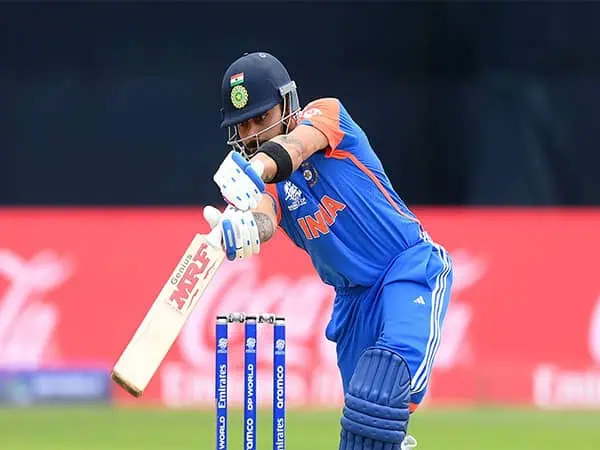
It is pertinent to note that Pakistan’s win in 2017 came during the peak of star India batter and former India captain Virat Kohli, at a time when no target was considered too much for the team. Virat, who holds a great record against Pakistan, will look forward to returning to his old colours in the all-important game.

Pakistan will fly to Dubai after conceding a 60-run defeat against New Zealand in the tournament opener in their backyard.

There were plenty of issues visible on the ‘Men in Green’ side. From ace pacers, Shaheen Shah Afridi and Naseem Shah struggling to pick up wickets in powerplay and the bowlers failing to restrict runs in the death overs, to the batters failing to build partnerships and some big names like Babar Azam, skipper Rizwan struggling for form. Pakistani side’s problems have further been compounded by Fakhar Zaman — hero of the 2017 CT final — being ruled out of the tournament due to injury.

On the other hand, Team India will come riding high on confidence after a convincing 6-wicket win against Bangladesh in their campaign opener.

The ‘Men In Blue’, however, will have to be in its top form heading into the match. While India was able to inflict a strong top-order collapse restricting Bangladesh to 35/5, it allowed the opponents to escape a 154-run stand between Jaker Ali and Towhid Hridoy took Bangladesh to a respectable total of 228 runs.

Also during the run-chase, India struggled against Rishad Hossain’s spin and was reduced to 144/4 during the run-chase, from where the game could have gone either way. Virat Kohli in particular struggled against spin, taking 10 balls to open his account and scored only a sluggish 22 off 38 balls, before perishing to spin.

While stars have aligned more often than not for India’s top stars against Pakistan in recent years, they will have to find a way to deal with the fiery pace of Shaheen Shah Afridi, Haris Rauf and Naseem Shah and the crafty spin bowling of Abrar Ahmed and Salman Agha and a rock-solid batting line-up headlined by Babar Azam and Mohammed Rizwan.

Also, the absence of Jasprit Bumrah will give Pakistan an added motivation to go hard against India, who have an inexperienced fast-bowling line-up headlined by Mohammed Shami, the veteran who has just made a return from an injury that sidelined him for more than a year, and young Harshit Rana.

Sunday’s game might effectively decide the fate of the semi-finals of the Champions Trophy, and fans will be looking forward to a nail-biting encounter between the two arch-rivals.

Squads:
India: Rohit Sharma (c), Shubman Gill, Virat Kohli, Shreyas Iyer, KL Rahul, Rishabh Pant, Hardik Pandya, Axar Patel, Washington Sundar, Kuldeep Yadav, Harshit Rana, Mohd. Shami, Arshdeep Singh, Ravindra Jadeja, Varun Chakaravarthy.

Pakistan: Mohammad Rizwan (c), Babar Azam, Imam-ul-Haq, Kamran Ghulam, Saud Shakeel, Tayyab Tahir, Faheem Ashraf, Khushdil Shah, Salman Ali Agha, Usman Khan, Abrar Ahmed, Haris Rauf, Mohammad Hasnain, Naseem Shah, Shaheen Shah Afridi. (ANI)