Ukraine Destroys 40+ Russian Warplanes in Deep-Strike Drone Operation Ahead of Istanbul Peace Talks

Russian Warplanes

A Ukrainian drone attack has destroyed more than 40 Russian planes deep in Russia’s territory, Ukraine’s Security Service said on Sunday, while Moscow pounded Ukraine with missiles and drones just hours before a new round of direct peace talks in Istanbul.

A military official, who spoke with The Associated Press on condition of anonymity to disclose operational details, said the far-reaching attack took more than a year and a half to execute and was personally supervised by Ukrainian President Volodymyr Zelenskyy.

In his evening address, Zelenskyy said that 117 drones had been used in the operation. He claimed the operation had been headquartered out of an office next to the local FSB headquarters. The FSB is the Russian intelligence and security service.

The military source said it was an “extremely complex” operation involving the smuggling of first-person view, or FPV, drones to Russia, where they were then placed in mobile wooden houses.

“Later, drones were hidden under the roofs of these houses while already placed on trucks. At the right moment, the roofs of the houses were remotely opened, and the drones flew to hit Russian bombers,” the source said.

Social media footage shared by Russian media appeared to show the drones rising from inside containers while other panels lay discarded on the road. One clip appeared to show men climbing onto a truck in an attempt to halt the drones.

Long-range bombers targeted

The drones hit 41 planes stationed at military airfields on Sunday afternoon, including A-50, Tu-95 and Tu-22M aircraft, the official said. Moscow has previously used Tupolev Tu-95 and Tu-22 long-range bombers to launch missiles at Ukraine, while A-50s are used to coordinate targets and detect air defences and guided missiles.

The Security Service of Ukraine said that the operation, which it codenamed “Web”, had destroyed 34% of Russia’s fleet of air missile carriers with damages estimated at $7 billion. The claim could not be independently verified.

Russia’s Defense Ministry, in a statement, confirmed the attacks, which damaged aircraft and sparked fires on air bases in the Irkutsk region, more than 4,000 km (2,500 miles) from Ukraine, as well as the Murmansk region in the north, it said. Strikes were also repelled in the Amur region in Russia’s Far East and in the western regions of Ivanovo and Ryazan, the ministry said.

US Defense Secretary Pete Hegseth was briefed on Ukraine’s attack on Russia during a stop at Nellis Air Force Base and was monitoring the situation. A senior defence official said on the condition of anonymity to discuss sensitive matters that the US was not given notification before the attack. The official said it represented a level of sophistication the US had not seen before.

Also on Sunday, Russia’s top investigative body said that explosions had caused two bridges to collapse and derailed two trains in western Russia overnight, killing seven in one of the incidents and injuring dozens more. Russian officials, however, did not say what had caused the blasts and the word “explosions” was later removed from an Investigative Committee press release.

Attack ahead of talks

The drone attack came on the same day as Zelenskyy said Ukraine will send a delegation to Istanbul for a new round of direct peace talks with Russia on Monday.

In a statement on Telegram, Zelenskyy said that Defense Minister Rustem Umerov will lead the Ukrainian delegation. “We are doing everything to protect our independence, our state and our people,” Zelenskyy said.

Ukrainian officials had previously called on the Kremlin to provide a promised memorandum setting out its position on ending the war before the meeting takes place. Moscow had said it would share its memorandum during the talks.

Russian strike hits an army unit

Russia on Sunday launched the biggest number of drones — 472 — on Ukraine since the full-scale invasion in February 2022, Ukraine’s air force said.

Russian forces also launched seven missiles alongside the barrage of drones, said Yuriy Ignat, head of communications for the air force. Earlier Sunday, Ukraine’s army said at least 12 Ukrainian service members were killed and more than 60 were injured in a Russian missile strike on an army training unit.

Ukrainian army commander Mykhailo Drapatyi later Sunday submitted his resignation following the attack. He was a respected commander whose leadership saw Ukraine regain land on the eastern front for the first time since Kyiv’s 2022 counteroffensive.

The training unit was located to the rear of the 1,000-km (620-mile) active front line, where Russian reconnaissance and strike drones are able to strike. Ukraine’s forces lack troops and take extra precautions to avoid mass gatherings as the skies across the front line are saturated with Russian drones looking for targets.

FBI Probes Boulder Flamethrower Attack as Targeted Terror; Egyptian Suspect Arrested for Assault on Pro-Israel Rally

Boulder Flamethrower Attack

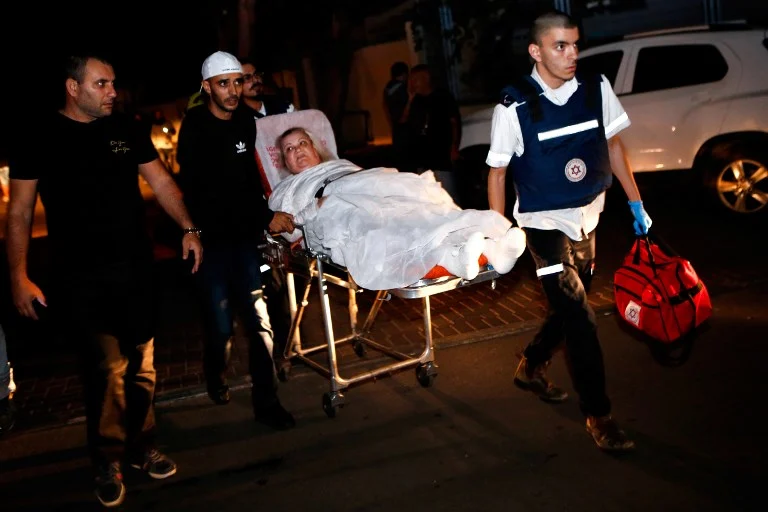
Six people sustained injuries in Boulder, Colorado in the United States after a man attacked and set people on fire people participating in a rally supporting Israeli hostages, local media reported.

A suspect ,identified as an Egyptian national, whose visa had expired in 2023, has been detained by the FBI which is called it a “targeted terror attack” and is investigating the incident that took place at Pearl Street Mall in Boulder, Colorado, on Sunday CBS News reported.

“We are aware of and fully investigating a targeted terror attack in Boulder, Colorado,” FBI chief Kash Patel said on X.

Witnesses said the suspect used a “makeshift flamethrower” and threw Molotov cocktails that burned multiple victims during a march in support of Israeli hostages, according to an FBI official cited by the CBS report.

The Egyptian national, Mohamed Sabry Soliman, 45, had arrived in the US two years ago and overstayed his visa. Fox News reported that he was arrested at the scene, after he allegedly set his victims on fire as they peacefully rallied on behalf of Israeli hostages still being held by Hamas in Gaza.

Soliman was heard yelling “Free Palestine” and other anti-Israel slogans during the attack on victims ranging in age from 67 to 88. Online records show Soliman has been booked into the Boulder County Jail as per the Fox News report.

Director of National Intelligence Tulsi Gabbard confirmed the National Counterterrorism Center is working with the FBI and local law enforcement on the ground.

“The @ODNIgov’s National Counterterrorism Center is working with the FBI and local law enforcement on the ground investigating the targeted terror attack against a weekly meeting of Jewish community members who had just gathered in Boulder, CO to raise awareness of the hostages kidnapped during Hamas’ attack on Israel on Oct. 7. Thank you to first responders and local authorities for your quick response and action.” (ANI)

Trump Claims Trade Talks Averted India-Pakistan Nuclear War After Operation Sindoor; India Refutes Mediation

Trump Threatens Iran

US President Donald Trump on Friday (local time) once again claimed credit for brokering a cessation of hostilities between India and Pakistan, asserting that his administration’s trade negotiations potentially averted a nuclear war between the two nations.

During an interaction with reporters here, Trump expressed pride in achieving peace through trade rather than military conflict, reigniting debates over the US role in the recent India-Pakistan ceasefire following the escalation of tension after the Pahalgam Terror Attack and India’s subsequent reply through Operation Sindoor.

“I think the deal I’m most proud of is the fact that we’re dealing with India, we’re dealing with Pakistan, and we were able to stop potentially a nuclear war through trade as opposed to bullets. You know, normally they do it through bullets. We do it through trade. So I’m very proud of that. Nobody talks about it. But we had a very nasty potential war going on between Pakistan and India. And now, if you look, they’re doing fine,” the US President said.

Trump further claimed that the US was very close to finalising a deal with India, with representatives from Pakistan to visit the US next week.

“Pakistani representatives are coming in next week. We’re very close to making a deal with India. And I wouldn’t have any interest in making a deal with either if they were going to be at war with each other,” Trump stated.

The cessation of hostilities between the two nations came on May 10 after India’s ‘Operation Sindoor’, launched in retaliation for the April 22 Pahalgam terror attack that killed 26 civilians.

The operation targeted nine terror camps in Pakistan and Pakistan-occupied Kashmir (PoK), leading to intense clashes, including Pakistan’s attempted drone attacks on Indian cities along the International Border and Line of Control (LoC) and shelling along the LoC.

Earlier, before India could officially announce any understanding of cessation of hostilities with Pakistan, US President Donald Trump announced the “full and immediate ceasefire”, claiming that the US played a key role as mediator.

However, India refuted the claims made by the US President, reiterating its policy that India and Pakistan bilaterally address any matter related to the Union territory of Jammu and Kashmir.

“As you are aware, we have a long-standing national position that any issues pertaining to the Union territory of Jammu and Kashmir have to be addressed by India and Pakistan bilaterally. That stated policy has not changed. As you are aware, the outstanding matter is the vacation of illegally occupied Indian Territory by Pakistan,” the Ministry of External Affairs stated.

The MEA further stated that the “issue of trade” did not come up between Indian and US leaders since the commencement of ‘Operation Sindoor’ and the cessation of hostilities.

“From the time OPERATION SINDOOR commenced on 7th May till the understanding on cessation of firing and military action on 10th May, there were conversations between Indian and U.S. leaders on the evolving military situation. The issue of trade did not come up in any of these discussions,” MEA further stated. (ANI)

Owaisi Urges Saudi to Re-list Pakistan on FATF Grey List Amid Operation Sindoor’s Strong Anti-Terror Outreach

MP Asaduddin Owaisi / Image Intagram

All India Majlis-e-Ittehadul Muslimeen (AIMIM) MP Asaduddin Owaisi on Thursday informed the Saudi officials that Pakistan is propagating terrorism and targeting Indian citizens, and urged them to bring Pakistan back to the Financial Action Task Force (FATF) Grey List to curb terror financing.

He is part of a multi-party delegation led by Bharatiya Janata Party (BJP) MP Baijayant Panda under Operation Sindoor outreach to convey India’s unified stance against terrorism and seek international support to hold Pakistan accountable.

During his visit, Owaisi interacted with Saudi officials and highlighted Pakistan’s false propaganda about India. He said that the delegation apprised officials as well as the diaspora members from India about the terrorism propagated by Pakistan against Indian citizens.

“27 lakh members of the Indian diaspora reside and work in the Kingdom of Saudi Arabia…Whoever the delegation met, we told them how Pakistan is propagating terrorism and how Indian citizens are targeted. We told them that Pakistan should be brought back to the FATF Grey List. The Kingdom of Saudi Arabia is a member of the FATF. They helped us in 2018,” Owaisi told ANI.

He emphasised that India is home to over 14.5 crore proud Muslims, showcasing the country’s rich Islamic heritage and esteemed scholars, thereby refuting Pakistan’s claims of representing all Muslims.

Owaisi said that the multi-party delegation met with Abdullah ibn Muhammad, head of Saudi Arabia’s Shura Council, and Adel al-Jubeir, Saudi Arabia’s Minister of State for Foreign Affairs. Regarding concerns raised over the issue of talks between India and Pakistan, he added that talks were held after the Mumbai terror attack and Pathankot. Still, they yielded no results and only losses.

“It was a good meeting. They, too, had some concerns. They asked us what could be done about the talks. We told them we talked after 26/11, after Pathankot, but it yielded no result. Instead, we suffered a loss. So, all in all, we presented all of this before them. We told them about Pakistan’s propaganda – we told them that around 14.5 crore Muslims live in India. And what they (Pakistan) say is absolutely wrong,” Owaisi said.

Owaisi pointed out that despite receiving significant financial aid from Saudi Arabia, Pakistan’s economy is not stabilising, and the funds are not being utilised for the welfare of the poor. Specifically, he mentioned that Saudi Arabia provided $2 billion in aid to Pakistan last year and a $3 billion loan in 2024.

He compared Pakistan’s defense budget, which is 2.6% of its GDP, to India’s 1.9%, highlighting the disparity in military spending between the two nations.

Owaisi discussed the recent Pahalgam terror attack and assured the Saudi officials that India is working to resolve such issues, while also exposing Pakistan’s alleged role in promoting terrorism.

“We told them that Saudi Arabia gave Pakistan 2 billion USD in aid last year. In 2024, Saudi Arabia gave them a loan of 3 billion USD. We told them Pakistan’s economy is not stabilising, and the money is not being used for the poor. We told them that Pakistan’s defence budget is 2.6% of its GDP, whereas India’s is 1.9%. The Ulemas in Pakistan are no match for the Ulemas in India…We told them how work is being done in India, how Ulemas are working there, and how Pakistani propaganda is a lie. What they did in Pahalgam, we said that there are problems in our country as well, but we are trying to resolve this,” Owaisi said.

In a strong demonstration of India’s united political front against terrorism, an all-party parliamentary delegation led by BJP MP Baijayant Panda arrived in Riyadh on Wednesday to strengthen diplomatic ties and explore avenues of cooperation between India and Saudi Arabia.

Maj Gen Abdulrahman Alharbi, Chair of the India-Saudi Arabia Council Friendship Committee of the Shura Council, warmly welcomed the delegation.

This multi-party delegation includes BJP MPs Nishikant Dubey, Phangnon Konyak, Rekha Sharma, Satnam Singh Sandhu, AIMIM MP Asaduddin Owaisi, former Jammu and Kashmir Chief Minister Ghulam Nabi Azad, and former diplomat Harsh Shringla.

The multi-party delegations, consisting of seven groups led by one MP each, have been initiated to counter Pakistan’s misinformation on terrorism and highlight India’s zero-tolerance policy on terrorism. (ANI)

Fatima Payman Files Complaint Over Sexist, Racist Remark in Parliament, Sparking Debate on Workplace Culture

Fatima Payman

Independent Senator Fatima Payman, Australia’s first hijab-wearing senator, has lodged a formal complaint with the Parliamentary Workplace Support Service (PWSS) after an older male colleague allegedly made sexually suggestive and racially insensitive remarks to her during an official parliamentary function. The incident, which has sparked widespread discussion about workplace culture in Australia’s parliament, highlights ongoing concerns about the treatment of women and minorities in political spaces.

Payman, a 30-year-old Afghan-born senator from Western Australia, recounted the incident to the ABC’s Triple J Hack program, stating that the colleague, who was reportedly intoxicated, urged her to “get some wine into you and see you dance on the table.” As a Muslim woman who does not consume alcohol due to her faith, Payman found the remarks particularly offensive and isolating. “It felt inappropriate and targeted,” she said, emphasizing the cultural insensitivity of the comment given her background.

“I told this colleague, ‘Hey, I’m drawing a line, mate,’ and moved on to making a formal complaint,” Payman added, demonstrating her resolve to address the behavior. She praised the PWSS process but noted the importance of calling out such conduct to set clear boundaries. “Being clear is being kind. You’re helping someone understand your boundaries by speaking up,” she said, reflecting her Generation Z perspective on confronting inappropriate behavior.

The senator, who was elected on a Labor ticket in 2022 before leaving the party in 2024 over its stance on Palestinian statehood, did not name the colleague or specify the exact date of the incident. However, she described the remarks as part of a broader pattern of challenges faced by women and minorities in Australia’s political environment. Payman’s complaint has reignited debates about the need for stronger enforcement mechanisms within the newly established Independent Parliamentary Standards Commission, with some, like Senator Lidia Thorpe, criticizing the PWSS for lacking transparency and effectiveness.

The incident comes amid Payman’s rising profile as a vocal advocate for marginalized communities. After splitting from the Labor Party to form her own political movement, Australia’s Voice, she has positioned herself as a champion for the “disenfranchised and unheard.” Her decision to go public with the complaint has been described as a bold move, underscoring her commitment to challenging unacceptable behavior in the parliamentary workplace.

Payman’s experience is not an isolated case. The PWSS, established following high-profile allegations of misconduct in Parliament House, reported handling 339 complaints in its first nine months. The senator’s actions align with her broader efforts to improve the culture in Canberra, where she has previously spoken out against racism and double standards in addressing hate crimes.

As discussions continue, Payman’s complaint serves as a reminder of the work still needed to ensure a safe and respectful environment for all parliamentarians. The incident has prompted calls for greater accountability and cultural change within Australia’s political institutions.

Israeli Prime Minister Benjamin Netanyahu’s Tunnel Video Under Al Aqsa Sparks Outrage Across Arab World

Netanyahu’s Tunnel Video

Israeli Prime Minister Benjamin Netanyahu has drawn sharp regional condemnation after releasing a video of himself walking through a massive underground tunnel dug beneath the Al Aqsa Mosque, one of Islam’s holiest sites. The move, viewed by many as a dangerous provocation, comes amid escalating tensions in occupied East Jerusalem.

The video, published Monday to coincide with the 58th anniversary of Israel’s occupation of East Jerusalem in the 1967 war, shows Netanyahu inspecting the controversial tunnel — a structure that reportedly runs from the Palestinian neighborhood of Silwan to beneath the Al Aqsa Mosque compound, known to Muslims as Haram al-Sharif.

Standing inside the dimly lit tunnel, Netanyahu declared, “Jerusalem will remain Israel’s eternal capital,” and reiterated his call for other nations to recognize Israeli sovereignty over the city and relocate their embassies to Jerusalem. The timing and setting of the announcement have been widely interpreted as a calculated message to reinforce Israeli claims over all of Jerusalem, including the occupied eastern part.

Settler Incursions and Flag March Escalate Tensions

The video release came on the same day that more than 2,090 Israeli settlers, escorted by heavily armed forces, entered the Al Aqsa compound, according to the Islamic Waqf — the Jordanian-appointed authority managing Islamic sites in Jerusalem. Among those leading the incursions were far-right Israeli politicians, including National Security Minister Itamar Ben Gvir and Negev and Galilee Minister Yitzhak Wasserlauf, as well as multiple members of the Knesset from Likud, Jewish Power, and Religious Zionism parties.

Outside the mosque compound, hundreds of Israeli nationalists flooded the streets around Bab Al Amoud (Damascus Gate) during the annual “Flag March,” waving Israeli flags, chanting anti-Arab slogans, and performing dances seen as provocations by Palestinians. Some participants carried banners with incendiary slogans such as “Jerusalem is ours since 1967” and “Gaza will be ours in 2025,” raising fears of further escalation and territorial expansion.

Arab World Condemns, but Stops Short of Action

The developments have drawn swift condemnation from Arab capitals. Governments in Jordan, Saudi Arabia, Egypt, and Qatar issued statements denouncing Netanyahu’s actions and warning of the “desecration” of Al Aqsa, a site of deep religious and political sensitivity. The Organisation of Islamic Cooperation (OIC) also issued a strongly worded rebuke.

However, critics say the reaction has so far been limited to rhetoric, with no tangible steps taken to pressure Israel or defend Palestinian rights. Many activists and political commentators described the international and regional response as muted and ineffective, accusing Arab leaders of turning a blind eye to repeated violations of Jerusalem’s status quo.

“The silence of the so-called international community is shameful,” said one Palestinian rights group in a statement. “It is this very silence that has allowed Netanyahu and his government to act with impunity in Jerusalem.”

Tunnel Symbolism and Historical Sensitivities

The tunnel under Al Aqsa has long been a source of Palestinian alarm. It is part of a broader network of underground excavation projects carried out by Israeli authorities and settler-linked organizations, ostensibly for archaeological purposes. Palestinians view these activities as a deliberate effort to undermine the structural integrity of Islamic holy sites and assert Israeli control over the area.

The use of such a tunnel by Netanyahu in an official video — timed with the anniversary of the 1967 occupation — has only deepened fears that Israel intends to further erode the historical and religious character of East Jerusalem.

With tensions already running high amid ongoing military operations in Gaza and the West Bank, Monday’s developments have heightened concerns of a broader flare-up in the region.

What’s Next?

While Netanyahu’s supporters hailed the video as a bold reaffirmation of Israeli sovereignty, critics warn it may further isolate Israel diplomatically and ignite unrest. Meanwhile, Palestinians continue to face restricted access to Al Aqsa, increasing military presence in their neighborhoods, and heightened surveillance.

With the region on edge, observers say the situation in Jerusalem could become a flashpoint for renewed violence if diplomatic intervention is not urgently pursued.

Dhu al-Hijjah Moon Sighting Expected on 27 May; Eid al-Adha Likely on 6 June

Eid al-Adha

The International Astronomical Centre announced that the crescent moon marking the start of Dhu al-Hijjah 1446 AH will be observed on Tuesday, 27th May, across the Islamic world.

Engineer Mohammad Shawkat Odeh, Director of the Abu Dhabi-based centre, said that moon sighting will be possible with telescopes from parts of Central and Western Asia, as well as most of Africa and Europe. Additionally, it may be visible to the naked eye in large areas of the Americas.

Based on these astronomical predictions, Wednesday, 28th May is expected to be the first day of Dhu al-Hijjah, making Friday, 6th June the likely date for the first day of Eid al-Adha in most Islamic countries. (ANI/WAM)

Sheikh Hasina Alleges Yunus Sells Bangladesh to US, Runs Government with Militants

Sheikh Hasina Alleges Yunus

write title and 18 words meta for this news ” Former Bangladesh Prime Minister Sheikh Hasina, currently in exile in India, has launched a scathing attack on the interim government led by Nobel laureate Muhammad Yunus, accusing him of “selling off” Bangladesh to the United States and governing with the support of militants. In a statement posted on social media, Hasina alleged that Yunus, who assumed the role of Chief Adviser of the interim government on August 8, 2024, following her ouster, is compromising Bangladesh’s sovereignty and aligning with foreign powers for political gain.

Hasina, whose 16-year tenure as prime minister ended amid a student-led uprising on August 5, 2024, claimed that Yunus is collaborating with banned militant groups and terrorists to maintain power. “He has seized power with the help of terrorists, releasing them from prisons and allowing them to run the country,” she stated, referencing the release of convicted individuals after her government’s fall. She further criticized Yunus for imposing an “illegal” ban on her party, the Awami League, asserting that he lacks a constitutional mandate to alter Bangladesh’s laws or governance structure. “This militant leader has no right to touch our constitution, which we earned through a long struggle and the liberation war,” Hasina added.

The former premier also alleged that Yunus is ceding strategic assets to the US, specifically mentioning St. Martin’s Island, a long-standing point of contention. “When America wanted St. Martin’s Island, my father, Bangabandhu Sheikh Mujibur Rahman, refused, and he paid with his life. I, too, refused to sell our country to stay in power,” she said, implying that Yunus is willing to make such concessions.

Hasina’s accusations come amid escalating tensions between her supporters and the interim government. She claimed that Awami League members, religious minorities, and media outlets face relentless attacks under Yunus’s administration. “Our workers, police, journalists, and minorities—Hindus, Buddhists, Christians—are being targeted. Temples and churches have been destroyed,” she said, echoing earlier statements where she accused Yunus of orchestrating “genocide” against minorities.

In response, Yunus’s administration has denied these allegations, emphasizing efforts to restore stability and implement reforms. Yunus, who has pledged to hold free and fair elections by December 2025 or early 2026, has accused Hasina’s regime of destroying Bangladesh’s institutions during her rule. “Her dictatorship broke the judiciary and suppressed democratic rights,” he said in August 2024, vowing to prioritize justice for the 1,400 lives lost during the 2024 protests.

The Bangladesh Hindu Buddhist Christian Unity Council has also raised concerns about minority safety, reporting 2,010 incidents of communal violence between August 4 and 20, 2024, though the interim government attributes most incidents to political motives rather than religious ones.

Hasina’s remarks have further strained India-Bangladesh relations, with Dhaka seeking her extradition to face charges of crimes against humanity. India, which has sheltered Hasina since her escape, has expressed concerns over minority persecution in Bangladesh, particularly after the arrest of Hindu monk Chinmoy Krishna Das in October 2024.

As Bangladesh navigates this turbulent period, Hasina’s allegations and Yunus’s reforms continue to polarize the nation, with the interim government facing mounting pressure to address both domestic unrest and international scrutiny.”

Trump’s Harvard Foreign Student Ban Threatens Princess Elisabeth’s Studies: A Detailed Account

Princess Elisabeth

Princess Elisabeth of Belgium, the 23-year-old heir to the throne, may face disruption in her studies at Harvard University due to a new directive from the U.S. administration under President Donald Trump. The move involves the revocation of Harvard’s ability to enroll international students under the Student and Exchange Visitor Program, meaning foreign students may have to transfer to other institutions or risk losing their legal student status in the United States.

Elisabeth, who recently completed her first year of a two-year master’s program in Public Policy, is one of thousands of international students potentially impacted. The Belgian Royal Palace has acknowledged the issue, noting that the situation is under review and that they are monitoring developments closely to understand how it may affect the princess’s education.

In response, Harvard University has taken legal action against the federal government, arguing that the decision is unconstitutional and politically motivated. A federal court has issued a temporary block on the enforcement of the order, offering short-term relief. However, the future remains uncertain as legal proceedings continue.

This situation highlights growing tensions between the current U.S. administration and leading academic institutions, raising concerns about the future of international education in America and the challenges faced by global students in the country.

India Blames Pakistan for Misusing Indus Water Treaty, Defends Water Policy at UNSC

UNSC to Hold Closed-Door Meeting

India, in a firm and unequivocal statement at the United Nations Security Council (UNSC), accused Pakistan of spreading disinformation over the Indus Water Treaty and reiterated its commitment to responsible water management even amid persistent cross-border terrorism.

Delivering the statement at the Arria Formula Meeting on “Protecting Water in Armed Conflict – Protecting Civilian Lives”, Permanent Representative of India to the United Nations Parvathaneni Harish strongly refuted Pakistan’s claims regarding the Indus Water Treaty.

Harish highlighted Pakistan’s violation of the treaty’s spirit through its support for cross-border terrorism and its obstructionist approach to modifying the treaty.

Harish affirmed that India has always acted responsibly as an upper riparian state and accused Pakistan of distorting facts. “India entered into the Indus Water Treaty 65 years ago in good faith,” he said, recalling that the agreement was signed in a spirit of goodwill and friendship.

He pointed out that Pakistan has violated the treaty’s spirit by inflicting three wars and thousands of terror attacks on India, resulting in over 20,000 Indian lives lost in the last four decades.

“Pakistan has violated the spirit of the treaty by inflicting three wars and thousands of terror attacks on India. In the last four decades, more than 20,000 Indian lives have been lost in terror attacks, the most recent of which was a dastardly targeted terror attack on tourists in Pahalgam last month. India has shown extraordinary patience and magnanimity throughout this period. Pakistan’s state-sponsored cross-border terrorism in India seeks to hold hostage the lives of civilians, religious harmony, and economic prosperity,” he added.

He added that Pakistan’s state-sponsored terrorism threatens civilian lives, religious harmony, and economic prosperity.

He emphasized that significant changes have taken place in the past 65 years, including escalating security concerns, growing requirements for clean energy, climate change, and demographic shifts.

“In these 65 years, far-reaching fundamental changes have taken place not only in terms of escalating security concerns through cross-border terror attacks, but also growing requirements for producing clean energy, climate change, and demographic change. Technology for dam infrastructure has transformed to ensure safety and efficiency of operations and water use. Some of the old dams are facing serious safety concerns,” he added.

“Some old dams face serious safety concerns,” he said, pointing out that terrorists even attacked the Tulbul Navigation Project in Jammu and Kashmir in 2012.

“In fact, in 2012, terrorists even attacked the Tulbul Navigation Project in Jammu and Kashmir. These cynical acts continue to endanger safety of our projects and lives of civilians,” added Permanent Representative of India to the United Nations.

Harish stated that India has formally asked Pakistan to discuss modifications to the treaty, but Pakistan has continued to block consistently any changes to this infrastructure and any modifications of the provisions which is permissible under the treaty.

“Against this backdrop, India has finally announced that the treaty will be in abeyance until Pakistan- a global epicentre of terror credibly and irrevocably ends its support for cross-border terrorism,” he stated.

India has formally asked Pakistan to discuss the modifications of the treaty on several occasions in the past two years. However, Pakistan continues to reject these and Pakistan’s obstructionist approach continues to prevent the exercise of full utilisation of the legitimate rights by India.

“It is clear that it is Pakistan which remains in violation of the Indus Water Treaty,” Harish concluded.

India suspended the Indus Waters Treaty in April 2025, following the Pahalgam terror attack, which it blamed on Pakistan-based terrorists. (ANI)