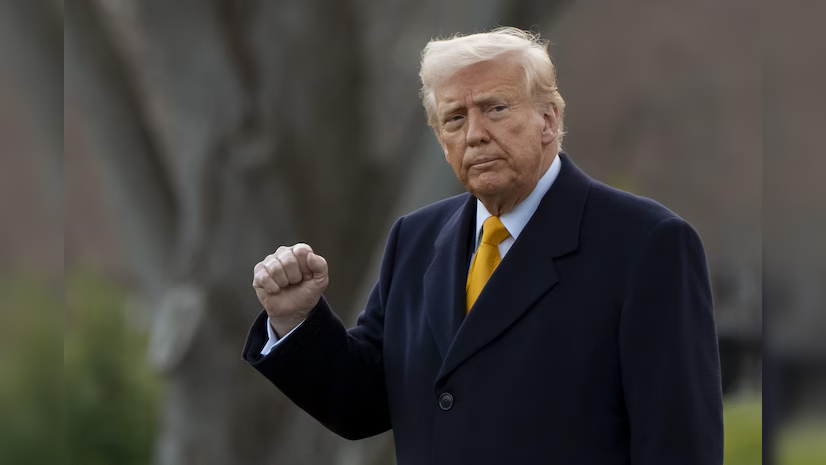
Trump Pressures Netanyahu to Halt Gaza War, Warns Against Iran Strike Plans Amid Growing US-Israel Rift

trump

US President Donald Trump has asked Israeli Prime Minister Benjamin Netanyahu to end the war in Gaza and stop talk of a potential military strike on Iran, CNN reported, citing a source familiar with their recent phone conversation.

The phone call, which took place on Monday, comes amid ongoing indirect ceasefire negotiations between Hamas and the US, as well as Washington’s efforts to secure a nuclear agreement with Iran.

CNN noted that despite Trump later describing the call as “very well, very smooth,” tensions between the two leaders have grown in recent weeks over the Gaza conflict.

According to CNN, Trump urged Netanyahu during the call to stop public discussion of a potential attack on Iran and halt leaks about related military plans.

In response, Netanyahu reportedly told Trump that Iran was stalling through negotiations and was not genuinely committed to any deal.

Meanwhile, ceasefire negotiations have shown some movement. Netanyahu convened a meeting of top ministers on Tuesday night after “some progress” was made toward a deal, according to his office.

Israeli Foreign Minister Gideon Sa’ar also acknowledged recent advances, though he cautioned against premature optimism.

On Thursday, Hamas confirmed it had not rejected the US-proposed deal but sought stronger guarantees against future Israeli attacks.

The rift between the US and Israel appears to be deepening. The Trump administration recently bypassed Israel during a Middle East trip, secured a ceasefire deal with Yemen’s Iran-backed Houthis that failed to curb missile attacks on Israel, and lifted sanctions on Syria–moves that have drawn criticism from Israeli officials.

The Trump administration is also working to expand the Abraham Accords, aiming to include Saudi Arabia.

However, Riyadh has maintained that normalisation with Israel is contingent upon steps toward Palestinian statehood and a two-state solution.

US Ambassador to Israel Mike Huckabee told Bloomberg News that the two-state solution is no longer a goal of US policy, citing cultural and political realities.

Earlier in the war, Trump had floated the idea of a “Gaza Riviera” under US control, which would involve the relocation of a large portion of the Palestinian population from the coastal strip. (ANI)

Axiom-4 Launch Delayed: Indian Astronaut Shukla to Lift Off on June 11, Says Minister Jitendra Singh

Axiom-4 Launch

Union Minister for Earth Sciences Dr Jitendra Singh on Wednesday informed that the launch of Axiom-4, carrying Indian astronaut Shukla to the International Space Station (ISS), has been postponed due to a technical issue.

According to Singh, a liquid oxygen (LOX) leak was detected during a 7-second hot test of the Falcon 9 booster, prompting a joint review by ISRO, Axiom, and SpaceX teams.

In a post on X, Singh stated, “Mission Update | Axiom-04 The launch of Axiom Mission 4, carrying India’s astronaut Shukla to the ISS, is postponed. A liquid oxygen (LOX) leak was detected during a 7-second hot test of Falcon 9’s booster. After a joint review by ISRO, Axiom & SpaceX teams, it was decided to rectify the issue & revalidate before liftoff. Safety. Precision. Commitment to excellence.”

Singh emphasised the importance of safety, precision, and commitment to excellence in the mission and stated that further updates on the mission will be shared accordingly.

Earlier, Union Minister Jitendra Singh spoke about the exclusive missions that Indian astronaut Group Captain Shubhanshu Shukla will perform during his Axiom4 space mission.

He also mentioned that the world recognises India’s growth and capabilities and said that this has been possible due to recent changes in the space sector.

In a video released by the Office of Jitendra Singh, speaking about Gaganyaan mission, he said, “Gaganyaan is a very ambitious mission as far as ISRO is concerned. The whole world is closely watching it.”

He added, “Gaganyaan will also involve docking and undocking, which will happen in this. Once they go up, it will take about 28 hours, then after 28 hours, it will reach about 400 kilometres from the surface of Earth, which is in American physiology, about 250 miles, and there the docking would happen. They would then enter into the space station. And remain there for a minimum of about two weeks, which could also be extended. So the experience: getting accustomed to that kind of exercise walking into and walking out would also be required in case of Gaganyaan, and also several future experiments, and more so India’s own space station. We plan to have our own exclusive space station by 2035, which will be known as Bharat Space Station, and for that also, this experience is going to come in handy.”

Speaking about the role which will be performed by Group Captain Shubhanshu Shukla, he said, “This time, Shubhanshu Shukla is going to play a very important role. He is going to have the most critical role because he will perform experiments which are exclusively going to have a bearing on the future space missions, not only those of India, also of NASA and other agencies. And I’m also glad to mention that it keeps up the spirit of the whole of science and the whole of government, which PM Modi keeps emphasising time and again. We got ISRO involved in an official MoU with the Department of Biotechnology. And as of now, Shubhanshu is scheduled to perform six sets of experiments. A) For example, about life sciences- the physical, physiological, and cognitive effects of being in space for a long while, which would affect the human body.”He added, “B) of course, the behavioral responses resulting from constant watching of the computer screen which is mandatory for all the astronauts. C) He is also going to experiment on the body’s response in extreme conditions. The effect of microgravity on muscle dysfunction and besides that, some plant-related research like how the cyanobacteria behave in microgravity, which could have a bearing on the production of food elements in space in times to come.”

He said, “These are very futuristic experiments which are exclusively assigned to Shubhanshu. Therefore, it’s a great breakthrough. This is a moment which would make our founding fathers proud- Vikram Sarabhai, Satish Dhawan. India today has reached that pedestal where we are looked upon as not junior partners, not as followers, but as partners who offer cues to others to follow. And this could be possible because of the reorientation of the space reforms, the opening of the space sector to the private players and it could not have been possible without the political will of the government in place.”

Union Minister Jitendra Singh thanked PM Modi for his leadership. “I have to thank PM Modi for he has the cpacity to make out-of-box decisions, break the taboos of the past because for six, seven decades we got conditioned to live with the belief that space has to act behind the veil of secrecy and it is not to be opened up to the private sector. Giving up that mindset, we are now following same global strategies, parameters, in fact, marching ahead of other nations as well.”

He elaborated, “We are now equal partners. The decision to have an Astronaut from India was taken and the offer was made to India incidentally when PM Modi was on a visit to Washington DC when President Biden was in place. So you can see there is also a reflection of the recognition of the Indian capabilities, Indian human resource, which is quite a departure from the earlier times when the capabilities of Indians were not taken seriously. That perception about India has also undergone a change.”

The Axiom-4 mission launch has been postponed to June 11, 2025, due to unfavorable weather conditions. The Indian Space Research Organisation (ISRO) announced that the mission, carrying Indian astronaut Group Captain Shubhanshu Shukla to the International Space Station (ISS), will now lift off at 5:30 PM IST on June 11.

ISRO wrote on X, “Launch of Axiom-4 mission to International Space Station: Due to weather conditions, the launch of Axiom-4 mission for sending Indian Gaganyatri to International Space Station is postponed from 10th June 2025 to 11th June 2025. The targeted time of launch is 5:30 PM IST on 11th June 2025: Dr V Narayanan, Chairman ISRO/ Secretary DOS / Chairman Space Commission.”

The Axiom-4 mission crew includes members from India, Poland, and Hungary, marking each nation’s first mission to the space station in history and the second government-sponsored human spaceflight mission in over 40 years, according to Axiom Space.

Group Captain Shubhanshu Shukla will be India’s second national astronaut to go to space since 1984. Group Captain Shubhanshu Shukla is part of Axiom Space’s fourth private astronaut mission (Ax-4), marking a historic moment for India’s space collaboration with NASA.

Slawosz Uznanski, European Space Agency (ESA) project astronaut, will be the second Polish astronaut since 1978. Tibor Kapu will be the second national Hungarian astronaut since 1980. Peggy Whitson will command her second commercial human spaceflight mission, adding to her standing record for the longest cumulative time in space by an American astronaut. (ANI)

Trump Deploys 2,000 More National Guard Troops to L.A., California Sues Over ‘Unlawful’ Federalization

Trump Threatens Iran

United States President Donald Trump is sending an additional 2,000 National Guard troops to support Immigration and Customs Enforcement (ICE) and federal law enforcement officers in Los Angeles, the Department of Defence confirmed.

Monday’s deployment is in addition to the 2,000 National Guard troops ordered to deploy by Trump on Saturday warning of tougher action against those protesting immigration arrests.

“At the order of the President, the Department of Defence is mobilising an additional 2,000 California National Guard to be called into federal service to support ICE & to enable federal law-enforcement officers to safely conduct their duties,” Sean Parnell, Assistant to the Secretary of Defence for Public Affairs, wrote on X.

The latest deployment comes on the same day California filed a lawsuit against the Trump administration, asking a judge to declare the deployments unconstitutional.

In response to Monday’s filing, a White House spokesperson said California Governor Gavin Newsom should prioritise prosecuting “anti-ICE rioters” rather than suing the Trump administration.

“It’s pathetic that Newsom is more focused on saving face than protecting law enforcement and holding criminals accountable,” White House Deputy Press Secretary Anna Kelly said. “As the President said, Newsom should thank him for restoring law and order.”

During a news conference, California Attorney General Rob Bonta has strongly criticised Trump’s decision to federalise the state’s National Guard troops, calling it “unnecessary, counterproductive, and unlawful”.

This is California’s 24th lawsuit in 19 weeks against the Trump administration, Bonta said.

Bonta argues that Trump’s order abuses federal authority, violating the 10th Amendment and federal law, as it was made without Governor Gavin Newsom’s authorisation and against the wishes of local law enforcement, as per CNN.

The order “abused the federal government’s authority and violated the 10th Amendment and federal law,” according to Bonta, who said Trump made the order “without authorisation from Governor Newsom and against the wishes of local law enforcement.”

Further, Bonta said Hegseth ignored Newsom’s request to rescind the deployment.

In a post on X, California Governor Gavin Newsom has accused Trump of “creating fear and terror to take over a state militia and violate the US Constitution.”

Notably, the protests erupted after ICE agents conducted raids across the city, arresting dozens of undocumented immigrants. (ANI)

Israeli Forces Intercept Gaza-Bound Freedom Flotilla Carrying Activists and Aid

Freedom Flotilla

In a high-profile maritime incident, Israeli naval forces intercepted a Gaza-bound aid vessel named Madleen, part of the Freedom Flotilla Coalition, in international waters during the early hours of Sunday morning. The ship, flying a British flag, carried humanitarian aid intended for the besieged Gaza Strip and was crewed by a group of international activists, including prominent names like Swedish climate activist Greta Thunberg and French Member of European Parliament Rima Hassan.

Interception and Boarding

The Madleen was intercepted approximately 100 nautical miles from the Gaza coast. According to the Freedom Flotilla Coalition, Israeli naval commandos used drones to spray an unknown white substance on the vessel and cut its satellite communications before forcibly boarding the ship. Activists claim that no warning was given prior to the action.

The Israeli military confirmed the operation, stating that the vessel was redirected to the Israeli port of Ashdod. The IDF (Israel Defense Forces) described the mission as “swift and professional,” emphasizing that the activists on board were detained peacefully and without injury. The humanitarian cargo has been seized and, according to Israeli authorities, will be inspected and delivered to Gaza “via established land crossings, pending security checks.”

Israeli Government’s Position

Israel’s Ministry of Foreign Affairs labeled the operation as a necessary step to enforce the long-standing naval blockade on Gaza, which it claims is essential to prevent arms smuggling to Hamas and other militant groups. In an official statement, the Ministry described the Madleen as a “selfie yacht of celebrities” and called the mission “a political provocation rather than a genuine humanitarian effort.”

The Israeli government further asserted that the flotilla’s participants were seeking publicity and not interested in engaging with official humanitarian channels, which have been operating under international supervision.

Activists Denounce “Piracy”

On the other side, the Freedom Flotilla Coalition denounced the interception as an act of “state piracy,” accusing Israel of unlawfully boarding a civilian vessel in international waters. In a statement released shortly after contact with the ship was lost, the coalition said, “Our unarmed civilian vessel was carrying only food and medical aid. This was a peaceful mission of solidarity and support for the people of Gaza.”

Supporters of the mission have called for the immediate release of all detained activists and the return of the ship and its cargo. The organization claims the cargo included essential supplies like insulin, antibiotics, and water purification tablets—much-needed resources in Gaza, where the healthcare system is on the verge of collapse.

International Response

The interception has drawn mixed reactions from the international community. The United Nations Special Rapporteur on Human Rights in the Occupied Territories, Francesca Albanese, expressed concern over the use of force against unarmed civilians and reiterated the right to deliver humanitarian aid during crises.

France’s Foreign Ministry demanded clarification from Israeli authorities about the safety and whereabouts of Rima Hassan, while the European Parliament has called for an urgent session to discuss the legality of the naval blockade and its humanitarian impact.

Meanwhile, protests erupted in several cities, including Paris, Sydney, and London, where demonstrators held signs reading “End the Siege of Gaza” and “Freedom for the Flotilla.”

A History of Blockade Challenges

This is not the first time international activists have attempted to breach Israel’s blockade on Gaza. The most well-known attempt occurred in 2010, when Israeli forces raided a Turkish-led flotilla, resulting in the deaths of nine activists on the Mavi Marmara and sparking a major diplomatic crisis.

Since then, numerous flotilla missions have been launched, mostly ending in either interception or deterrence at sea. Israel maintains that its naval blockade, imposed in 2007 following Hamas’ takeover of Gaza, is in line with international law. However, critics argue that the blockade constitutes collective punishment and has worsened the humanitarian crisis in the densely populated enclave.

The Gaza Context

Gaza remains one of the most heavily restricted and impoverished regions in the world. After nearly nine months of intensified conflict in 2025, with over 30,000 deaths reported by local authorities and severe infrastructure collapse, the region is facing what the United Nations has described as a “full-scale humanitarian catastrophe.”

Famine, medicine shortages, and lack of clean water continue to plague the population. International efforts to deliver aid have been complicated by closed border crossings, security constraints, and logistical breakdowns.

What’s Next?

As of Monday morning, the activists detained aboard the Madleen are reportedly being held for questioning by Israeli authorities. It is unclear whether formal charges will be brought against them.

Human rights groups and international observers are closely monitoring the situation. The incident has once again brought attention to the humanitarian crisis in Gaza and reignited global debate over the legality and morality of the Israeli blockade.

While the Israeli government remains firm in its security rationale, voices from civil society, international law experts, and affected communities continue to call for urgent diplomatic and humanitarian solutions to alleviate the suffering of Gaza’s civilians.

Saudi Arabia Launches Successful First-Ever Drone Medicine Delivery at Holy Sites Ahead of Hajj 1446

Drone Medicine Delivery

Saudi Arabia announced the successful pilot launch of drone-based medicine delivery between primary healthcare centres and hospitals in the holy sites, marking a significant milestone and a first-of-its-kind initiative, Saudi Press Agency (SPA) reported Saturday.

The project aims to enhance the efficiency of healthcare services provided to pilgrims during the 1446 Hajj season.

The achievement was made possible through active collaboration between the Makkah Health Cluster and the National Unified Procurement Company (NUPCO), which jointly ensured the supply of medicines and medical equipment to the holy sites using drones.

The initiative is designed to accelerate response times and support healthcare operations by delivering medicines and medical supplies during Hajj. In one key instance, Mina Emergency Hospital received a drone delivery of ice packs used for treating heat exhaustion and sunstroke, as part of intensified preparedness efforts coinciding with the start of the stoning ritual on the first day of Eid Al-Adha.

The initiative aligns with the healthcare system’s commitment to creating a safe and healthy environment that enables pilgrims to perform their rituals with ease and comfort. It also reflects efforts to deliver world-class healthcare services in line with the objectives of Saudi Vision 2030. (ANI/WAM)

Indian Pilgrims Perform Wuquf-e-Arafat During Hajj 2025 Amid Smooth Arrangements by Indian Mission and Saudi Authorities

Wuquf-e-Arafat During Hajj 2025

Indian pilgrims joined millions of others in Saudi Arabia today to perform Wuquf-e-Arafat, the core ritual of Hajj pilgrimage, the Embassy of India in Riyadh shared on Thursday.

The Indian Embassy wrote on X, “Indian pilgrims join millions of other pilgrims today at Arafat to perform Wuquf-e-Arafat, the core ritual of Haj.”

In a video message, Consul General Fahad Suri said, “On this blessed day of Arafat, I extend my heartfelt greetings and best wishes to all the pilgrims gathered in Arafat, the pinnacle of the Hajj journey. These five sacred days spent in Meena, Arafat and Muzalifa are a time of deep reflection and devotion and form the core elements of Hajj. I am pleased to share that all pilgrims from India have safely arrived in Arafat and are currently engaged in prayers and supplications. Comprehensive arrangements have been made by Indian Hajj Mission in coordination with concerned Saudi authorities and agencies for the safe and smooth movement of pilgrims right from their transfer to Arafat, their stay here and further movements for Musalifa and Mina. We extend our sincere gratitude to the Kingdom of Saudi Arabia, its authorities, particularly the Ministry of Hajj and Umrah, all concerned agencies and all service providers for their tireless efforts in facilitating a safe and spiritually fulfilling Hajj. Wishing all of you a successful Hajj and a blessed Eid-ul-Adha. Hajj ma brur, hajj ma bruk, Eid Mubarak.”

India and the Kingdom of Saudi Arabia enjoy close friendly relations reflecting the centuries old economic and socio-cultural ties. The annual Hajj pilgrimage is an important component of India-Saudi Arabia bilateral relations.

During PM Modi’s visit to Saudi Arabia earlier this year, the MEA noted in a previous statement that the Indian side had expressed its appreciation to the Saudi side for the continuing welfare of around 2.7 million Indian nationals residing in the Kingdom, reflecting the strong people- to-people bonds and immense goodwill that exists between the two nations.

The Indian side also congratulated Saudi Arabia for successfully holding the Haj pilgrimage in 2024 and expressed its appreciation for the excellent coordination between the two countries in facilitating Indian Haj and Umrah pilgrims. (ANI)

Trump Bans New Foreign Students at Harvard, Imposes Travel Curbs on 19 Nations Citing Security Threats

trump

In a significant move invoking national security concerns, US President Donald J. Trump has announced a visa ban for international students planning to begin studies at Harvard University.

In an order he signed on Wednesday night, Trump issued a proclamation suspending the entry of foreign nationals seeking to study or participate in exchange visitor programs at Harvard University.

Citing multiple compliance failures and national security risks, Trump said the prestigious institution has “rendered itself an unsuitable destination for foreign students and researchers.”

“Admission into the United States to attend, conduct research, or teach at our Nation’s institutions of higher education is a privilege… Harvard University has failed in this respect,” Trump said in the proclamation.

The proclamation pointed to Harvard’s alleged refusal to share disciplinary and criminal information regarding foreign students with the Department of Homeland Security (DHS), despite specific requests for data on “known illegal activity,” threats, and other misconduct.

According to the proclamation, Harvard provided information on only three students, which the DHS deemed insufficient to determine further action.

“These actions and failures directly undermine the Federal Government’s ability to ensure that foreign nationals… remain in compliance with Federal law,” the proclamation read.

Trump cited warnings from the FBI about foreign adversaries, including China, exploiting the American higher education system to steal intellectual property and spread misinformation. He also accused Harvard of fostering entanglements with foreign governments, receiving over $1 billion in foreign funding in the past five years–including over $150 million from China–and collaborating with individuals tied to the Chinese military, as noted by a US House Select Committee probe.

Harvard’s alleged failure to discipline campus misconduct and its “continued discrimination” in admissions post the Supreme Court’s ruling were also cited as grounds for the decision. “It is not in the interest of the United States to further compound Harvard’s discrimination… by further reducing opportunities for American students through excessive foreign student enrollment,” Trump noted.

Under sections 212(f) and 215(a) of the Immigration and Nationality Act, Trump suspended entry of all nonimmigrant students under F, M, or J visas who intend to begin studies at Harvard after the date of the proclamation. The measure is effective for six months and may be extended upon review.

The Secretary of State and Secretary of Homeland Security have been directed to implement the proclamation and assess whether existing foreign students at Harvard should have their visas revoked. The proclamation provides exemptions for foreign nationals whose entry is deemed in the national interest.

“The entry of the class of foreign nationals described above is detrimental to the interests of the United States,” Trump declared, adding that until Harvard complies with federal requirements, the institution will be restricted from hosting international students under the Student and Exchange Visitor Program (SEVP).

The order, signed by Trump on June 4, 2025, further authorizes federal departments to consider limiting Harvard’s participation in SEVP and the related information systems, with exceptions for cases deemed to serve national interest.

Trump has also signed an orer which imposes travel restrictions on nationals from 19 countries to the US, citing national security risks, according to the White House.

The countries are Afghanistan, Myanmar, Chad, Republic of the Congo, Equatorial Guinea, Eritrea, Haiti, Iran, Libya, Somalia, Sudan, and Yemen.
The proclamation goes into effect on June 9.

Trump He posted a video announcing the travel ban on his social media platform, Truth Social. The US President has cited the recent attack in Colorado to illustrate the “extreme dangers” of foreign nationals entering the US without being “properly vetted”.

The proclamation signed by Trump also partially restricts travel to the US by nationals from seven other countries: Burundi, Cuba, Laos, Sierra Leone, Togo, Turkmenistan, and Venezuela. (ANI)

Three Missing Indian Men Rescued in Iran, Tehran Police Foil Kidnapping Plot

Three Missing Indian Men

Three Indian men who had gone missing in Iran have been rescued by Tehran police, the Iranian Embassy in India claimed on Tuesday.

“Three missing Indian citizens freed by Tehran police. Local media in Iran say police have found and released three Indian men who had gone missing in Iran,” the Iranian Embassy said in its X post.

According to a report by Iran’s Mehr News Agency (MNA), “The kidnapping of the three Indian men was reported to Tehran police on May 1.”

The three men, all from Punjab, had arrived in Iran on May 1 while on their way to Australia. A local travel company had promised them well-paying jobs in Australia. However, they went missing shortly after reaching Iran.

The Iranian Embassy in India had earlier said on May 29 that the case was under investigation. The case of the three Indian nationals was being followed up by the consular affairs department of Iran’s foreign ministry in coordination with relevant judicial authorities, MNA, citing the Embassy said.

Mehr News, citing another Tehran-based news agency, added that the three men were rescued in a police operation against their captors in Varamin, a town located in southern Tehran.

Meanwhile, India also confirmed on May 29 that it was in touch with Iranian authorities to locate the three missing nationals and had received good cooperation from the Iranian side, Ministry of External Affairs spokesperson Randhir Jaiswal said.

Addressing a press briefing, Jaiswal said, “We are extending all possible help to the family members of the three persons who are missing.”

When asked about the missing Indians and incidents involving ransom calls from Pakistan in recent months, he responded, “You would have seen a statement made by our embassy as well in Iran. The three Indian nationals who had landed there some time back are missing, and we are in touch with the Iranian authorities to locate them for their safety and security and eventual return home. We are in daily touch with the authorities there. We are receiving good cooperation from the Iranian side. And we are also in touch with the families. Obviously, family members in such situations have their own anxiety, etc. So, we are extending all possible help. Hopefully, we’ll be able to do our best in this situation.”

Clarifying further, he added, “February was a different issue. What we are talking about are three Indian nationals who went to Iran recently in May.”

The Indian Embassy in Iran had said that the family members of the missing men informed them after the three went missing following their travel to Iran.

In a statement on X, the Indian Embassy said, “Family members of 3 Indian citizens have informed the Embassy of India that their relatives are missing after having travelled to Iran. The Embassy has strongly taken up this matter with the Iranian authorities, and requested that the missing Indians should be urgently traced and their safety should be ensured. We are also keeping the family members regularly updated of the efforts being made by the Embassy.”(ANI)

TikTok Star Sana Yousuf’s Murder: Suspect Umar Hayat Arrested Within 24 Hours in Faisalabad

Sana Yousuf

In a swift operation, Islamabad Police arrested 22-year-old Umar Hayat, alias “Kaka,” in Faisalabad on June 3, 2025, less than 24 hours after the brutal murder of 17-year-old TikTok star Sana Yousuf. The arrest marks a significant breakthrough in a case that has shocked Pakistan and sparked widespread outrage on social media.

The Tragic Incident

Sana Yousuf, a popular social media influencer hailing from Upper Chitral, was fatally shot at her residence in Islamabad’s G-13 sector on June 2, 2025. Known for her vibrant presence on TikTok, where she had amassed nearly 800,000 followers, and Instagram, with over 500,000 followers, Sana was a rising star in Pakistan’s digital space. According to police reports, the assailant shot her twice in the chest, leading to her death. The incident sent shockwaves through her fanbase and the broader online community, with many demanding swift justice.

Swift Police Action

Inspector General (IG) of Islamabad Police, Syed Ali Nasir Rizvi, confirmed the arrest during a press briefing on June 3, 2025. He revealed that the suspect, Umar Hayat, was apprehended in Faisalabad following an intensive investigation. The police utilized advanced surveillance tools, including CCTV footage and Safe City cameras, to track down the suspect. A total of 11 raids were conducted, with three in Islamabad and several in Faisalabad, leading to Hayat’s arrest.

The murder weapon, a pistol, along with Sana’s mobile phone, was recovered from the suspect. During interrogation, Hayat confessed to the crime, providing critical details about the motive and execution of the murder.

Motive: A Tale of Rejection

IG Rizvi disclosed that the motive behind the murder was rooted in personal rejection. Umar Hayat had repeatedly attempted to establish a romantic relationship with Sana, who consistently rejected his advances. “The accused killed Sana after being repeatedly rejected,” Rizvi stated, highlighting the personal nature of the crime. This revelation has sparked discussions about the dangers of obsession and entitlement, particularly in the context of social media fame.

Case Details and Legal Proceedings

The case has been registered under Section 302 (murder) of the Pakistan Penal Code at the Golra Police Station in Islamabad. Authorities are continuing their investigation to ensure all aspects of the case are thoroughly examined. The recovered evidence, including the weapon and Sana’s phone, is expected to play a crucial role in the prosecution.

Public Outcry and Social Media Response

Sana Yousuf’s murder has ignited a firestorm of reactions across social media platforms, with hashtags such as #JusticeForSana trending on X and other platforms. Fans and activists have expressed grief over the loss of a young talent and called for stricter measures to protect influencers and women from targeted violence. Many have praised the Islamabad Police for their rapid response but emphasized the need for broader societal changes to address issues of harassment and gender-based violence.

Sana’s Legacy

Sana Yousuf, at just 17, had become a household name in Pakistan’s social media landscape. Her content, which often showcased her vibrant personality and cultural pride as a Chitrali, resonated with a diverse audience. Her tragic death has left a void in the online community, with tributes pouring in from fans, fellow influencers, and public figures.

A Call for Justice

The arrest of Umar Hayat is a significant step toward justice for Sana Yousuf, but it also underscores the challenges of ensuring safety in an increasingly digital world. As the investigation progresses, the nation watches closely, hoping for a resolution that honors Sana’s memory and addresses the broader issues her death has brought to light.

Authorities have assured the public that the case will be handled with utmost diligence, with further updates expected as legal proceedings continue.

Gaza Pediatrician Dr. Alaa al-Najjar Loses Nine Children and Husband in Israeli Airstrike on Khan Younis Home

loses 9 children after Israeli strike

On the afternoon of May 23, 2025, a catastrophic Israeli airstrike struck a residential home in the Qizan al-Najjar area of Khan Younis, southern Gaza, leaving a trail of unimaginable grief. Dr. Alaa al-Najjar, a 38-year-old pediatrician at Al-Tahrir Clinic within the Nasser Medical Complex, was on duty treating wounded children when she received the harrowing news: her own home had been hit. The strike killed nine of her ten children—Yahya (12), Rakan (10), Ruslan (7), Jubran (8), Eve (9), Revan (5), Sayden (6 months), Luqman (2), and Sidra (1)—and left her husband, Dr. Hamdi al-Najjar, a fellow doctor at Nasser Hospital, and their surviving son, 11-year-old Adam, critically injured. Dr. Hamdi succumbed to his wounds nine days later, on June 1, 2025, deepening the tragedy for Dr. Alaa, who now grieves the loss of nearly her entire family while continuing her work amidst Gaza’s ongoing conflict.

The Day of the Strike

Dr. Alaa began her day like many others, kissing her ten children goodbye before heading to Nasser Hospital, a routine shaped by her commitment to saving lives in a war-torn region. Her husband, Dr. Hamdi, drove her to work and returned home shortly before the airstrike hit at approximately 3:00 p.m. According to Dr. Suheir al-Najjar, a niece, the Israeli military first launched a dud missile, which failed to detonate, prompting Hamdi to rush inside to evacuate his children. Moments later, a second missile struck, leveling the house and engulfing it in flames. The precision of the strike, enabled by advanced targeting technology, has raised questions about whether the Israeli military was aware that the home sheltered a family of doctors and their young children.

Ali al-Najjar, Hamdi’s older brother, rushed to the scene upon hearing of the explosion. He described a chaotic and heart-wrenching sight: his nephew Adam lay injured on the street, covered in soot and blood, while Hamdi was found bleeding heavily from his head and chest, his arm severed. Ali frantically searched for the other children amidst the rubble, but the collapsed structure made recovery efforts nearly impossible. Emergency responders, including Gaza Civil Defense, pulled seven charred bodies from the debris, some so badly burned that Dr. Alaa could not identify them when they arrived at the hospital morgue. The remains of two children, Yahya and Sayden, were never recovered, presumed buried under the collapsed home.

A Family Dedicated to Healing

Dr. Alaa and Dr. Hamdi al-Najjar were both respected physicians at Nasser Hospital, a critical healthcare facility in Gaza struggling under the weight of relentless Israeli attacks and a severe shortage of medical staff. Dr. Alaa, described by colleagues as a devout Muslim and compassionate pediatrician, had returned to work just six months after giving birth to her youngest child, Sayden, driven by her duty to treat Gaza’s wounded children. The couple’s ten children, ranging in age from six months to 12 years, held Egyptian citizenship and had plans to relocate to Cairo for education at Al-Azhar University, a dream cut short by the airstrike. Colleagues emphasized that the family had no known political or military affiliations, with British surgeon Dr. Graeme Groom noting that Dr. Hamdi had “no political and no military connections and doesn’t seem to be prominent on social media.”

The Survivors’ Struggle

Adam, the couple’s only surviving child, sustained severe injuries, including burns covering over 60% of his body, a nearly severed left arm, and multiple lacerations from shrapnel. He underwent two surgeries and remains in critical condition at Nasser Hospital, reliant on a ventilator. Dr. Alaa, despite her overwhelming loss, has been seen weeping outside Adam’s hospital room while continuing her medical duties. Dr. Hamdi, initially stabilized after undergoing surgeries for brain damage, chest and abdominal bleeding, and shrapnel wounds, was intubated and placed in intensive care. Despite efforts by medical staff, including thoracic surgeon Dr. Abdul Aziz al-Farra, Hamdi’s condition deteriorated, and he passed away on June 1, 2025.

International efforts to evacuate Adam for advanced medical care have been initiated. Italy’s Foreign Minister, Antonio Tajani, announced on May 30, 2025, that Italy was prepared to receive Adam for treatment, with arrangements underway for his transfer by June 11. The Gisha Legal Center for Freedom of Movement and the World Health Organization have also advocated for Adam’s evacuation, citing the limited medical resources in Gaza. However, transferring Dr. Hamdi was deemed too risky due to his critical condition before his death.

Israel’s Response and International Outcry

The Israeli Defense Forces (IDF) acknowledged the airstrike, stating it targeted “a number of suspects” operating from a structure adjacent to IDF troops in Khan Younis, which they described as a “dangerous war zone.” The IDF claimed civilians had been evacuated from the area prior to the strike and said the incident was under review for potential harm to “uninvolved civilians.” However, humanitarian groups have criticized the IDF’s evacuation orders as insufficient, noting that they often lack clear timelines for when it is safe for residents to return.

The attack on the al-Najjar family has sparked widespread condemnation. The Palestinian Ministry of Health described it as part of a “systematic targeting of medical personnel and institutions,” noting that over 1,400 healthcare professionals have been killed in Gaza since October 2023. Hamas called the strike a “horrific massacre,” accusing Israel of deliberately targeting civilians and medical workers. Francesca Albanese, the UN Special Rapporteur for the occupied Palestinian territories, labeled the attack as part of a “distinguishable sadistic pattern” in a “new phase of the genocide” in Gaza. International voices, including the United Kingdom, France, and Canada, condemned Israel’s renewed offensive as “wholly disproportionate,” while UN Secretary-General António Guterres warned that Gaza was enduring “the cruelest phase” of the war.

The Broader Context of Gaza’s Crisis

The al-Najjar family’s tragedy is one of many in Gaza, where over 53,900 Palestinians, including 16,503 children, have been killed since the war began on October 7, 2023, following a Hamas attack on Israel that killed 1,200 people and took 251 hostages. The conflict has displaced nearly all of Gaza’s 2 million residents, with over 80% of the territory under Israeli evacuation orders or direct control, leaving civilians confined to just 73 square kilometers. An 11-week Israeli blockade on humanitarian aid, partially lifted in late May 2025, has exacerbated famine risks, with the World Food Programme reporting that 2 million people face “extreme hunger.” Nasser Hospital, where Dr. Alaa works, has received minimal aid due to looting by armed gangs, further straining its capacity to treat patients like Adam.

A Doctor’s Resilience Amid Grief

Despite her profound loss, Dr. Alaa has continued working at Nasser Hospital, a testament to her dedication as a physician. Colleagues describe her as “calm, patient, and filled with faith,” yet devastated, spending hours grieving outside Adam’s room. Dr. Youssef Abu al-Rish, undersecretary of the Palestinian Health Ministry, recounted consoling her as she awaited news of her son’s condition, calling her a “steadfast Palestinian woman” who heals others while bearing her own pain. Her niece, Dr. Suheir al-Najjar, emphasized the cruelty of the strike, noting that the family was targeted despite their humanitarian roles.

A Call for Accountability and Ceasefire

The loss of the al-Najjar family has intensified calls for a ceasefire and accountability. The International Criminal Court issued arrest warrants in November 2024 for Israeli Prime Minister Benjamin Netanyahu and former Defense Minister Yoav Gallant for war crimes and crimes against humanity in Gaza. Israel also faces a genocide case at the International Court of Justice. The international community, including the Red Cross, which lost two staff members in a separate Khan Younis strike, has reiterated demands for an end to the “intolerable civilian death toll.”

Dr. Alaa al-Najjar’s story is a stark reminder of the human cost of the Gaza conflict, where even those dedicated to saving lives are not spared its brutality. As she mourns her nine children and husband while tending to her surviving son, her resilience and grief embody the enduring struggle of Gaza’s people. The world watches, with growing urgency, for a resolution to this devastating war.