Iranian President Masoud Pezeshkian said in an interview released on Monday that Israel, which last month fought a 12-day war with Iran, had attempted to assassinate him.
The remarks came less than a month after Israel launched its unprecedented June 13 bombing campaign against Iran, killing top military commanders and nuclear scientists.
The Israeli attacks took place two days before Tehran and Washington were set to meet for a new round of nuclear talks, stalling negotiations that were aimed at reaching a deal over Iran’s atomic programme.
“They did try, yes. They acted accordingly, but they failed,” Pezeshkian told US media figure Tucker Carlson in response to a question on whether he believed Israel had tried to kill him.
“It was not the United States that was behind the attempt on my life. It was Israel. I was in a meeting… they tried to bombard the area in which we were holding that meeting,” he said, according to a translation of his remarks from Persian, in apparent reference to an alleged assassination attempt during the recent war.
More than 900 people were killed in Iran during the conflict, according to the judiciary.
The Israeli attacks drew waves of retaliatory drone and missile fire, killing 28 people in Israel, according to authorities.
‘Forever wars’
The 12-day war between Iran and Israel saw it, along with the United States, launching strikes on Iranian nuclear facilities at Fordo, Isfahan and Natanz.
A ceasefire between Iran and Israel took hold since June 24.
On June 16, Israeli Prime Minister Benjamin Netanyahu did not rule out plans to assassinate Iran’s supreme leader, Ayatollah Ali Khamenei, saying it would “end the conflict” after reports emerged at the time that US President Donald Trump had vetoed the move.
During the interview with Carlson, Pezeshkian accused Netanyahu of pursuing his “own agenda” of “forever wars” in the Middle East, and urged the United States not to be dragged into it.
“The US administration should refrain from getting involved in a war that is not America’s war, it is Netanyahu’s war,” he said.
He added that his country has “no problem” restarting nuclear talks, provided that trust can be reestablished between the two countries.
“We see no problem in re-entering the negotiations,” the Iranian president said.
“There is a condition … for restarting the talks. How are we going to trust the United States again?”
“We re-entered the negotiations, then how can we know for sure that in the middle of the talks the Israeli regime will not be given the permission again to attack us?”
The ongoing feud between tech billionaire Elon Musk and former Trump strategist Steve Bannon erupted into a firestorm of personal insults and legal threats over the July 4th weekend, exposing deep divisions within the MAGA movement. The clash, sparked by Musk’s proposal for a new political party called the “America Party,” has escalated into a public spectacle, with Musk labeling Bannon a “fat, drunken slob” and calling for his arrest, while Bannon retaliated by questioning Musk’s U.S. citizenship and demanding his deportation.
The Spark: Musk’s “America Party” Proposal
The latest chapter in this bitter rivalry began when Musk, the CEO of Tesla, SpaceX, and xAI, polled his 220 million X followers on July 4, 2025, about launching a third political party to challenge President Donald Trump and the Republican Party. The poll, which garnered overwhelming support with 80% in favor, prompted Musk to declare, “The people have spoken. A new political party is needed in America to represent the 80% in the middle!” He dubbed this proposed party the “America Party,” a move that drew immediate ire from Bannon, a staunch Trump loyalist and host of the War Room podcast.
Bannon, who served as Trump’s chief strategist during his first administration, lambasted Musk on his podcast, calling him “Elmo the Mook” and falsely claiming he is not a U.S. citizen. “No, brother, you’re not an American. You’re a South African,” Bannon said, despite Musk having been a naturalized U.S. citizen since 2002. “Only a foreigner could do this… If we take enough time and prove the facts of that, you should be deported,” Bannon added, accusing Musk of having ulterior motives for his proximity to Trump.
Musk’s Fiery Retort
Musk wasted no time hitting back, taking to X to deliver a scathing personal attack. “The fat, drunken slob called Bannon will go back to prison and this time for a long time. He has a lifetime of crime to pay for,” Musk wrote on July 4, 2025, in a post that quickly went viral. In a follow-up post, Musk escalated his rhetoric, stating, “Evil oozes from his face like a disease,” intensifying the personal nature of the feud.
Bannon, who served four months in federal prison in 2024 for contempt of Congress after defying a subpoena related to the January 6, 2021, Capitol riot investigation, has been a vocal critic of Musk for months. His attacks have included calls for investigations into Musk’s alleged drug use, his federal contracts, and even his immigration status, despite Musk’s well-documented U.S. citizenship.
A Broader MAGA Rift
The Musk-Bannon feud is emblematic of a larger “MAGA civil war” between the movement’s populist and techno-oligarchic factions. Bannon, a self-styled populist nationalist, has long criticized Musk as a “globalist” whose influence threatens the core values of the Make America Great Again movement. In a January 2025 interview with an Italian newspaper, Bannon called Musk a “truly evil guy” intent on establishing “techno-feudalism on a global scale” and vowed to “run him out” of Trump’s orbit.
Musk, once a close ally of Trump and head of the Department of Government Efficiency (DOGE), has seen his relationship with the president sour since early 2025. The tipping point came in June when Musk publicly criticized Trump’s “Big, Beautiful Bill,” a multi-trillion-dollar spending package, and even called for his impeachment, prompting Bannon to label the feud a “national security issue.” Musk’s subsequent exit from his advisory role and his public spat with Trump, including threats to decommission SpaceX’s Dragon spacecraft, further strained ties.
The “America Party” proposal has deepened these tensions, with Bannon accusing Musk of undermining Trump’s leadership. “So now we’re the movement of ‘if you don’t agree with us 100% you should be deported’? If this is what MAGA has become, it sure as hell has no resemblance to the movement of free thinkers I’ve been in since the start,” a Trump critic commented on X, reflecting broader discontent with the infighting.
Personal Attacks and Legal Threats
The feud has taken a particularly nasty turn with both men trading personal insults. Bannon’s “Elmo the Mook” jab and his accusations of Musk’s disloyalty were met with Musk’s claims that Bannon’s criminal history warrants a lengthy prison sentence. Bannon was previously pardoned by Trump in 2021 during a fraud investigation, but his 2022 contempt conviction led to his recent incarceration. Musk’s allegations of a “lifetime of crime” remain unsubstantiated, but they underscore the intensity of their mutual animosity.
Bannon has also pushed for probes into Musk’s business dealings, including SpaceX’s government contracts and alleged drug use, as reported by The New York Times. In response, Musk has doubled down, using his platform to mock Bannon’s appearance and character while rallying support for his vision of a centrist political alternative.
Implications for the MAGA Movement
The Musk-Bannon clash highlights a growing rift within the Republican Party, with Musk’s techno-oligarchic faction advocating for deregulation and innovation, and Bannon’s populist base prioritizing traditionalist values and loyalty to Trump. Political analysts suggest this division could weaken Trump’s coalition as he navigates his second term.
“Musk and Bannon represent two poles of the MAGA spectrum,” said political commentator Kate Plummer in a Newsweek report. “Musk’s side embraces unconventional lifestyles mixed with a cultish belief in capitalism; Bannon’s Traditionalists make a more religious, populist appeal.” The outcome of this feud could shape the future of the Republican Party, especially as Bannon’s allies position him as a potential 2028 presidential contender.
What’s Next?
As the feud shows no signs of cooling, both Musk and Bannon continue to leverage their platforms—Musk’s X and Bannon’s War Room—to rally supporters. Musk’s poll results suggest significant public interest in a new political party, though third-party efforts historically face steep challenges in the U.S. electoral system. Meanwhile, Bannon’s influence within MAGA remains strong, bolstered by his media presence and ties to Trump’s base.
For now, the war of words continues, with Musk and Bannon trading barbs that resonate far beyond their personal rivalry. As one X user put it, “This is less about policy and more about who gets to define the soul of Trumpism.” Whether this feud will lead to concrete political or legal consequences remains to be seen, but it has undeniably electrified the political landscape in the summer of 2025.
Trump Threatens 10% Tariff on Nations Backing ‘Anti-American’ BRICS Policies as Trade Tensions Escalate
Washington, July 7, 2025 — Former U.S. President Donald Trump, poised for a potential return to the White House in November, has issued a bold new warning amid escalating global trade tensions. In a late-night post on Truth Social this Sunday, Trump declared that the United States would impose an additional 10% tariff on any country aligning itself with what he called the “Anti-American policies of BRICS.” The move marks a sharp escalation in the ongoing standoff between Washington and the expanding BRICS alliance.
“Any Country aligning themselves with the Anti-American policies of BRICS will be charged an ADDITIONAL 10% Tariff,” Trump wrote. “There will be no exceptions to this policy.”
This statement comes just days before the expiration of a 90-day pause on higher U.S. tariffs that the Trump administration had implemented earlier this year to give time for trade negotiations. Trump said the U.S. government would begin sending formal tariff letters to dozens of countries starting Monday at noon (Washington time).
Why This Matters
BRICS — the influential economic bloc comprising Brazil, Russia, India, China, and South Africa — has been expanding both its membership and influence. During its latest summit held over the weekend, BRICS leaders condemned U.S. and Israeli military actions against Iran and called for the withdrawal of Israeli troops from Gaza. The group also pushed for a “just and lasting” resolution to ongoing conflicts in the Middle East. Among the attendees were Chinese Premier Li Qiang and Indian Prime Minister Narendra Modi.
Though Trump did not explicitly define what constitutes “Anti-American” policies, his threat comes amid growing concerns in Washington over BRICS’ efforts to create an alternative global financial architecture that reduces dependence on the U.S. dollar. Trump has previously threatened 100% tariffs on BRICS nations if they attempt to settle trade in local currencies rather than the dollar.
The Bigger Picture: A Battle for Global Trade Power
Trump’s latest warning signals renewed U.S. resistance to BRICS-led efforts to challenge Western economic dominance. At the summit, BRICS leaders reaffirmed their commitment to developing a cross-border payment system, a long-discussed initiative aimed at facilitating trade without reliance on Western financial systems like SWIFT.
Chinese Premier Li Qiang called for reforming global governance, highlighting the rise of “unilateralism and protectionism,” a veiled criticism of the U.S. approach under both the Biden and Trump administrations.
“Today’s world is more turbulent, with unilateralism and protectionism on the rise,” Li said. “China is willing to work with BRICS countries to promote global governance in a more just, reasonable, efficient and orderly direction.”
India, while traditionally a U.S. partner, has also shown growing interest in de-dollarization and strategic autonomy within BRICS, making Trump’s blanket tariff threat particularly complicated.
What’s Next?
Trump’s comments have already injected new uncertainty into global trade markets, especially for middle-income countries that trade with both the U.S. and BRICS members. Analysts say that developing economies may now face pressure to “choose sides,” potentially forcing them to align with Washington or risk economic penalties.
China’s Ministry of Foreign Affairs has not yet responded to Trump’s statement. However, observers expect Beijing to issue a strong rebuttal, particularly if the U.S. follows through with tariff impositions.
If implemented, the 10% tariffs could affect dozens of countries, including U.S. allies who have expressed support for BRICS initiatives, such as Argentina, Egypt, and the UAE, which recently participated in BRICS forums.
Global Reaction and Concerns
Trade experts warn that Trump’s aggressive tariff plan may spark retaliation from BRICS-aligned countries and exacerbate global supply chain disruptions. The possibility of a tit-for-tat trade war looms large, just as the world economy shows signs of fragile recovery post-COVID and amid ongoing regional conflicts.
Meanwhile, U.S. businesses dependent on global exports and imports fear a fresh wave of cost increases and market volatility, especially in sectors like technology, agriculture, and pharmaceuticals.
Conclusion
As the U.S. under Donald Trump ramps up its protectionist stance and BRICS accelerates its efforts to reshape global economic governance, the world finds itself at a critical crossroads. Whether this escalates into a full-blown trade war or forces a new balance of power will depend on the next moves in Washington, Beijing, New Delhi, and beyond.
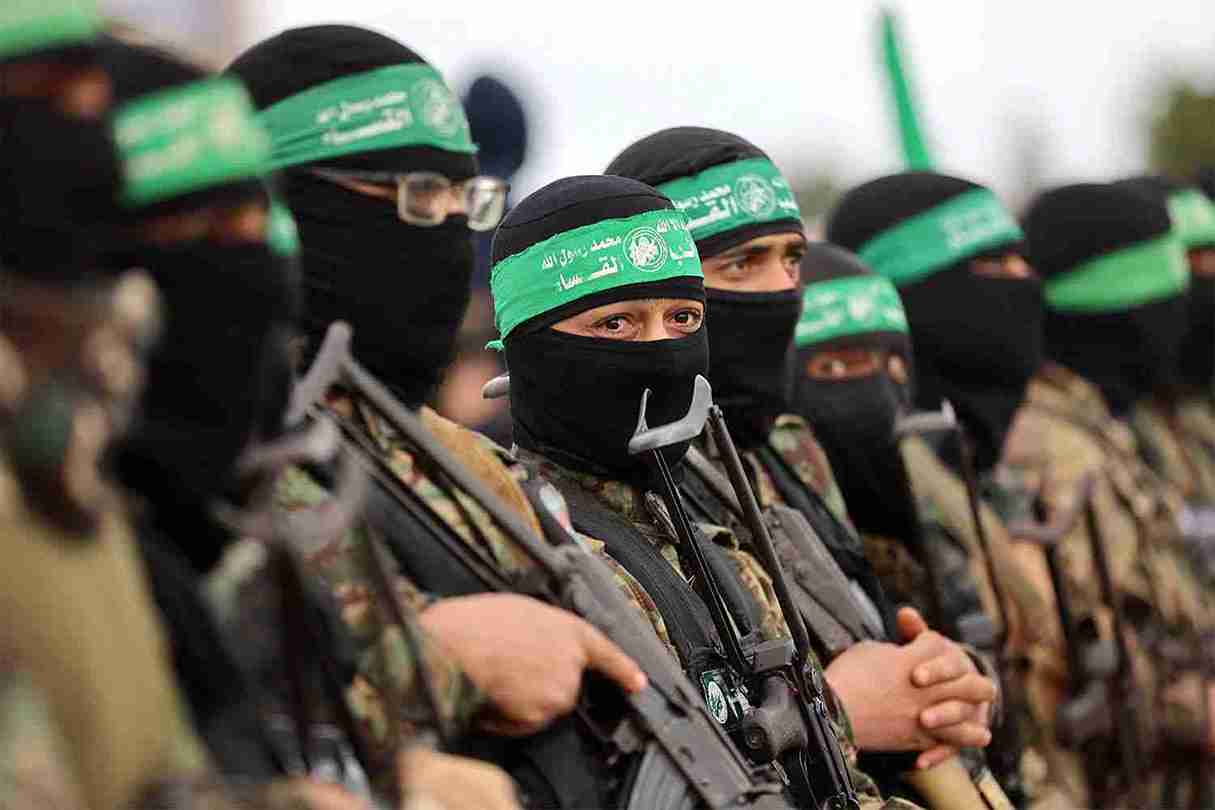
Hamas announced that it had “submitted a positive response” to a 60-day ceasefire proposal with Israel in Gaza, indicating progress toward a potential agreement after months of stalled efforts, CNN reported
In a statement on Friday, Hamas said it had responded positively to the mediators and expressed readiness to begin talks on the implementation of the framework.
Hamas has “submitted a positive response to the mediators, and the movement is fully prepared to immediately enter into a round of negotiations regarding the mechanism for implementing this framework,” the group said.
Israel had earlier accepted the US-backed proposal, clearing the way for both sides to begin final negotiations to work out details before a ceasefire is finalized, CNN reported.
As reported by CNN, Bishara Bahbah, a Palestinian-American interlocutor who has been in direct contact with Hamas, welcomed the response in a Facebook post, stating, “We are now much closer to ending this cursed war.”
He added that Hamas had introduced “amendments it deemed necessary.”
“In my view, these amendments will not prevent reaching a ceasefire agreement within the coming week, God willing,” he said.
An Israeli source familiar with the developments said earlier on Friday that a positive response from Hamas was anticipated, and that the changes made to the proposal language were not expected to disrupt the progress toward a deal, CNN reported.
Under the terms of the proposal, of the 50 Israeli hostages still held in Gaza, 10 — including 8 living hostages on the first day — would be released during the ceasefire, along with the bodies of 18 others. In exchange, an unspecified number of Palestinian prisoners and detainees would be freed.
Following the initial release, Israel would withdraw from parts of northern Gaza, and the two sides would begin talks on a permanent ceasefire.
Hamas has been directed to release the hostages without any public displays or ceremonies. Additional hostages would be released on four other dates outlined in the proposal, CNN reported.
Earlier, US President Donald Trump cautioned Hamas against rejecting the ceasefire deal, warning that “it will not get better — it will only get worse,”
“I hope, for the good of the Middle East, that Hamas takes this Deal, because it will not get better — IT WILL ONLY GET WORSE. Thank you for your attention to this matter!” Trump wrote on his social media platform, Truth Social.
According to Al Jazeera, at least 57,130 Palestinians have been killed and more than 130,000 injured since October 7, 2023, when Hamas launched an attack in southern Israel that left approximately 1,139 people dead. In Gaza, hundreds of thousands have been displaced multiple times, with widespread destruction of cities, hospitals, and schools. The UN estimates that 85 per cent of Gaza is now under Israeli military control. (ANI)
United States President Donald Trump said that Israel has agreed to the necessary conditions to finalise a 60-day ceasefire in Gaza.
Trump cautioned Hamas against rejecting the ceasefire deal, warning that “it will not get better — it will only get worse.”
Qatar and Egypt, who, according to Trump, “worked very hard to help bring Peace”, will deliver the final proposal. He also stated that negotiations to end the war would continue during the proposed ceasefire period.
“My Representatives had a long and productive meeting with the Israelis today on Gaza. Israel has agreed to the necessary conditions to finalize the 60 Day CEASEFIRE, during which time we will work with all parties to end the War. The Qataris and Egyptians, who have worked very hard to help bring Peace, will deliver this final proposal. I hope, for the good of the Middle East, that Hamas takes this Deal, because it will not get better — IT WILL ONLY GET WORSE. Thank you for your attention to this matter!” Trump wrote on his social media platform, Truth Social.
The announcement came less than a week before Israeli Prime Minister Benjamin Netanyahu’s scheduled visit to the United States on July 7.
Meanwhile, Israeli airstrikes have continued across Gaza. On Monday, Israel launched at least 50 aerial strikes, with a significant focus on eastern Gaza City, following forced evacuation warnings issued by the Israeli military, according to Al Jazeera.
Citing medical sources, Al Jazeera reported that Israeli forces killed at least 68 Palestinians in Gaza on Sunday, including 47 in Gaza City and the northern areas of the territory.
According to Gaza’s Health Ministry, the ongoing war has so far claimed at least 56,500 lives and wounded 133,419 people. In comparison, around 1,139 people were killed in Israel during the October 7 attacks, during which more than 200 individuals were taken captive. (ANI)
Israeli residents of Gaza border communities will be allowed to return to their homes as the Israeli government declared on Sunday that there is “no security impediment” to living in the area.
This decision, approved Sunday by the Cabinet in a telephone referendum, follows assessments by the Israel Defense Forces and the Ministry of Defense. Consequently, funding for those staying in temporary absorption facilities will be halted for those deemed able to return.
The decision applies to twelve localities, including Be’eri, Kfar Aza, Nir Oz, Sufa, Netiv HaAsara, Nir Yitzhak, Kerem Shalom, Ein Hashlosha, Nirim, Nahal Oz, Kissufim, and Holit.
Other communities such as Nahal Oz, Kissufim, Holit, Kfar Aza, and Be’eri will continue to rely on temporary housing until reconstruction is complete.
The Tekuma administration, responsible for rebuilding areas damaged during the October 7 attacks, confirmed that renovation work in Kerem Shalom, Re’im, Nirim, and Ein Hashlosha is finished, allowing residents to return starting July 1. Sufa, Nir Yitzhak, and Netiv HaAsara will also reopen on this date. Nahal Oz’s restoration is expected by August, just in time for the new school year, while Kissufim’s rebuilding will conclude in November 2025.
Holit, Kfar Aza, and Be’eri are projected to be ready for return sometime in 2026.
The Families’ Headquarters for the Return of the Abductees commented on the move, saying, “If there is no security obstacle to returning to live in the Gaza Envelope, then there is certainly no obstacle to ending the fighting in Gaza. Now all that remains is to reach a comprehensive agreement to return all 50 abductees. The Gaza Envelope will earn the name ‘the land of resurrection’ when all the abductees return home.”
While the military ban has been lifted, the government confirmed support will continue for those not yet ready to move back. The state will fund 90 percent of rent for another year for residents who prefer to remain in temporary accommodations during ongoing repairs.
At least 1,180 people were killed, and 252 Israelis and foreigners were taken hostage in Hamas’s attacks on Israeli communities near the Gaza border on October 7. Of the 50 remaining hostages, around 30 are believed to be dead. (ANI/TPS)
In a stunning and controversial political escalation, prominent Republican groups and far-right figures are calling on President Donald Trump to revoke the U.S. citizenship of Zohran Mamdani—a 33-year-old Democratic Socialist and newly elected Democratic nominee for New York City Mayor. Mamdani made history on June 25, 2025, by defeating former New York Governor Andrew Cuomo in the Democratic primary. However, his resounding victory has triggered intense backlash from conservative quarters, who are labeling him a threat to American values, national security, and the “soul of New York.”
Who is Zohran Mamdani?
Zohran Kwame Mamdani is a Ugandan-born, Queens-based politician, filmmaker, and community organizer. He immigrated to the U.S. as a child and became a naturalized citizen in 2018. A self-proclaimed democratic socialist, Mamdani first rose to political prominence as a member of the New York State Assembly, representing Astoria, Queens. His platform emphasizes bold progressive policies such as rent control, public transportation reform, free municipal services, and aggressive taxation on the wealthy. His mayoral campaign gained traction among working-class New Yorkers, immigrant communities, and left-leaning voters.
The Republican Backlash
1. Communist Control Act Cited
The New York Young Republican Club (NYYRC) issued a public statement invoking the Communist Control Act of 1954, a Cold War-era law that was designed to bar communists from holding positions of influence. While the act has been deemed unenforceable by courts, Republicans argue Mamdani’s policy agenda is so radical that it falls under the statute. The NYYRC accused him of trying to “destroy New York City from within” and demanded denaturalization and deportation.
Former President Donald Trump amplified these calls on his Truth Social account, calling Mamdani a “100% Communist Lunatic,” and claiming “he wants to replace American greatness with foreign radicalism.”
2. Immigration and ICE Conflict
One of Mamdani’s key proposals—removing Immigration and Customs Enforcement (ICE) from New York City—sparked outrage from Republican leaders. Mamdani described ICE as a “fascist institution” and vowed to make NYC a true sanctuary city.
Trump’s border advisor Tom Homan rejected this stance, asserting that federal law overrides local ordinances. “It’s game on. We will triple down on ICE in cities like this,” Homan warned. Republicans view Mamdani’s anti-ICE rhetoric as indicative of a broader threat posed by pro-immigrant, leftist politicians.
3. Allegations of Extremism and Anti-Semitism
Tennessee Republican Congressman Andy Ogles accused Mamdani of extremism, citing a 2017 rap lyric in which he referenced the “Holy Land Five”—leaders of a Muslim charity convicted of funding Hamas. Ogles demanded a DOJ investigation into whether Mamdani misrepresented affiliations during his naturalization process.
Further, Mamdani’s pledge to arrest Israeli Prime Minister Benjamin Netanyahu if he visits NYC—based on ICC war crime warrants—has drawn sharp criticism. GOP Representative Elise Stefanik called him “an anti-Semite disguised as a progressive,” while far-right commentator Laura Loomer went as far as to suggest Mamdani’s leadership could “cause another 9/11.”
4. Citizenship and “American-ness” Attacks
Mamdani’s relatively recent citizenship—granted in 2018—has become a political target. Republican Councilwoman Vickie Paladino argued it’s “insane” that someone “so recently naturalized” could govern America’s largest city. “He wasn’t even born here. He hasn’t lived the American experience long enough to lead it,” she said.
This echoes Donald Trump’s past “birther” rhetoric and attempts to question the legitimacy of immigrant politicians. Critics say such remarks are racially and religiously coded, blending Islamophobia and nativism.
5. Strategic Red Scare and Base Mobilization
Analysts see the GOP’s uproar as part of a strategic effort to galvanize its conservative base ahead of upcoming elections. By branding Mamdani as a radical and foreign threat, Republicans aim to associate the Democratic Party with “un-American” policies.
Stephen Miller, Trump’s longtime policy aide, stated: “This is the Great Replacement, live and in action. If you don’t fight it now, you’ll lose your country.” The GOP is using Mamdani’s win to paint a picture of Democratic extremism and justify crackdowns on immigration and dissent.
Legal Context: Can Mamdani Be Stripped of Citizenship?
Legally speaking, the demand to revoke Mamdani’s citizenship is unlikely to succeed.
The Communist Control Act has been ruled unconstitutional in its application to citizens’ rights.
The First Amendment protects political beliefs, even unpopular or radical ones.
Denaturalization is extremely rare and only permitted if a person is found to have committed fraud or concealed material facts during their naturalization process.
Thus far, no credible evidence has emerged suggesting Mamdani’s citizenship was obtained unlawfully.
Mamdani’s Response
In response to the attacks, Mamdani remained defiant. In a public statement, he said:
“This is not about me. This is about a broader movement for justice, dignity, and working-class power in New York City. These attacks are the last gasps of a fearful political establishment.”
He also dismissed accusations of extremism and anti-Semitism, saying, “They are trying to divide our city by using fear. But New York belongs to all of us—immigrants, workers, people of all faiths.”
Conclusion
The calls to revoke Zohran Mamdani’s citizenship highlight a growing polarization in American politics, where identity, ideology, and immigration have become central battlegrounds. While the legal path to denaturalization is practically nonexistent in this context, the political battle is just beginning. As Mamdani prepares for the general election in November 2025, he is likely to remain at the center of one of the most charged and symbolic debates over what it means to be American in the 21st century.
President Donald Trump said on Friday he would consider bombing Iran again if Tehran was enriching uranium to a level that concerned the United States, and he backed inspections of Iran’s bombed nuclear sites.
As per report published by The Reuters, “Sure, without question, absolutely,” Trump said when asked about the possibility of new bombing of Iranian nuclear sites if deemed necessary at some point.
At a White House news conference, Trump said he plans to respond soon to comments from Iran’s Supreme Leader Ali Khamanei, who said Iran “slapped America in the face” by launching an attack against a major U.S. base in Qatar following last weekend’s U.S. bombing raid.
Trump also said he would like inspectors from the International Atomic Energy Agency or another respected source to be able to inspect Iran’s nuclear sites after they were bombed last weekend.
Trump said he believes the sites were “obliterated.” He has rejected any suggestion that damage to the sites was not as profound as he has said.
But Trump said he would support the IAEA, the U.N. nuclear watchdog, going in to check the sites that were bombed.
Advertisement · Scroll to continue
Report This Ad
The agency’s chief, Rafael Grossi, said on Wednesday that ensuring the resumption of IAEA inspections was his top priority as none had taken place since Israel began bombing on June 13.
However, Iran’s parliament approved moves on Wednesday to suspend such inspections. Iran’s foreign minister Abbas Araqchi indicated on Friday that Tehran may reject any request by the head of the agency for visits to Iranian nuclear sites.
Trump also said he does not believe Iran wants to still seek a nuclear weapon after U.S. and Israeli bombing raids.
He said Iran still wants to meet about the way forward. The White House had said on Thursday that no meeting between the U.S. and an Iranian delegation has been scheduled thus far.
Former President Donald Trump unleashed a scathing personal attack on Zohran Mamdani, the Indian-American Democratic socialist who emerged victorious in New York City’s Democratic mayoral primary. In a series of posts on his Truth Social platform, Trump labeled Mamdani a “100% Communist Lunatic,” criticized his appearance, voice, and intelligence, and framed his win as a dangerous shift in the Democratic Party’s direction. The remarks, made as Trump traveled back from a NATO summit in The Hague, reflect a broader Republican strategy to portray Mamdani as a symbol of Democratic extremism ahead of the November 2025 general election.
Mamdani’s Historic Primary Victory
Zohran Mamdani, a 33-year-old state assemblyman from Astoria, Queens, delivered a stunning upset by defeating former New York Governor Andrew Cuomo in the Democratic primary. With approximately 43% of first-choice votes in the ranked-choice voting system, Mamdani’s lead prompted Cuomo’s concession, though final results are pending due to the ranked-choice process. If elected in November, Mamdani would become New York City’s first Muslim and Indian-American mayor, as well as its youngest in over a century.
Mamdani’s campaign galvanized younger, progressive voters with a bold platform centered on affordability and social justice. Key proposals include freezing rents on stabilized apartments, making public buses free, establishing city-run grocery stores, and funding these initiatives through a $10 billion tax increase on corporations and wealthy residents. His campaign’s savvy social media presence and extensive volunteer network helped him overcome Cuomo’s name recognition and establishment backing, which included endorsements from figures like former President Bill Clinton and Representative Jim Clyburn.
Mamdani’s victory is seen as a referendum on the Democratic Party’s direction, particularly after its losses in the 2024 presidential election. His progressive policies and outspoken criticism of Israel’s actions in Gaza—calling them a “genocide” and supporting the Boycott, Divestment, and Sanctions (BDS) movement—have made him a polarizing figure, even within his own party.
Trump’s Fiery Response
Trump’s reaction to Mamdani’s win was swift and vitriolic. In his Truth Social posts, he wrote, “It’s finally happened, the Democrats have crossed the line. Zohran Mamdani, a 100% Communist Lunatic, has just won the Dem Primary, and is on his way to becoming Mayor. We’ve had Radical Lefties before, but this is getting a little ridiculous.” He went on to attack Mamdani personally, stating, “He looks TERRIBLE, his voice is grating, he’s not very smart,” and mocked his supporters, including Representative Alexandria Ocasio-Cortez (AOC), whom he referred to as part of “AOC+3, Dummies ALL.” Trump also falsely claimed Senate Minority Leader Chuck Schumer, who is Jewish, was a “Great Palestinian Senator” groveling over Mamdani.
In a second post, Trump sarcastically suggested that Democrats nominate Representative Jasmine Crockett for president in 2028, with AOC and other progressive “Squad” members—likely Ilhan Omar, Ayanna Pressley, and Rashida Tlaib—in cabinet roles. He concluded, “Added together with our future Communist Mayor of New York City, Zohran Mamdani, and our Country is really SCREWED!” These remarks align with Trump’s long-standing tactic of using inflammatory rhetoric to paint political opponents as extreme and unfit.
Broader Political Context
Mamdani’s win has sparked intense debate within and beyond the Democratic Party. Progressives, including Ocasio-Cortez and Senator Bernie Sanders, celebrated his victory as a “seismic shift” toward policies prioritizing working-class New Yorkers. Ocasio-Cortez praised Mamdani’s “dedication to an affordable, welcoming, and safe New York City,” noting that his campaign overcame millions in opposition funding from billionaires and lobbyists. The Working Families Party echoed this sentiment, calling the result a sign that voters are “fed up with the status quo.”
However, moderate Democrats expressed concern that Mamdani’s socialist platform could alienate voters in swing districts, complicating efforts to regain congressional control in the 2026 midterms. Representative Laura Gillen (D-NY) called Mamdani “too extreme to lead,” arguing his policies, such as higher taxes, are “the last thing New York needs.” The group Republicans Against Trumpism warned that Mamdani’s prominence could be weaponized by Republicans to hurt moderate Democrats in competitive races.
Republicans, meanwhile, seized on Mamdani’s victory as political ammunition. Trump’s adviser Stephen Miller linked Mamdani’s win to “unchecked migration,” invoking white nationalist rhetoric. Conservative media and influencers have also targeted Mamdani’s Muslim faith, with some falsely linking him to 9/11 or labeling him a “terrorist sympathizer” due to his pro-Palestinian stance. Such attacks have drawn criticism for their Islamophobic undertones.
Mamdani’s Background and Platform
Born in Uganda to Indian parents, Mamdani is the son of filmmaker Mira Nair and academic Mahmood Mamdani. He moved to New York City at age seven and later graduated from Bowdoin College with a degree in Africana studies. Before entering politics, he worked as a housing counselor and hip-hop musician. Elected to the New York State Assembly in 2020 after defeating a four-term incumbent, Mamdani has focused on housing reform, transportation, and energy policy, securing $100 million for subway service and launching a fare-free bus pilot.
His mayoral platform addresses New York’s affordability crisis, with proposals like universal childcare, a $30 minimum wage, and “baby baskets” for newborns. Mamdani’s foreign policy views, particularly his pledge to arrest Israeli Prime Minister Benjamin Netanyahu if he visits New York (citing 2024 ICC arrest warrants), have drawn ire from pro-Israel groups, who accuse him of antisemitism. Mamdani has denied these claims, emphasizing his commitment to protecting Jewish New Yorkers and increasing funding to combat hate crimes.
The Road to November
Mamdani now faces a competitive general election against incumbent Mayor Eric Adams, running as an independent, and Republican candidate Curtis Sliwa. Adams, who called Mamdani a “snake oil salesman” on Fox & Friends, has positioned himself as a moderate alternative, emphasizing crime reduction and support for police. Cuomo has not ruled out an independent run, which could further complicate the race. Given New York’s liberal leanings, the Democratic nominee typically has an advantage, but Mamdani’s progressive agenda and polarizing rhetoric may face scrutiny in the diverse, complex city.
Trump’s intervention signals that the race will draw national attention, with Republicans likely to frame Mamdani as emblematic of a Democratic Party veering too far left. Meanwhile, Mamdani’s campaign continues to resonate with voters frustrated by rising costs and inequality, as evidenced by his ability to build a multiracial, youth-driven coalition. As one X user quipped in response to Fox News’ coverage of Mamdani’s “socialist promises,” “Nothing says ‘radical’ like being able to eat and have a kid without needing to live in a tent.”
Conclusion
Donald Trump’s attack on Zohran Mamdani underscores the high stakes of the 2025 New York City mayoral race, which has become a flashpoint in the broader struggle over the Democratic Party’s identity. Mamdani’s rise reflects a growing appetite for progressive change among urban voters, but it also invites fierce opposition from conservatives and moderates alike. As the general election approaches, Mamdani’s ability to navigate personal attacks, unify Democrats, and appeal to a broad electorate will determine whether he can make history as New York’s next mayor.
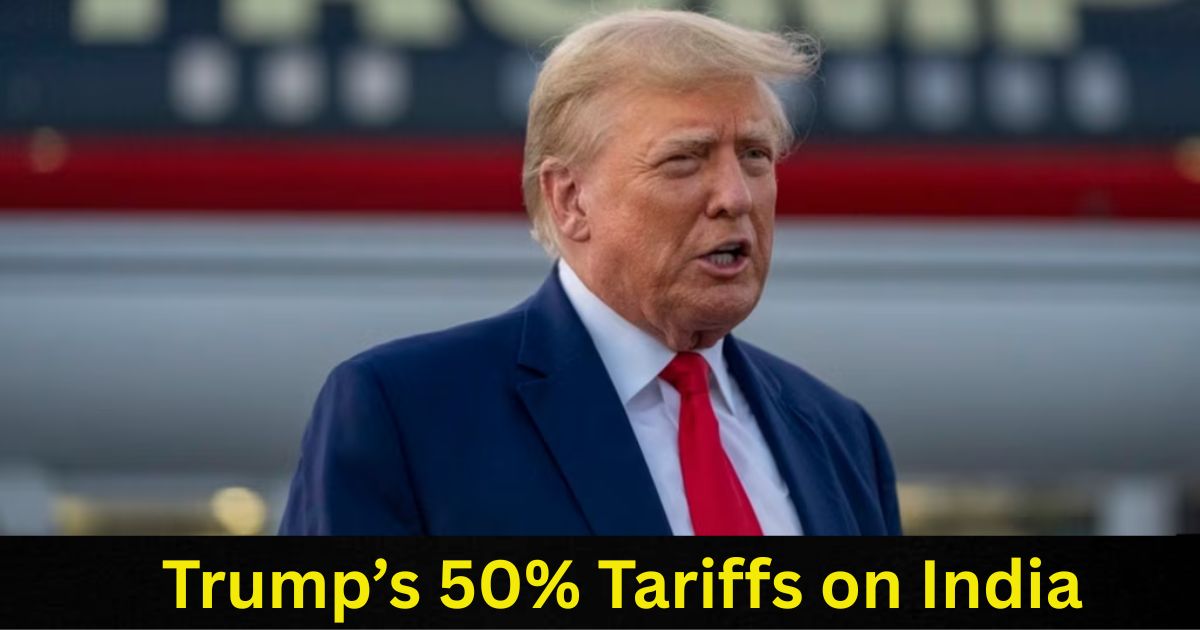
US President Donald Trump has claimed he stopped a potential nuclear conflict between India and Pakistan by threatening to withhold trade deals.
Speaking at a NATO summit in Hague, President Trump doubled down on his claims at the press conference Wednesday, saying he used “a series of phone calls on trade” to convince the nuclear-armed neighbours to step back from military confrontation during escalating tensions in May 2025.
“I said if you’re going to go fighting each other, we’re not doing any trade deal,” Trump told reporters at the conclusion of the NATO summit in the Netherlands on Wednesday.
“We stopped the nuclear war,” he added.
Trump referenced recent diplomatic meetings, saying Pakistani general Asim Munir had visited his office the previous week while praising Prime Minister Narendra Modi as “a great friend of mine” and “a great gentleman.”
According to the President’s account, both countries chose potential economic partnerships over military action when presented with the option.
“I got them to reason, and I said, we’re not doing a trade deal if you’re going to fight. They said, no, I want to do the trade deal,” Trump explained.
The comments represent the President’s most latest public account of his claimed role in mediating the India-Pakistan crisis that erupted earlier this year.
However, Trump’s characterisation of events has been disputed by Indian officials.
The Indian government has previously contested the President’s assertion that US mediation was decisive in achieving the ceasefire between the two nations in May 2025.
Meanwhile, India has clarified that the cessation of hostilities between India and Pakistan took place on May 10 following contacts between the two DGMOs.
A spokesman for India’s foreign ministry said senior officials in New Delhi and Washington had been “in regular contact” during the crisis, but stopped short of confirming Trump’s version of events.
The conflict represented the most serious military escalation between India and Pakistan in over five decades, with both nuclear-armed nations mobilising forces along their disputed border.
The US maintains significant economic relationships with India and a bilateral trade worth billions of dollars annually.
India is one of America’s largest trading partners in Asia, while Pakistan has sought closer economic ties with Washington in recent years.
In fiscal year 2024-25, the bilateral trade between the two countries reached USD 131.84 billion.
During the press conference, Trump also defended US strikes on Iranian nuclear facilities as “very, very successful”, contradicting a preliminary intelligence report suggesting more limited damage.
The US president called the operation “obliteration” and compared it to the atomic bombs that ended World War II.
“No other military on Earth could have done it,” he said, dismissing media reports on the intelligence assessment as “spin”.
The strikes came days before a ceasefire between Israel and Iran was announced. A classified US intelligence report suggested the attacks set Iran’s nuclear programme back “a few months”.
However, the Israel Atomic Energy Commission said the strikes had delayed Iran’s nuclear weapons development “by many years”.
Trump has previously highlighted his personal relationships with world leaders as key to resolving international disputes, though his claims about direct intervention in foreign conflicts have sometimes drawn scepticism from diplomatic sources.
The president made similar assertions about preventing wars during his previous term in office, including claims about North Korea and Middle Eastern conflicts. (ANI)