Afghanistan Earthquake Death Toll Rises to 1457, Thousands Injured as Aid Efforts Struggle

Afghanistan Earthquake

The death toll from the powerful earthquake that struck Afghanistan’s Kunar province has climbed to 1,457, with 3,394 others injured, Taliban officials said on Thursday. More than 6,700 homes have been destroyed due to earthquake as international aid agencies struggle to reach people in remote areas, the local media reported.

Taliban deputy spokesman Hamdullah Fitrat said at least 3,994 people have been injured while over 6,782 homes were destroyed in Kunar and neighbouring Nangarhar, Afghanistan’s leading news agency Khaama Press reported. Rescue workers have started retrieving bodies from the rubble, with officials stating that the recovery operation remains far from complete.

Survivors have been facing shortages of water, food and medical care. Taliban authorities have claimed that humanitarian assistance has been provided to many families and roads to remote earthquake-hit areas have been reopened. They also stated that specialised rescue teams from several nations have joined ongoing operations.

Despite Taliban’s claims, people and aid workers have said that rescue efforts continue to remain slow and uneven. The difficult mountainous terrain and widespread damage has further made it hard to reach people who are most in need.

International organisations, including the Red Cross and the World Health Organisation, along with aid shipments from India, Japan, Iran and Turkey are working to support local operations. Relief agencies have said that access challenges have delayed critical supplies and medical assistance.

The 6.0-magnitude earthquake struck the eastern part of Afghanistan at 11.47 pm local time on August 31, at a depth of eight kilometres, according to the US Geological Survey, Xinhua news agency reported.

Afghanistan is especially vulnerable to earthquakes as it sits on top of several fault lines where the Indian and Eurasian plates meet. The mountainous terrain of eastern Afghanistan is also prone to landslides, making it harder for emergency services to carry out rescues.

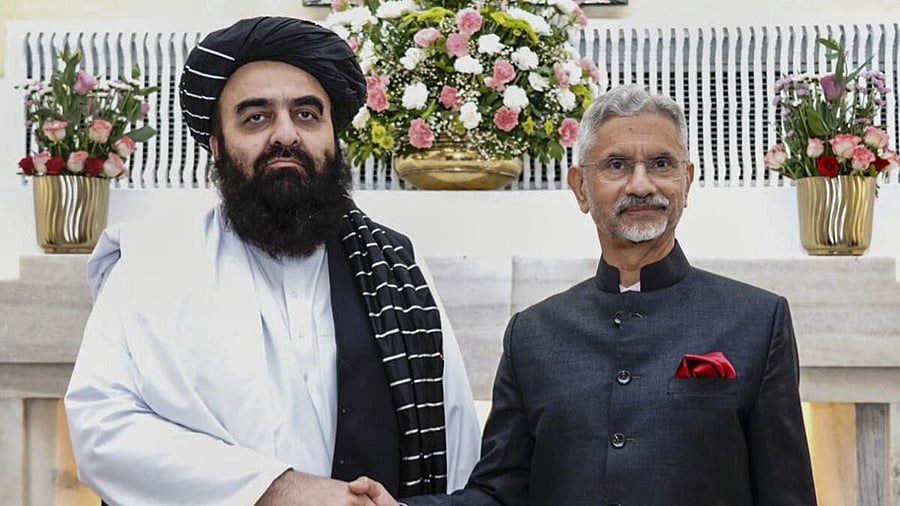
On September 1, External Affairs Minister (EAM) S Jaishankar spoke with Afghanistan’s Foreign Minister Amir Khan Muttaqi and condolences over the loss of lives in the earthquake. Wishing early recovery to those injured, the EAM expressed India’s full support for Afghanistan and conveyed that New Delhi will be sending food and relief material to Kabul.

“Spoke with Afghan Foreign Minister Mawlawi Amir Khan Muttaqi today. Expressed our condolences at the loss of lives in the earthquake. Conveyed that India has delivered 1000 family tents today in Kabul. 15 tonnes of food material is also being immediately moved by Indian Mission from Kabul to Kunar. Further relief material will be sent from India starting tomorrow. Wish early recovery of those injured. India stands by Afghanistan at this difficult time,” EAM Jaishankar posted on X.

Trump Claims India Offered Zero Tariffs on US Goods, Calls Trade Ties a ‘One-Sided Disaster’

Modi-Trump Unite

Washington / New Delhi, September 1 — US President Donald Trump on Monday claimed that India has offered to cut tariffs on American goods to zero, but stressed that New Delhi should have taken the step “years ago.”

The Trump administration recently slapped 25 per cent reciprocal tariffs on Indian exports, alongside an additional 25 per cent levy for India’s purchases of Russian oil, raising total duties to 50 per cent — among the highest in the world.

Trump has repeatedly accused India of “funding Moscow’s deadly war in Ukraine” through oil imports from Russia. However, he has avoided imposing harsher sanctions on Russia itself.

Defending India’s position, External Affairs Minister S. Jaishankar argued that the US has not applied the same standards to China or the European Union, which remain the largest buyers of Russian crude and LNG.

“They have now offered to cut their tariffs to nothing, but it’s getting late. They should have done so years ago,” Trump posted on Truth Social, adding that the relationship with India has been a “one-sided disaster.”

Prime Minister Narendra Modi, meanwhile, held bilateral talks with Russian President Vladimir Putin and Chinese President Xi Jinping during the Shanghai Cooperation Organisation (SCO) summit in Tianjin.

Since returning to office in January, Trump has increasingly used tariffs as a blunt trade weapon. His measures have unsettled global markets. Last week, the US Court of Appeals for the Federal Circuit ruled that several Trump-era tariffs were illegal, though it allowed them to remain in force pending an appeal to the Supreme Court.

India, for its part, has vowed not to “bow down.” Commerce Minister Piyush Goyal said the government would instead focus on expanding into new export markets.

The US was India’s top export destination in 2024, with shipments worth $87.3 billion. But trade negotiations remain deadlocked, particularly over agriculture and dairy access. Trump wants greater US entry, while Modi is determined to protect Indian farmers.

“What few people understand is that we do very little business with India, but they do a tremendous amount of business with us,” Trump said Monday. “It has been a totally one-sided disaster for decades. India buys most of its oil and military equipment from Russia, very little from the US.”


Faith, Family & the Future: Navigating Chaos with Purpose

Kashmir Fruit Growers Face Heavy Losses as Highway Closure Disrupts Transport

From Boom to Bust: How the April 22 Terror Attack Shattered Pahalgam’s Tourism Dream

11 Dead in Ramban and Reasi Weather Tragedies as Landslides and Cloudburst Devastate Jammu

PM Modi Invites Xi Jinping to India’s 2026 BRICS Summit, Strengthens Bilateral Ties at SCO Meeting

PM Modi Invites Xi Jinping

Prime Minister Narendra Modi on Sunday invited Chinese President Xi Jinping to the BRICS Summit that India will host in 2026, the Ministry of External Affairs said.

President Xi thanked Prime Minister Modi for the invitation and offered China’s support to India’s BRICS Presidency. India is preparing to take over the leadership of BRICS from the current president, Brazil.

PM Modi also expressed support for China’s Presidency of the Shanghai Cooperation Organisation and the Summit in Tianjin, the Ministry of External Affairs said in a statement today.

The two leaders met on the sidelines of the Summit of the leaders of the Shanghai Cooperation Organisation (SCO) in Tianjin today. The two leaders had previously met in Russia’s Kazan in 2024 on the sidelines of the BRICS Summit.

In July this year, Prime Minister Modi, in his intervention at the BRICS grouping’s summit in Rio De Janeiro, said that India will attempt to give a “new form” to the BRICS next year.

PM Modi said BRICS will mean Building Resilience and Innovation for Cooperation and Sustainability, and just as during the G-20 chairmanship, India had given priority to the issues of the Global South in the agenda, similarly, during India’s chairmanship of BRICS, it will take the forum forward in the spirit of people-centricity and humanity first.

The 17th BRICS Summit held under the theme: “Strengthening Global South Cooperation for a More Inclusive and Sustainable Governance”. Xi Jinping had participated in the summit virtually.

Commitments were adopted across strategic areas, including global governance, finance, health, AI, climate change, peace and security.

In addition to the main declaration, BRICS leaders endorsed three supplementary frameworks- The BRICS Leaders’ Framework Declaration on Climate Finance, The BRICS Leaders’ Declaration on Global Governance of Artificial Intelligence and the BRICS Partnership for the Elimination of Socially Determined Diseases.

The Leaders’ Framework Declaration on Climate Finance is a first-of-its-kind collective BRICS commitment under the United Nations Framework Convention on Climate Change (UNFCCC) and the Paris Agreement. The declaration proposed mobilising USD 300 billion annually by 2035 for climate-related investments, with an explicit emphasis on ensuring that such finance is “accessible, timely and concessional.”

The Rio-de-Janerio summit announced the establishment of a BRICS Climate Research Platform to harmonise data, share best practices, and advance joint modelling.

The BRICS Leaders’ Statement on the Global Governance of Artificial Intelligence emphasised that AI must serve as a tool to advance inclusive development, reduce digital inequalities, and empower the Global South through multilateral, UN-led frameworks.

The BRICS grouping is formed by eleven countries: Brasil, Russia, India, China, South Africa, Saudi Arabia, Egypt, United Arab Emirates, Ethiopia, Indonesia, and Iran. It serves as a political and diplomatic coordination forum for countries from the Global South, facilitating coordination in a wide range of areas.

Meanwhile, during his bilateral meeting with Chinese President in Tianjin on the sidelines of the SCO summit, Prime Minister Modi underlined the importance of peace and tranquility on the border areas for continued development of bilateral relations.

The two leaders noted with satisfaction the successful disengagement last year and the maintenance of peace and tranquility along the border areas since then, the MEA said in a statement.

They expressed commitment to a fair, reasonable, and mutually acceptable resolution of the boundary question proceeding from the political perspective of their overall bilateral relations and the long-term interests of the two peoples. They recognized the important decisions taken by the two Special Representatives in their Talks earlier this month, and agreed to further support their efforts.

Both leaders welcomed the positive momentum and steady progress in bilateral relations since their last meeting in Kazan in October 2024. They reaffirmed that the two countries were development partners and not rivals, and that their differences should not turn into disputes.

A stable relationship and cooperation between India and China and their 2.8 billion peoples on the basis of mutual respect, mutual interest and mutual sensitivity are necessary for the growth and development of the two countries, as well as for a multipolar world and a multi-polar Asia befitting the trends of the 21st century.

Prime Minister Modi underlined the importance of peace and tranquility on the border areas for continued development of bilateral relations. The two leaders noted with satisfaction the successful disengagement last year and the maintenance of peace and tranquility along the border areas since then. They expressed commitment to a fair, reasonable, and mutually acceptable resolution of the boundary question proceeding from the political perspective of their overall bilateral relations and the long-term interests of the two peoples. They recognized the important decisions taken by the two Special Representatives in their Talks earlier this month, and agreed to further support their efforts, the MEA said in a statement.

The two leaders noted the need to strengthen people-to-people ties through direct flights and visa facilitation, building on the resumption of Kailash Manasarovar Yatra and tourist visa. On economic and trade relations, they recognized the role of their two economies to stabilize world trade. They underlined the need to proceed from a political and strategic direction to expand bilateral trade and investment ties and reduce trade deficit.

The Prime Minister noted that India and China both pursue strategic autonomy, and their relations should not be seen through a third country lens. The two leaders deemed it necessary to expand common ground on bilateral, regional, and global issues and challenges, like terrorism and fair trade in multilateral platforms.

Prime Minister also had a meeting with Cai Qi, Member of the Standing Committee of the Politburo of the Communist Party of China. Prime Minister Modi shared with Cai his vision for bilateral relations and sought his support to realize the vision of the two leaders, the MEA said.

Cai reiterated the Chinese side’s desire to expand bilateral exchanges and further improve relations in line with the consensus reached between the two leaders. (ANI)

Kashmir Fruit Growers Face Heavy Losses as Highway Closure Disrupts Transport

From Boom to Bust: How the April 22 Terror Attack Shattered Pahalgam’s Tourism Dream

11 Dead in Ramban and Reasi Weather Tragedies as Landslides and Cloudburst Devastate Jammu

Modi in Japan: PM Stresses Crucial India-China Ties for Global Stability Ahead of SCO Summit in Tianjin

Modi in Japan: PM Stresses Crucial India-China Ties for Global Stability Ahead of SCO Summit in Tianjin

Modi in Japan

Prime Minister Narendra Modi on Friday underlined the importance of stronger India-China relations, calling them “crucial” for regional peace, prosperity, and global economic stability. His remarks came during a two-day visit to Japan, where he is holding meetings to deepen Delhi-Tokyo cooperation before traveling to China for the 25th Shanghai Cooperation Organisation (SCO) summit.

In Japan, Mr. Modi is scheduled to visit four factories, including one producing a prototype of the E10 Shinkansen bullet train, which India hopes to acquire as part of its high-speed rail ambitions. He will also oversee the signing of memoranda of understanding in defense, trade, technology, and business.

From Tokyo, the Prime Minister will head to Tianjin at the invitation of Chinese President Xi Jinping to participate in the SCO summit, which brings together leaders from Russia, Iran, Kazakhstan, Kyrgyzstan, Pakistan, Tajikistan, Uzbekistan, and Belarus.

“Stable, predictable, and amicable bilateral relations between India and China, the two largest nations on Earth, can have a positive impact on regional and global peace and prosperity,” Mr. Modi told Japanese media. He recalled his meeting with President Xi in Kazan last year, describing the progress since then as “steady and positive.”

The timing of these remarks is significant. India is facing global economic turbulence, including the United States’ decision to impose a 50 per cent tariff on Indian goods, which government sources estimate will affect $48 billion in exports. Analysts say the tariffs have prompted New Delhi and Beijing to recalibrate ties, putting aside long-standing mistrust to offset potential economic losses.

Signs of this thaw appeared earlier this year when Chinese Foreign Minister Wang Yi urged India and China to “take the lead in opposing hegemonism and power politics,” adding that “making the dragon and elephant dance is the only right choice.” The phrase was later echoed by President Xi himself, signaling Beijing’s seriousness in fostering closer cooperation.

During his visit to Delhi this month, Wang Yi assured India of cooperation in key sectors, particularly in the electric vehicle (EV) industry, which depends heavily on rare earth minerals controlled by China. Both countries also agreed to step up trade, resume direct flights, and work toward disengagement in Ladakh, where tensions escalated after the 2020 Galwan clashes.

“Given volatility in the world economy, it is important for India and China to work together to bring stability to the global economic order. India is ready to advance bilateral relations from a strategic and long-term perspective on the basis of mutual interest,” Mr. Modi said.

The SCO summit in Tianjin is expected to showcase whether these positive signals translate into concrete outcomes. With wars in Ukraine and Gaza reshaping global politics and U.S.-China rivalry intensifying, closer ties between Asia’s two largest economies could significantly influence the emerging multipolar order.

Kashmir Politics From Mahraja Hari Singh To Syed Ali Geelani

From Boom to Bust: How the April 22 Terror Attack Shattered Pahalgam’s Tourism Dream

Former Jamat-e-Islami Spokesperson Advocate Zahid Ali Surrenders to Jammu and Kashmir Police

Sajad Lone Slams J&K Government for Taking Over 215 Jamaat e Islami Schools, Calls Move Political Overreach

Trump Adviser Peter Navarro Calls Ukraine Conflict “Modi’s War”, Defends Tariffs on India Over Russian Oil

Peter Navarro

Washington: White House trade adviser Peter Navarro has stirred controversy by describing the Ukraine conflict as “Modi’s war,” alleging that India’s continued purchase of Russian oil is helping sustain Moscow’s military campaign.

In an interview with Bloomberg on Wednesday, Navarro, who serves as President Donald Trump’s Senior Counsellor for Trade and Manufacturing, said the “road to peace runs partly through New Delhi.” He argued that India’s oil imports from Russia effectively feed “the Russian war machine.”

“Everybody in America loses because of what India is doing. Consumers, businesses, workers — all lose because India’s high tariffs cost us jobs, factories, and higher wages. Then taxpayers lose because we have to fund Modi’s war,” Navarro claimed. When asked whether he meant “Putin’s war,” he doubled down: “I mean Modi’s war, because the road to peace runs, in part, through New Delhi.”

The remarks came after Trump imposed an additional 25% tariff on Indian goods, taking total duties to 50%. The new levies, effective from Wednesday, are directly linked to India’s energy trade with Russia.

Navarro insisted that the tariffs could be lifted “tomorrow” if India halts Russian oil purchases. “India buys Russian oil at a discount and then refiners sell it at a premium globally. Russia uses that money to fund its war machine, kill more Ukrainians, and then Ukraine turns to the US and Europe for more aid,” he said.

While calling Prime Minister Narendra Modi “a great leader,” Navarro expressed frustration that India — the world’s largest democracy — continues to resist American pressure. “This is a mature democracy with intelligent people running it. Yet they tell us they don’t have the highest tariffs in the world, when they do. And they won’t stop buying Russian oil. What does that mean?” he asked.

India has dismissed the US tariffs as “unjustified and unreasonable,” affirming it will take all necessary steps to protect its national interests and economic security.

Navarro further said that stopping both India and China from buying Russian oil would bring the Ukraine war to an end much faster. “If everybody, including Europe, just stopped buying Russian oil, it’s only a matter of time before Putin doesn’t have the money to fund that war,” he added.

Meanwhile, the House Foreign Affairs Committee criticised Trump’s move, warning that targeting India could backfire. In a social media post, it said, “Instead of sanctioning China or others buying larger amounts of Russian oil, Trump’s singling out India with tariffs, hurting Americans and sabotaging the US-India relationship in the process. It’s almost like it’s not about Ukraine at all.”

New Delhi has yet to issue an official response to Navarro’s “Modi’s war” remarks.


Kashmir Politics From Mahraja Hari Singh To Syed Ali Geelani

From Boom to Bust: How the April 22 Terror Attack Shattered Pahalgam’s Tourism Dream

Former Jamat-e-Islami Spokesperson Advocate Zahid Ali Surrenders to Jammu and Kashmir Police

Sajad Lone Slams J&K Government for Taking Over 215 Jamaat e Islami Schools, Calls Move Political Overreach

Trump Threatens New Tariffs on Countries Imposing Digital Taxes, Warns of Export Curbs on US Chips

Trump Threatens New Tariffs

US President Donald Trump has warned that his administration will impose “substantial” new tariffs and restrict American chip exports against countries that enforce digital services taxes or regulations on US technology companies.

The threat, delivered in a fiery post on Trump’s Truth Social platform, underscores the White House’s growing frustration with what it sees as discriminatory policies aimed at Silicon Valley’s largest firms, including Alphabet, Meta, and Amazon.

“Digital Taxes, Digital Services Legislation, and Digital Markets Regulations are all designed to harm or discriminate against American Technology,” Trump declared. “They also, outrageously, give a complete pass to China’s largest Tech Companies. This must end, and end NOW!”

Tariffs and Export Restrictions

Trump announced that Washington would respond to such measures not only with retaliatory tariffs but also by curbing the export of advanced American chips and high-tech components—industries seen as vital to global supply chains.

“I put all Countries with Digital Taxes, Legislation, Rules, or Regulations on notice,” he wrote, “that unless these discriminatory actions are removed, I, as President of the United States, will impose substantial additional Tariffs on that Country’s Exports to the U.S.A.”

The president added:

“America, and American Technology Companies, are neither the ‘piggy bank’ nor the ‘doormat’ of the World any longer. Show respect to America and our amazing Tech Companies or, consider the consequences!”

Global Tensions Over Digital Taxes

Digital services taxes (DSTs) have become a flashpoint in trade relations. Several countries, including France, Canada, and India, have sought to impose levies on revenue generated by foreign digital platforms within their borders, arguing that US tech giants profit heavily from their markets without paying sufficient tax locally.

The United States has long opposed such taxes, viewing them as unfairly targeting American firms while giving Chinese platforms like Tencent and Alibaba more room to grow. Trump’s latest remarks suggest he is willing to use tariffs and export controls as leverage to force governments to retreat from these measures.

European Union’s Position

The warning comes just a week after Washington and Brussels issued a joint statement pledging to cooperate on digital trade. Both sides agreed not to impose customs duties on electronic transmissions and to resist “unjustified trade barriers.” The European Union also confirmed it would not move forward with so-called network usage fees, which telecom operators had pushed as a way to charge major tech firms for heavy internet traffic.

Ongoing Trade Negotiations

Trump has already shown he is prepared to act decisively: in June, his administration cut off trade talks with Canada over Ottawa’s proposed digital tax. Analysts say the issue could become a central fault line in US trade policy, shaping relations not only with Europe but also with key Asian economies.

By tying digital taxes to restrictions on chip exports, Trump is placing the world’s most sought-after technologies at the heart of his economic diplomacy. The move may escalate tensions with allies but could also push countries to reconsider their tax policies in order to maintain access to critical American technologies.

Outlook

For now, Trump’s threat is a warning rather than a policy announcement. But with trade talks already strained and the global chip industry facing fierce competition, the prospect of new US restrictions adds further uncertainty.

As digital taxation spreads, the coming months may determine whether the world moves toward a cooperative framework on tech regulation—or slides into a new cycle of tariff battles with Washington at the centre.


Kashmir Politics From Mahraja Hari Singh To Syed Ali Geelani

From Boom to Bust: How the April 22 Terror Attack Shattered Pahalgam’s Tourism Dream

Former Jamat-e-Islami Spokesperson Advocate Zahid Ali Surrenders to Jammu and Kashmir Police

Sajad Lone Slams J&K Government for Taking Over 215 Jamaat e Islami Schools, Calls Move Political Overreach

Jhelum Police Arrest Religious Scholar Engineer Muhammad Ali Mirza Under MPO

Engineer Muhammad Ali Mirza

According to Jhelum Police, Engineer Muhammad Ali Mirza has been arrested under Section 3 of the MPO and transferred to jail.

Police said that the arrest was made following a petition filed against him by religious groups.

It is worth mentioning that religious scholar Engineer Muhammad Ali Mirza is quite active on social media and also runs his own YouTube channel.

Detailed Introduction to Engineer Muhammad Ali Mirza

Engineer Muhammad Ali Mirza, born on October 4, 1977, in Jhelum, Punjab, Pakistan, is a prominent Pakistani Islamic scholar, YouTuber, and commentator known for his thought-provoking lectures on religious, historical, and societal issues. A mechanical engineer by profession, Mirza has garnered significant attention for his unique approach to Islamic theology, emphasizing unity among Muslims and advocating for a return to the core teachings of the Quran and Sahih Hadith, irrespective of sectarian affiliations. His work, often disseminated through his YouTube channel, has amassed a following of over three million subscribers, making him one of Pakistan’s most influential religious figures online. However, his outspoken views and critiques of traditional Islamic scholarship have also made him a polarizing figure, leading to controversies, legal challenges, and multiple assassination attempts.

Early Life and Education

Muhammad Ali Mirza was born to Mirza Arshad Mahmud, who reportedly worked at Allied Bank. Raised in Jhelum, Mirza pursued higher education in mechanical engineering at the University of Engineering and Technology, Taxila. After completing his degree, he joined the Government of Punjab as a mechanical engineer, serving on the 19th pay scale. His professional career in engineering was cut short when the department asked him to resign due to his growing prominence as a public figure through his religious lectures. This transition marked the beginning of his full-time dedication to Islamic scholarship and public discourse.

Career as a Religious Scholar

Mirza’s journey into religious scholarship began with his YouTube channel, initially named “720085,” registered on May 1, 2009, before transitioning to his current channel, created on June 17, 2014. His lectures focus on addressing controversial issues within the Muslim community, particularly those related to sectarian divisions among Sunni, Shia, Deobandi, Barelvi, and other groups. Mirza advocates for a non-sectarian approach, arguing that no single sect is entirely correct or incorrect. Instead, he emphasizes the importance of aligning beliefs and practices with the Quran and authentic Hadith, often challenging established narratives upheld by traditional scholars.

Through his Jhelum-based research academy, Mirza conducts in-depth studies and delivers weekly lectures, which are recorded and shared online. His content covers a wide range of topics, including theology, Islamic history, and contemporary social issues. He is known for his meticulous referencing of Islamic texts, aiming to resolve disputes and misconceptions within the Muslim Ummah (community) by grounding his arguments in primary sources. His approach has resonated with a global audience, particularly among younger Muslims seeking clarity in a landscape marked by sectarianism and dogmatic rigidity.

Controversies and Legal Challenges

Mirza’s unorthodox views and willingness to critique prominent religious figures have sparked significant controversy. His critics accuse him of using derogatory language when referring to Muslim saints and companions of the Prophet Muhammad (PBUH), particularly Mu’awiya I, the first Umayyad Caliph. Mirza’s interpretation of a hadith reported by al-Bukhari, which he claims portrays Mu’awiya negatively, has drawn ire from traditionalist Sunni scholars who revere Mu’awiya as a companion of the Prophet. This stance has fueled long-standing rivalries, notably with Deobandi scholar Mufti Tariq Masood, culminating in a failed attempt to hold a public debate in Jhelum in 2021.

Mirza’s comments on the Ahmadi community have also stirred debate. While he has stated that Ahmadis are not Muslims, he has argued they are closer to the truth than Christians and Jews and deserve humane treatment, a position that has been misinterpreted by critics as defending Ahmadis. This led to a blasphemy case filed against him in April 2023 under Section 295C of the Pakistan Penal Code, accusing him of disrespecting the Prophet Muhammad (PBUH) and downplaying Pakistan’s legal stance on Ahmadis. Additionally, his defense of Indian politician Nupur Sharma, who faced backlash for controversial remarks about the Prophet, drew criticism from both Indian and Pakistani scholars, though it earned praise from Indian journalist Rubika Liaquat.

Mirza has faced legal repercussions for his outspokenness. In May 2020, he was arrested on charges of spreading hate speech against religious scholars but was released on bail shortly after. In August 2025, he was arrested again under Section 3 of the Maintenance of Public Order (MPO) Ordinance following complaints from religious groups, leading to his detention in Jhelum District Jail and the sealing of his academy. Earlier, in April 2023, another FIR was lodged against him under the MPO and blasphemy laws, highlighting the ongoing tension between Mirza and certain religious factions.

Assassination Attempts

Mirza’s controversial stances have made him a target for violence. He survived assassination attempts in October 2017, March 2021, and August 2023. The 2021 attack occurred during a weekly lecture at his Jhelum academy, where an assailant from Lahore attempted to stab him during a photo session, resulting in minor injuries. In 2023, another attacker, Ali Hasan from Gujrat, was apprehended by academy guards before he could harm Mirza. The extremist group Tehreek-e-Labbaik Pakistan reportedly offered a Rs. 500,000 reward for his assassination, and in 2023, the late Pir Afzal Qadri also called for his killing, underscoring the severity of opposition to his work.

Public Perception and Impact

Mirza’s supporters view him as a bold reformer who challenges the monopolization of religious discourse by traditional scholars. They appreciate his transparency, as he publicly discloses his assets and refrains from accepting charitable funds for his academy, distancing himself from what he calls the “religious business” of some clerics. His followers, particularly on platforms like X, praise his research-driven approach and commitment to Muslim unity, as seen in posts commending his courage in the face of death threats and legal challenges.

Conversely, detractors label him a heretic and accuse him of sowing division by criticizing revered figures and sects. On platforms like Reddit, critics argue that his teachings sometimes deviate from established Islamic scholarship, and his refusal to engage in direct debates with scholars like Mufti Tariq Masood or Mufti Hanif Qureshi has led to accusations of avoiding accountability. Some allege he selectively uses Sunni texts to appeal to a broader audience while promoting his own interpretations, further fueling perceptions of him as a controversial figure.

Personal Life and Philosophy

Mirza, now 47 years old, remains based in Jhelum, where he continues to operate his academy despite repeated threats and legal actions. A Libra by zodiac, he identifies as a Pakistani Muslim who prioritizes intellectual rigor over blind adherence to any sect. His philosophy centers on fostering critical thinking among Muslims, encouraging them to question sectarian narratives and verify religious claims against the Quran and Hadith. He maintains an active presence on social media platforms, including YouTube, Facebook, Instagram, and Twitter, where he engages with his audience and addresses criticisms.

Conclusion

Engineer Muhammad Ali Mirza stands as a complex figure in Pakistan’s religious landscape—a mechanical engineer turned Islamic scholar who challenges conventional norms while advocating for unity and authenticity in Islamic practice. His commitment to addressing contentious issues has earned him a vast following but also significant opposition, resulting in legal battles and life-threatening attacks. As of August 2025, Mirza remains in Jhelum District Jail, with his academy sealed, yet his influence persists through his online lectures and the ongoing debates they inspire. His story reflects the challenges of navigating religious discourse in a polarized society, where calls for reform often come at a steep personal cost.

Kashmir Politics From Mahraja Hari Singh To Syed Ali Geelani

From Boom to Bust: How the April 22 Terror Attack Shattered Pahalgam’s Tourism Dream

Former Jamat-e-Islami Spokesperson Advocate Zahid Ali Surrenders to Jammu and Kashmir Police

Sajad Lone Slams J&K Government for Taking Over 215 Jamaat e Islami Schools, Calls Move Political Overreach

India Alerts Pakistan of Tawi River Flood Risk Despite Indus Waters Treaty Suspension

India Alerts Pakistan of Tawi River

India warns Pakistan of Tawi River flooding via diplomatic channels, bypassing suspended Indus Waters Treaty communication.

Despite ongoing tensions after the April 22 Pahalgam terror attack, India reportedly sent a goodwill gesture to Pakistan on Sunday, warning about potential flooding in the Tawi River. The alert was shared through the Indian High Commission in Islamabad, as the usual Indus Waters Treaty communication channel remains suspended, according to Pakistani media citing official sources.

Neither country has officially confirmed the report, but if true, this marks the first time India has used its diplomatic mission to share such critical flood data. Normally, these alerts are exchanged through the Indus Water Commissioners under the 1960 Indus Waters Treaty, which divides the eastern rivers (Ravi, Beas, Sutlej) for India and the western rivers (Indus, Jhelum, Chenab) for Pakistan, with India entitled to 20% of the Indus basin waters and Pakistan 80%.

Following the Pahalgam attack, which killed 25 Indian tourists and one Nepalese national, India halted water data sharing as a punitive measure. These updates were previously crucial during monsoon season to help Pakistan issue timely evacuation warnings.

Pakistani authorities have now issued flood warnings based on India’s alert about potential major flooding in the Tawi River in Jammu.

In Pakistan, monsoon floods have caused severe damage, killing 788 people, including 200 children and 117 women, and injuring over 1,000 since June 26, according to Dawn, citing the National Disaster Management Authority. Khyber Pakhtunkhwa reported 469 deaths, followed by Punjab (165), Sindh (51), Balochistan (24), Pakistan-occupied Gilgit-Baltistan (45), Pakistan-occupied Kashmir (23), and Islamabad (8).

In Jammu and Kashmir, Jal Shakti Minister Javed Ahmed Rana ordered 24/7 monitoring of major rivers like the Jhelum, Ravi, and Tawi. Authorities issued advisories urging people to avoid water bodies and landslide-prone areas, with the Meteorological Department predicting heavy rain, possible cloudbursts, flash floods, and landslides in high-altitude areas until August 27.

Kashmir Politics From Mahraja Hari Singh To Syed Ali Geelani

From Boom to Bust: How the April 22 Terror Attack Shattered Pahalgam’s Tourism Dream

Former Jamat-e-Islami Spokesperson Advocate Zahid Ali Surrenders to Jammu and Kashmir Police

Sajad Lone Slams J&K Government for Taking Over 215 Jamaat e Islami Schools, Calls Move Political Overreach

America Ultimately Seeking To Make Iran “Obedient To It”Khamenei Urges National Unity Against US

Khamenei Rejects Trump

Iran’s supreme leader Ayatollah Ali Khamenei on Sunday called for a united national front to confront what he described as US efforts to subjugate the Islamic republic.

The remarks, delivered at a mosque in Tehran and published on his official website, come two months after fighting halted between Iran and Israel in a war that briefly drew in the United States, and as Tehran prepares for fresh talks with world powers on its nuclear programme.

Khamenei said that the rare Israeli and US attacks in June, which targeted key nuclear sites and triggered Iranian retaliation, were intended to destabilise the Islamic republic.

He claimed that a day after “Iran was attacked” by Israel at the start of the war, “American agents” met in Europe “to discuss what government should rule Iran after the Islamic republic”. According to him, Washington’s ultimate goal is to make Iran “obedient”.

Aftermath of the June War

Khamenei argued that Iran emerged stronger from the 12-day confrontation, its most direct and intense clash with Israel and the United States. “The Iranian nation, by standing firm alongside the armed forces, the government and the system, delivered a strong blow to its enemies,” he said.

Warning against internal discord, he added: “The way forward for the enemy is to create discord” in Iran, blaming “agents of America and the Zionist regime” for attempting to divide the country. He stressed that, despite differences of opinion, Iranians remain united in defending the system and standing up to foreign adversaries.

Nuclear Tensions and Diplomacy

Relations between Tehran and Washington have been frozen since the 1979 Islamic revolution and subsequent hostage crisis at the US embassy. The US has since imposed waves of sanctions, most recently over Iran’s nuclear programme.

Western powers accuse Iran of seeking to develop nuclear weapons, a charge Tehran strongly denies. The June war disrupted the sixth round of nuclear talks between Tehran and Washington, which had begun weeks earlier but collapsed amid the fighting.

Iran is now scheduled to meet Britain, France and Germany on Tuesday for new negotiations, as the European powers have warned they may reimpose sanctions if no agreement is reached.


Kashmir Politics From Mahraja Hari Singh To Syed Ali Geelani

From Boom to Bust: How the April 22 Terror Attack Shattered Pahalgam’s Tourism Dream

Former Jamat-e-Islami Spokesperson Advocate Zahid Ali Surrenders to Jammu and Kashmir Police

Sajad Lone Slams J&K Government for Taking Over 215 Jamaat e Islami Schools, Calls Move Political Overreach

Trump’s 50% Tariffs on India Aim to Pressure Russia Over Ukraine War, Says Vice President JD Vance

Tariffs on India

US President Donald Trump’s punitive 50 per cent tariffs on imports from India were meant to create “aggressive economic leverage” to force Russia to halt its bombing campaign in Ukraine, American Vice President JD Vance has said.

Speaking on NBC News’ Meet the Press, Trump’s number two said he remained confident that the US could still broker an end to the Russia-Ukraine conflict, despite setbacks since the American President’s recent meeting with Russian counterpart Vladimir Putin.

“Trump has applied aggressive economic leverage, for example, secondary tariffs on India, to try to make it harder for the Russians to get rich from their oil economy,” Vance explained.

Expressing optimism over Washington’s mediation efforts, he added, “We believe we’ve already seen some significant concessions from both sides, just in the last few weeks. He (Trump) tried to make it clear that Russia can be reinvited into the world economy if they stop the killing. But they are going to continue to be isolated if they don’t stop the killing.”

Tariffs on India

Relations between New Delhi and Washington have sharply deteriorated since the Trump administration began targeting India over its imports of discounted crude oil from Russia. Notably, the US has refrained from issuing similar warnings to China and Europe — the largest importers of Russian crude oil and gas respectively, NDTV reported.

Earlier this month, Trump announced that tariffs on Indian products would be raised to 50 per cent, including an additional 25 per cent duty explicitly imposed as punishment for India’s continued Russian oil purchases. Washington argues that New Delhi’s imports are indirectly funding Moscow’s war machine — a claim India strongly denies.

India’s Stand

India has consistently defended its energy procurement, saying decisions are guided purely by market dynamics and national interest. After Western sanctions cut off much of Moscow’s traditional market, Russia began offering crude oil at steep discounts — which India capitalised on to ensure affordable energy supplies.

Responding to American criticism, External Affairs Minister S Jaishankar struck a defiant tone at an event in New Delhi. “It’s funny to have people who work for a pro-business American administration accusing other people of doing business,” he remarked.

“That’s really curious. If you have a problem buying oil or refined products from India, don’t buy it. Nobody forces you to buy it. But Europe buys, America buys, so you don’t like it, don’t buy it,” Jaishankar added.


Kashmir Politics From Mahraja Hari Singh To Syed Ali Geelani

From Boom to Bust: How the April 22 Terror Attack Shattered Pahalgam’s Tourism Dream

Former Jamat-e-Islami Spokesperson Advocate Zahid Ali Surrenders to Jammu and Kashmir Police

Sajad Lone Slams J&K Government for Taking Over 215 Jamaat e Islami Schools, Calls Move Political Overreach