How to Overcome Waswasah, Strengthen Tawakkul, and Find Calm: A Scholar’s Deeply Reassuring Answer

Waswasah

Assalamu Alaykum Shaykh, My question is about how Shayatin can adversely impact our lives with their waswasahs? Do all mental health issues, such as overthinking and panic attacks, emerge from waswasah? How can we stop it? Are they signs of weakness of Imaan and Tawakkul? Reading your recent article about Prophet SaW’s life and difficulties has given me a deeper understanding of the test of Allah. However, as normal human beings, how can we make our lives more bearable, and how can we increase our Tawakkul?

Answer:
Assalāmu ʿalaykum wa raḥmatullāhi wa barakātuh.
Your question reflects sincerity and a desire to understand your inner experience through the lens of Qur’ān, Sunnah, and the guidance of our scholars. May Allah reward your concern and increase you in clarity and tranquillity.

When we speak about the influence of Shayṭān, it is essential to remember that his primary tool is whispering, subtle suggestions and distortions that try to push the heart away from remembrance, certainty, and calmness. Allah tells us that the devil whispers, retreats, comes back, magnifies fears, beautifies sins, feeds doubts, and tries to confuse a person in moments of vulnerability. But these whispers do not force a person, nor do they have power over the believer who remembers Allah. They are invitations, not commands.

Whispering does not mean weakness. In fact, the Prophet ﷺ told the Companions, some of whom were troubled by the strange thoughts entering their hearts, that this discomfort is a sign of faith, because the believer dislikes the whisper and feels disturbed by it. This means the heart is alive. Only a dead heart feels nothing.

It is important, however, to distinguish the spiritual phenomenon of whispering from psychological and emotional challenges. Not every anxious thought, panic attack, or episode of overthinking is from Shayṭān. The scholars, including Imām al-Nawawī, Ibn al-Qayyim, and others, recognized that some intrusive thoughts arise from illness, exhaustion, emotional trauma, or the natural functioning of the mind. The Prophet ﷺ acknowledged human sorrow, grief, fear, and sadness as natural states. He himself experienced deep emotional pain at times, after the death of Khadījah, during persecution, and at moments of great responsibility. These emotions did not diminish his rank, and they do not diminish yours.

A panic attack may come from anxiety. Constant overthinking may come from stress or internal pressure. A feeling of dread might come from burnout or lack of rest. These conditions require compassion, not self-blame. Islam does not shame a person for being human. Hardship is part of the divine design of life. Allah tells us plainly that He will test us, and the Prophet ﷺ taught that those most beloved to Allah are tested the most, not because they are weak, but because they are strong enough for refinement and elevation.

Shayṭān tends to attack through the door already open: tiredness, fear, emotional pain, loneliness, sin, or spiritual neglect. He tries to make small problems feel huge and tries to shake the believer’s focus by feeding confusion and uncertainty. But he has no authority over the believer who keeps turning back to Allah. His whispers weaken as the heart strengthens through remembrance, obedience, and good company, and through practical strategies that bring emotional stability.

To reduce the power of whispering, the Prophet ﷺ taught very simple but profound methods. The first is regular dhikr. The heart that remembers Allah becomes like a fortified home that the devil finds no entrance to. Reciting the morning and evening adhkār, Āyat al-kursī, and Sūrat al-Baqarah are among the most powerful spiritual protections. Seeking refuge with Allah whenever a whisper arrives weakens it immediately. Ignoring baseless thoughts is also crucial, for Ibn Taymiyyah said that the whisper grows when you feed it with attention and dies when you starve it.

Alongside spiritual means, Islam encourages practical remedies. If a person experiences mental health difficulties, seeking professional help is not a lack of faith, it is obedience to the Prophet ﷺ, who said that for every illness Allah created a cure. Therapy, counseling, medical treatment, a structured daily routine, sleep, social support, and physical activity are all part of a holistic Islamic approach to healing. The body, mind, and soul are interconnected; strengthening one strengthens the others.

You asked how to make life more bearable as ordinary human beings. One part of the answer is accepting the nature of this world: it is a place of tests, ups and downs, moments of light and moments of heaviness. No one escapes this pattern, not even the greatest of creation. But Allah equips us with inner tools, prayer, duʿā’, Qur’ān, mindfulness, patience, and gratitude, to transform the burden into spiritual elevation. Hardship becomes easier when we stop resisting its existence and instead ask Allah to strengthen us through it.

As for increasing tawakkul, reliance on Allah grows through three elements working together. The first is knowing Allah, His mercy, wisdom, gentleness, and power. A person only trusts whom they know. Deepening knowledge of His Names and Attributes naturally strengthens reliance. The second element is action. The Prophet ﷺ taught us to “tie the camel and then trust in Allah,” meaning tawakkul is not passive; it is the combination of effort and surrender. You take all reasonable steps, but you place the outcome entirely in Allah’s hands. The third element is the heart’s surrender, contentment with Allah’s decree, remembering past blessings, and recognizing that what Allah chooses for His servant is often better than what the servant would choose for himself. Ibn al-Qayyim beautifully said that true tawakkul is a peaceful heart resting in the certainty that Allah’s plan is wiser than one’s own.

In summary, whispering is real, but not every mental struggle comes from Shayṭān. Experiencing intrusive thoughts does not diminish your iman. Islam gives us both spiritual and practical tools to manage thoughts, emotions, and difficulties. Hardship is part of life, but with the right inner orientation, it becomes a means to deepen faith. Tawakkul grows through knowledge of Allah, sincere effort, and a heart that trusts the One who never abandons His servants.

Al-Falah University Under Spotlight: History, Growth, Leadership, and Rising Institutional Concerns

Al-Falah University

Al-Falah University (AFU) is a private university located in Faridabad, Haryana, India, approximately 27-30 km from the Delhi border. Established in 2014 by the Al-Falah Charitable Trust through the Haryana Private Universities (Amendment) Act, 2014, it spans a 70-acre campus in the village of Dhauj (Tikri Kheda, Fatehpur Taga Road). The trust, formed in 1995, initially started an engineering college in 1997, which evolved into the full university recognized by the University Grants Commission (UGC) in 2015 and the Association of Indian Universities (AIU). AFU operates as a Muslim minority institution, emphasizing multidisciplinary education with a focus on engineering, medical sciences, humanities, and more. It has come under intense national scrutiny in November 2025 due to its alleged links to the Delhi Red Fort car bomb blast on November 10, 2025, which killed 13 people and injured dozens.

The university’s official website (alfalahuniversity.edu.in) appears to be under maintenance or restricted access as of November 15, 2025, displaying only a placeholder message for site owners to log in. Its medical school’s site (alfalahmedical.org) remains active, promoting diagnostic services, outpatient care, and a blood bank, but omits any reference to recent controversies.

History and Founding

  • Founding: Established by the Al-Falah Charitable Trust, chaired by Javed Ahmed Siddiqui, an engineering graduate from Devi Ahilya Vishwavidyalaya, Indore. Siddiqui, the managing trustee, has a controversial past, including a 2000 conviction in a ₹7.5 crore investment fraud case involving Al-Falah Investments Ltd., where he was jailed from 2001-2004 for cheating, forgery, and criminal breach of trust.
  • Evolution: Began as Al-Falah School of Engineering & Technology in 1997. Upgraded to university status in 2014. The medical wing, Al-Falah School of Medical Sciences and Research Centre (AFSMRC), was approved in 2019 by the National Medical Commission (NMC) despite Siddiqui’s criminal record, raising questions about regulatory vetting.
  • Leadership: Vice-Chancellor is Dr. Bhupinder Kaur Anand; Dean of AFSMRC is Maj Gen (Dr) Pradeep Kumar Singh (retd.). Siddiqui directs nine affiliated companies under the trust, spanning finance, education, IT, energy, and healthcare, all registered at Al-Falah House in Okhla, Delhi.

Academic Programs and Facilities

AFU offers a range of UG, PG, diploma, and PhD programs across multiple schools. The flagship is its medical education through AFSMRC, affiliated with the university and attached to a 650-bed hospital. Key facilities include lecture halls, labs, a well-stocked library, seminar halls, auditorium, sports grounds, hostels, and a blood bank.

School/DepartmentKey Programs OfferedDurationAnnual Fee (Approx., INR)Intake/Seats
Medical Sciences & Research CentreMBBS, MD/MS (upcoming), BDS, B.PharmMBBS: 5.5 yrs (incl. internship)12-16.37 Lakh (Years 1-4); 9 Lakh (Year 5)MBBS: 150-200
Engineering & TechnologyB.Tech, M.Tech in various specializations4 yrs (UG)1-1.5 LakhVaries
Education & TrainingB.Ed, M.Ed2 yrs50,000-80,000Varies
Computer ScienceBCA, MCA3 yrs (UG)60,000-1 LakhVaries
Humanities & LanguagesBA, MA in Arts, Languages3 yrs (UG)30,000-50,000Varies
Commerce & ManagementBBA, MBA3 yrs (UG)80,000-1.2 LakhVaries
Physical & Molecular SciencesBSc/MSc in Sciences3 yrs (UG)40,000-70,000Varies
PolytechnicDiploma in Engineering3 yrs50,000-70,000Varies
  • Admissions: Primarily merit/entrance-based; MBBS via NEET UG (50% AIQ, 50% state quota). PG via NEET PG. As a minority institution, it prioritizes Muslim candidates.
  • Accreditations: UGC-recognized; AIU member; NMC-approved for medical programs. NAAC A-grade for some schools (e.g., Engineering, Education), but under dispute.
  • Student Reviews: Rated 3.8/5 on platforms like Shiksha for faculty (4/5), infrastructure, and placements. Praised for supportive faculty and serene campus; criticized for high fees and limited extracurriculars.

Total enrollment: ~2,000-3,000 students, with ~200 in MBBS.

Recent Controversies and Investigations (November 2025)

AFU has been at the center of the probe into the Jaish-e-Mohammed (JeM)-linked Red Fort blast, described as a “white-collar terror module” involving radicalized medical professionals. Key developments:

  • Blast Links: Three arrested doctors—Dr. Shaheen Saeed, Dr. Mujammil Shakeel, and Dr. Shaheen Shahid—from AFSMRC. Diaries revealed a two-year conspiracy with coded attack plans. Fugitive bomber Dr. Umar un Nabi (DNA-matched) rented rooms off-campus where 2,900 kg of ammonium nitrate was seized. Nisar Ul Hassan, a professor fired by J&K Lt. Gov. Manoj Sinha in 2023 for security risks, was hired by AFU.
  • Missing Personnel: 15 Islamic doctors and an MBBS student reportedly vanished post-blast; NIA arrested the student on November 15 for extremist links (family denies).
  • Raids and Detentions: Delhi Police detained three more (two AFU doctors from Nuh, Haryana) on November 15. Seven-hour search at Okhla head office; questioned 52 doctors on campus. Haryana Police found a suspect’s Suzuki Brezza on-site.
  • Regulatory Actions:
  • NAAC show-cause notice (Nov 13) for false accreditation claims; prohibited AIU logo use.
  • UGC flagged irregularities; NMC monitoring for potential medical status revocation.
  • Delhi Police filed two FIRs (Nov 15): one for cheating, one for forgery (under IPC 420, 468, etc.).
  • Other Issues: Website hacked on Nov 12 by “Indian Cyber Alliance” warning against “radical Islamic activities.” Suspicions of lab misuse for explosives; funding probes by Enforcement Directorate linking to Siddiqui’s firms.
  • University Response: Legal advisor Mohd Razi called charges “baseless”; no comment on recruitments. Operations continue, with notices for MBBS/PG admissions 2025-26 and PhD notices.
Timeline of Key Events (Nov 2025)Details
Nov 10Red Fort blast; AFU links emerge.
Nov 12Explosives seizure; website hack.
Nov 13NAAC notice; car found on campus.
Nov 1452 doctors questioned; 15 missing reported.
Nov 15NIA student arrest; two FIRs; three more detentions.

Broader Implications

The scandal exposes vetting gaps in minority institutions, especially medical approvals. While AFU promotes “ethical education and social responsibility,” investigations suggest opaque funding and radicalization risks. No further blasts reported, but security is heightened. As of November 15, 2025, the university faces potential closure or restrictions, with probes ongoing into Siddiqui’s network and cross-border ties. For admissions or queries, contact +91-9310332706 (official helpline).

Zohran Mamdani’s Historic Victory Shakes New York’s Elite, Billionaires Lose Political Power in 2025 Election

Zohran Mamdani

New York City, often hailed as the world’s financial capital, witnessed a political earthquake on 5 November 2025. In the race for the 36th District State Assembly seat, 33-year-old Social Democrat Zohran Mamdani not only secured re-election but also defeated his rival by an astonishing 30-point margin, setting a new benchmark in the city’s political history.Click Here To Follow Our WhatsApp Channel

This victory was not merely about winning a seat — it was a clear message to New York’s real estate magnates, Wall Street power brokers, and tech billionaires:

“Your era is over.”


When Money Lost the Battle

The coalition of wealthy donors formed against Mamdani turned this contest into one of the costliest primaries in American history.
The Real Estate Board of New York (REBNY), along with billionaire donors such as LinkedIn founder Reid Hoffman, Quicken Loans’ Dan Gilbert, and Ripple’s Chris Larsen, poured over $2 million into Mamdani’s opponent’s campaign.

As the New York Post summed it up:

“Billionaires bet big to stop a socialist – and lost bigger.”

But when the final votes were counted, the message was unmistakable —
Money lost, and the people won.

In his victory speech, Mamdani addressed the billionaire class directly:

“They thought democracy could be bought with money. Tonight, the people of Brooklyn, Queens, and Manhattan proved that our voices cannot be silenced.”


Real Estate Lobby in Panic

Mamdani’s triumph has sent shockwaves through New York’s real estate elite, who now describe him as “the greatest threat to New York’s economy.” His agenda, however, is straightforward and people-centred:

  • Mandatory rent stabilisation for all apartments
  • Passing the “Good Cause Eviction” bill to protect tenants
  • Imposing higher taxes on vacant properties to raise $10 billion for social housing
  • Introducing the “Pied-à-terre” tax on luxury second homes

REBNY president James Whelan quickly warned:

“This will be disastrous for New York’s economy.”

Meanwhile, The New York Times reported that the real estate lobby has begun pressuring Assembly Speaker Carl Heastie to remove Mamdani from the Housing Committee.


Wall Street’s Fury and Media Backlash

Outlets like Bloomberg News, Fox News, and the New York Post have branded Mamdani a “dangerous socialist.”
One billionaire donor, speaking anonymously to The Intercept, admitted:

“We did everything we could to defeat him. Now he’s in the Assembly, and he’s about to raise our taxes. This is a death sentence for our business.”

Reid Hoffman went so far as to declare that he would “never again support socialist candidates” and demanded his political contributions be returned.


Democratic Establishment on Edge

State Governor Kathy Hochul and New York City Mayor Eric Adams — both known for their close ties with real estate interests — have labelled Mamdani an “extremist.”
At a press conference, Hochul remarked:

“Our city needs a business-friendly environment, not socialism.”

But the public sentiment tells a different story.
Following Mamdani’s victory, #MamdaniWave began trending across social media, as young people, workers, and tenants throughout New York took to the streets in celebration of what they see as a new dawn for the working class.


The Beginning of a New Era

Zohran Mamdani’s victory is not just an electoral win — it marks the start of a new political era in New York, where money and lobbying power are being challenged by grassroots people’s movements.

In his closing remarks, Mamdani said:

“This victory is not mine. It belongs to every tenant who sleeps in fear of eviction.
To every student buried under debt.
To every worker juggling two jobs and still struggling to get by.
Tonight, we proved that New York is no longer the city of billionaires — it’s the city of its people.”

New York’s billionaire class may have lost more than an election —
they’ve lost their comfort.
And perhaps, this fear is only the beginning.


A Letter to Arabic Students: Guidance on Building Fluency and Confidence in Reading

Arabic Students

My dear students,
It has been brought to my attention, through my dear student, Mr Ali Rasul, that many of you at Al-Salam feel disheartened because, despite your sincere effort and hard work, you still struggle to progress quickly in understanding the Arabic language. Some of you mentioned that it can take nearly an hour to read a single page from my book Man ‘Allamani, even when you consult a good dictionary. I understand this feeling very well, and I wish to offer you some guidance that may help you move forward with renewed clarity and confidence.

Let me first reassure you that what you are experiencing is entirely normal. Arabic, being a rich and deeply expressive language, requires time and steady exposure before one begins to read it with ease and fluency. The book Man ‘Allamani was not designed for beginners; it assumes a certain mastery of grammar, morphology, and vocabulary, as well as familiarity with Arabic style and idiom. Starting directly with such a book can make you feel discouraged because it demands skills that naturally develop only after reading many simpler texts. Therefore, do not begin your Arabic reading journey with Man ‘Allamani. Instead, build your foundation through easier and more enjoyable readings that will strengthen your understanding step by step.

Language learning is most effective when it follows a graded progression, moving gradually from the simple to the complex, from short phrases to longer and more sophisticated expressions. Begin with texts that are easy, fluent, and engaging. A very useful starting point is the Silsilat al-‘Arabiyyah lil-Nāshi’īn (العربية للناشئين) series or similar graded readers. These books teach you grammar, vocabulary, and sentence structure in a balanced way, helping you gain confidence in both reading and comprehension. Once you have mastered such materials, you can move on to the next stage: developing a taste for Arabic literature.

After completing the elementary stage, I strongly recommend that you study Kalīlah wa Dimnah. This marvellous collection of fables, originally an Indian work translated into Persian and then rendered into Arabic by the great writer Ibn al-Muqaffa‘, is a masterpiece of Arabic prose. It combines simplicity with eloquence, wisdom with beauty, and offers a gateway into the world of Arabic literature. Our revered teacher, Shaykh Abul Hasan ‘Ali Nadwi (may Allah have mercy on him), once told us that he read Kalīlah wa Dimnah forty times, and he advised his students to do the same. I have followed his example and likewise recommend that you read it repeatedly, each reading will reveal new subtleties and deepen your appreciation of Arabic expression.

Once you have become comfortable with Kalīlah wa Dimnah, continue with Majmū‘ah min al-Nazm wa al-Nathr lil-Ḥifẓ wa al-Tasmī‘, reading it attentively and analysing the beauty of both its poetry and prose. Thereafter, explore Manthūrāt min Adab al-‘Arab by Shaykh Muḥammad al-Rābi‘ al-Ḥasanī al-Nadwī, and Mukhtārāt min Adab al-‘Arab by Shaykh Abul Hasan ‘Ali al-Ḥasanī al-Nadwī. For students who wish to experience the grandeur of classical Arabic, I also recommend studying Dīwān al-Ḥamāsah by Abū Tammām, especially the sections on manner, elegy, and valour, accompanied by the commentaries of al-Marzūqī and al-Tabrīzī. These works will train your literary sensitivity and help you appreciate the strength and elegance of Arabic expression.

In addition to classical works, it is equally important to read the writings of modern masters of Arabic style, who combined clarity, depth, and eloquence. Among them are Muṣṭafā Luṭfī al-Manfalūṭī, Ṭāhā Ḥusayn, Aḥmad Amīn, Muṣṭafā Ṣādiq al-Rāfi‘ī, Shaykh ‘Alī al-Ṭanṭāwī, and Abul Hasan ‘Ali al-Nadwī. Their books are treasures of modern Arabic literature, rich in thought and refined in language, and they can serve as excellent models for students who aspire to write and speak with fluency and taste.

For practical guidance, I suggest the following sequence. Begin with simple, well-written Arabic texts containing short, clear, and eloquent sentences. Progress to short storybooks that use familiar vocabulary and straightforward grammar. Then move on to longer narratives and essays with richer vocabulary and more complex ideas. For Arabic learners, the following books are highly beneficial and beautifully written: the children’s stories of Kāmil Kilānī; Qiṣaṣ al-Nabiyyīn by Abul Hasan ‘Ali Nadwī; Ṣuwar min Ḥayāt al-Ṣaḥābah and Ṣuwar min Ḥayāt al-Tābi‘īn by ‘Abd al-Raḥmān Rāfat Bashā; Al-Ayyām by Ṭāhā Ḥusayn; and Dhikrayāt by ‘Alī al-Ṭanṭāwī. Reading these works in order will gradually increase your fluency, vocabulary, and literary appreciation.

Finally, remember that progress in Arabic, or in any language, depends not on speed, but on consistency, patience, and genuine love for the language. Read daily, even if only for a few pages. Try to understand the context before looking up every new word; allow your mind to absorb meaning naturally. Read aloud when possible, and listen to good Arabic speech to attune your ear to the language’s rhythm and melody. With time, you will find that what once took you an hour to read will take only minutes. The Arabic language will open its beauty to you gradually, and your effort will surely bear fruit.

May Allah bless your studies and make your journey in the Arabic language one of joy, insight, and spiritual enrichment.

The Afghan “Jihad” Was CIA’s Operation Cyclone, Not a Holy War — Jamaat-e-Islami’s Narrative Hides Imperial Motives

Afghan Taliban

This is the problem with Jamaat-e-Islami: they project fassad as pure jihad—when in reality, it was the worst kind of imperialist war, waged for global dominance and to assume the role of the world’s self-appointed policeman.

The irony is stark: either Jamaat-e-Islami is deliberately concealing the truth while feigning innocence, or they are so intellectually bankrupt and geopolitically naïve that they fail to grasp the actual dynamics of global power play.Click Here To Follow Our WhatsApp Channel

The so-called Afghan Jihad was, in fact, Operation Cyclone—a covert campaign orchestrated by the CIA to avenge America’s humiliation in Vietnam by bleeding the Soviet Union. The real objective of this “jihad” was to shatter Russian pride and dismantle the Soviet bloc. Afghans, Arabs, Pakistanis—indeed, Muslims at large—were reduced to mere tools and puppets, or in economic terms, daily wagers hired by the empire. The technology, strategy, funding, weaponry, and overall blueprint were all scripted in Langley, not Kabul.

Even the ideological framework of anti-Russian, anti-Communist Islam was rewritten and rebranded by American think tanks. The syllabi of seminaries and schools were redesigned to serve this narrative. Under the banner of jihad, the Mujahideen cultivated a flourishing trade in opium, arms smuggling, and charas—a black economy masked in religious garb.

Sirajul Haq should refrain from misleading the public by romanticizing the Afghan war. To distort history is not just irresponsible—it is a disinformation campaign that insults both memory and reason.

Islam’s Unique Civilisation: Unity of Faith, Culture and History

Islam’s Unique Civilisation

Islam is unique in that it is the only religion that established a civilisation according to its own principles and temperament. Islam is unique also in recognising that religions other than itself exist, that their adherents claim they are true, and that these religions somehow have to coexist. From a position of political and cultural strength the Muslims accordingly established a civilisation that made space for other religions, and the languages and cultures associated with them. The language of its founding Scripture and its founding figure retained its authority. In fact, the authority of that language naturally flowed out of its Arab heartland to wherever the Muslims went, and it became the common language of all cultured peoples, whatever their religion, throughout the vast area from the Atlantic to the South China Sea.Click Here To Follow Our WhatsApp Channel

Other religions have, either by choice or by force of circumstance or a mixture of the two, developed within civilisations founded on principles other than their own. Christianity is perhaps the most extreme case. Its beliefs and rituals, its conception of religious authority and the expression of that authority in formal structures and organisations, were heavily influenced by the Hellenic civilisation into which it had deliberately drifted, away from the beliefs and rituals of the Jewish community where it began. Its principal scriptural language was not the language of the man claimed as its founding figure, but the Greek and, later the Latin, of the Roman world.

History in Islam is dated to the Hijrah – one of a number of momentous decisions taken by the Companions without specific guidance from the Qur’an or God’s Messenger. Another was the decision to collect the Qur’an into a single Mushaf, or Book. The first hijrah, to Abyssinia, was a flight from danger into safety, from persecution to protection. The Hijrah proper, to Yathrib, had those aspects, but more than that, it was the foundation of Madina, the first Muslim city, the gathering in a territory and a jurisdiction of people associated not by tribe, nor by a military and political alliance, but by a common commitment to the faith and to what that commitment entailed. The Hijrah represented an effort to leave behind one way of life and establish a new way of life based on the faith. The conversion of Yathrib into Madina symbolises that momentous change. It entailed lasting effects on personal manners, ethical conduct, social, economic and political relationships, and, very importantly on the pursuit of knowledge, the relationship human beings build with the world around them. This world includes the past as well as the present; it includes natural as well as human phenomena. Muslims made huge leaps in understanding both.

History is important in Islam. It is the informal and unfolded expression of being Muslim. The five daily prayers, the Ramadan fasting, the hajj, and other distinctively Muslim acts of worship and lifestyle, are formal and closed expressions of being Muslim, not shared with peoples who are not Muslim. But history is what Muslims do in the world, the public space, the space that they share with non-Muslims as well as Muslims. In this respect also the exceptional unity of Islam is evident. Aristotle achieved astonishing feats as a thinker and philosopher – many of the divisions and disciplines of knowledge we know today are owed to him. Yet he was a cultural bigot; he despised peoples other than the Greeks and considered them barbarians who should be enslaved until they could become civilised, i.e. Greek. His pupil Alexander, and his imperial successors, put this concept into practice with astonishing courage, military and organisational skill, and unflinching cruelty. Within the mainstream of Islam, by contrast, the greatest men and women were not admired unless they combined great achievement in the world with depth of understanding of Islam and personal piety. It is not until the twentieth century that men like Kemal Ataturk came to be regarded as popular heroes because of their political service to the Muslims, even though, in their personal conduct and attitudes to Islam, they were on the side of the cultural enemies of the Muslims.

The history of Islam is a story of human effort to express and achieve unity between culture, civilisation and religion in every sphere of life. It is an uneven effort, with uneven success. IN our diminished present time, it is found very active in personal lives, especially among the poor; there is not much evidence of it in legal and political structures. But even now, there is very little of elaborated liturgy, or song and dance, in Islamic worship. Worship is still every-day and is allowed to flow into the rest of life. The aesthetic elements of religious activity, among the mainstream Sunnis, are not elaborated and emphasised as they are in other religions, and so expressions in art-forms do not become a substitute for the expression of faith and identity in history.

Shocking Study Reveals: Even “Healthy-Looking” Processed Foods Can Make You Fat and Lower Your Sperm Count!

Processed Food

A new study has found that eating ultra-processed foods can cause people to gain more body fat and harm their reproductive health — even when they eat the same number of calories as people on a natural diet. The research, published in the journal Cell Metabolism, shows that the problem lies in how the food is made, not just how much is eaten.

What the study found

Scientists at the University of Copenhagen’s NNF Center for Basic Metabolic Research studied 43 healthy men aged between 20 and 35. Each man spent three weeks on an ultra-processed diet and three weeks on a minimally processed diet, with a three-month break between them. Both diets had the same amount of calories, protein, fat and carbohydrates.Click Here To Follow Our WhatsApp Channe

Even though the men ate the same number of calories, those on the ultra-processed diet gained around one kilogram more fat compared to when they ate unprocessed foods. Several other health markers linked to heart health also worsened during the processed food phase.

Chemicals and hormone changes

The study also found that the men who ate more ultra-processed foods had higher levels of a harmful chemical called phthalate cx-MINP, which is often found in plastics and food packaging. This chemical is known to disrupt hormones.

Along with this, their levels of testosterone and follicle-stimulating hormone (FSH) dropped. Both of these hormones are very important for sperm production and male fertility.

Why calories are not the full story

This study showed that not all calories are equal. Even if two diets have the same calorie count, the body reacts differently depending on how the food is made.

Ultra-processed foods usually contain artificial ingredients, additives and chemicals from packaging that can affect metabolism, hormone balance and digestion. They may also change the gut bacteria, which can influence how the body stores fat.

Experts react

Lead author Jessica Preston, who carried out the research as part of her PhD, said:

“Our results prove that ultra-processed foods harm reproductive and metabolic health, even if they’re not eaten in excess. It’s the processed nature of these foods that makes them harmful.”

Senior researcher Professor Romain Barrès added:

“We were shocked by how many body functions were disrupted in healthy young men. The long-term effects are worrying and show why food guidelines must be updated.”

What people can do

Health experts recommend reducing the amount of ultra-processed food in daily meals. This includes packaged snacks, sugary cereals, instant noodles, processed meats and many ready-to-eat foods.

Instead, try to eat more natural and whole foods such as fruits, vegetables, whole grains, pulses, nuts, eggs, milk and fresh meat. Cooking at home also helps you control what goes into your food.

The takeaway

The study proves that eating ultra-processed foods can harm the body in several ways — from increasing fat and reducing male hormones to raising exposure to harmful chemicals.

Even if calorie counts look the same, natural and home-cooked foods are much safer for long-term health and fertility.


When Saffron Bloomed Beyond Pampore: A Nostalgic Journey Through Kashmir’s Golden Fields

Saffron Seeds

There was a time when saffron—the golden spice of Kashmir—wasn’t just grown in Pampore. From the early 80s to the mid-90s, it coloured the karewas of many villages like a purple dream. Back then, our childhood wasn’t about carefree laughter or idle play. It was about agricultural chores, hard work, and yes—saffron.Click Here To Follow Our WhatsApp Channe

October days were spent in the fields, plucking those delicate blossoms. Nights turned into long hours of separating the red stigmas by hand—our eyes half-closed, our backs aching, but the hearts of our parents filled with quiet pride. I still remember, our family would produce heaps of saffron, selling it at around ₹100 per tola—a decent amount for the time, though it never quite matched the labour behind it.

National Saffron Mission

But saffron cultivation wasn’t easy. Rodents were the biggest enemies. We dug holes, stuffed them with chilli smoke & sometimes used poison baits to control them. Once, sometime in the late 80s, I was digging a rat hole when suddenly, instead of a rodent, a huge snake rose up before me. I froze for a second, dropped my tool (بیل), & ran away quickly!

Another day, in the early 90s, my cousin faced worse luck—he was digging a similar hole when someone accused him of making an underground hideout! That was the last time our family took the rodent issue seriously—we simply gave up managing them.

Then came the dry years of the mid to late 90s — a time that has devastating effects on the crops grown on Karewa. Prolonged dryness damaged a large number of almond & plum trees, and the saffron crop too began to suffer. With no borewells around those days & the karewas gradually losing their moisture, the land that once glowed purple in October slowly turned pale and tired.

Finally, the Yields declined sharply & slowly and saffron corms didn’t disappear only from the soils but it disappeared from our villages—leaving only memories behind.

We grew saffron as both a standalone crop & an intercrop under walnuts, almonds, & plums. We had a particular 32-kanal “nad-ناڈ” (as we called it in Kashmiri) on Karewa land filled with walnut trees that gave the excellent yields of saffron. Perheps due to topography, it would recive lesser heat, so moisture remained available at critical periods of time for the cf crop. The beauty was—saffron grew in winter when trees stood leafless, letting sunlight reach to the intercrop.

Those were the days — when our hands smelled of soil and saffron, & as kids, we’d secretly curse the corms that stole our holidays. Days went in plucking flowers, nights in separating crimson threads. Now, when I see “sensational news” of saffron beyond Pampore made for likes and views, I just smile — & remember those saffron days that left behind fragrance, toil, & memories to cherish forever.

Central Kashmir Erupts in Political Firestorm: NC, BJP, PDP Clash in High-Stakes Budgam By-Poll!

Central Kashmir Erupts in Political Firestorm

Central Kashmir’s Budgam constituency is heading for a high-stakes political showdown as the NC, BJP, PDP, and independents prepare for a closely watched by-election. With shifting loyalties, family legacies, and party unity on the line, the November 11 poll is set to shape the region’s political future.

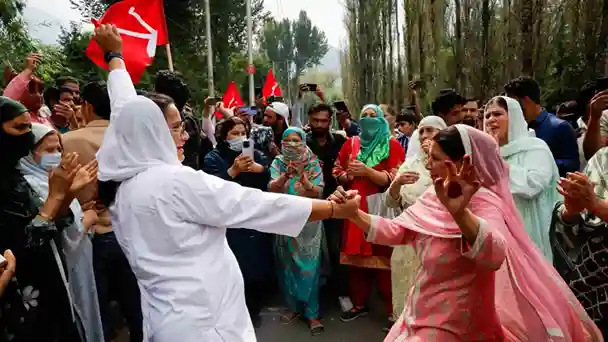
Central Kashmir is gearing up for an intense political contest as heavyweight candidates from the National Conference (NC), Bharatiya Janata Party (BJP), Peoples Democratic Party (PDP), and several independents filed their nomination papers for the Budgam Assembly by-election on Monday.Click Here To Follow Our WhatsApp Channel

The November 11 by-poll has become a litmus test for the region’s traditional loyalties and emerging local aspirations. With the ruling NC aiming to retain its dominance, the BJP seeking to expand its footprint, and the PDP attempting a comeback, Budgam is set to witness one of the most closely fought battles in recent memory. The counting of votes will take place on November 14.

According to the Election Commission’s schedule, the notification for the Budgam by-poll was issued on October 13, with the last date for filing nominations on October 20. Scrutiny will be held on October 22, and candidates can withdraw their names until October 24.


Major Contenders and Party Strategies

The National Conference has fielded Aga Syed Mehmood Al-Mousavi, a veteran Shia leader known for his deep roots in the Budgam constituency and close ties with the influential Aga Syed family. The BJP has nominated Aga Syed Mohsin Mosvi, while the PDP has chosen Aga Syed Muntazir Mehdi, who had contested against Chief Minister Omar Abdullah in the previous election.

A total of 19 candidates have submitted their nomination papers, including several independents such as Nazir Ahmad Khan, Deeba Khan, Parvez Ahmad Mir, Owais Ashraf Shah, and others. Their entry reflects growing public interest and the evolving nature of political participation in Budgam.

The filing of nominations turned into a public show of strength for all major parties. NC candidate Aga Mehmood arrived at the Deputy Commissioner’s Office accompanied by Chief Minister Omar Abdullah and senior NC leaders, symbolising the party’s united front. The BJP’s Syed Mohsin was joined by Leader of Opposition Sunil Sharma, while the PDP’s Aga Muntazir Mehdi appeared with senior leaders Ghulam Nabi Lone (Hanjura) and MLA Waheed-ur-Rehman Para.


Aga Family and NC’s Internal Equations

Aga Mehmood’s nomination has brought the spotlight back on the Aga family’s long-standing influence in Budgam politics. Speaking to reporters, he credited the NC for shaping Member of Parliament Aga Ruhullah’s political journey.

“It’s the NC that made him what he is today. His role in the party is important, and I believe he will definitely come forward in the campaign,” Mehmood said, calling Ruhullah “like my own son.”

Chief Minister Omar Abdullah echoed similar sentiments, saying the party leadership had unanimously approved Mehmood’s candidature after detailed discussions. He declined to comment further on Ruhullah’s possible involvement, stating, “Aga Mehmood Sahab has already said that Aga Ruhullah is like his son. He expects his support for the upcoming by-election. What else can I say?”

However, Ruhullah distanced himself from the remarks, stating on X that his loyalty lies “with conscience and principles.” He urged his family elders “not to belittle my fight or misrepresent my stance.” His statement has added an emotional layer to the by-poll, underscoring internal strains within the NC and the shifting political landscape of the Aga family.


PDP Seeks Revival Amid Political Fatigue

PDP candidate Aga Muntazir Mehdi launched a sharp attack on both the NC and BJP, accusing them of betraying public trust.

“Both NC and BJP have miserably failed to fulfill the aspirations of the people,” Mehdi said. “The NC was given a huge mandate last year, but it has done nothing to address unemployment, power shortages, or developmental stagnation. People are losing faith in traditional politics because promises are made only to be forgotten after elections.”

Mehdi emphasised that the PDP’s campaign will focus on rebuilding trust, improving governance, and addressing Budgam’s local challenges. “Our priority is to resolve Budgam’s core problems. People have waited too long for basic governance. We aim to solve real issues, not play politics, and ensure every resident’s voice is heard,” he said.


A Test for NC’s Strength and Budgam’s Legacy

The by-election will serve as a critical test of the NC’s organisational strength and internal unity after returning to power. Budgam has been a traditional NC bastion since 1996 and carries deep historical and emotional value for the party.

The by-poll was necessitated after Chief Minister Omar Abdullah vacated the Budgam seat to retain Ganderbal, his family’s home constituency. In the 2024 election, Omar had won Budgam by a margin of 18,485 votes against PDP’s Aga Muntazir Mehdi, despite a lower voter turnout of 52 percent.

Political analysts say that while the NC still enjoys strong grassroots support, growing discontent over unfulfilled promises and internal divisions could impact its vote share.


Security and Poll Arrangements

District authorities have set up 173 polling stations and initiated voter awareness drives to encourage participation, particularly among first-time voters. Security agencies have described Budgam as “sensitive but manageable,” with extensive area mapping, deployment planning, and confidence-building patrols already underway.

With a voter base of around 1.26 lakh spread across both urban and rural belts, Budgam holds the key to Central Kashmir’s political pulse. The outcome will not only shape local governance but also indicate the balance of power between traditional heavyweights and emerging local voices.


Conclusion

As Central Kashmir braces for the Budgam by-election, the contest has grown into much more than a fight for one assembly seat. It has become a test of loyalty, legacy, and leadership — a reflection of shifting political identities and the enduring struggle between continuity and change.

The results on November 14 will determine whether Budgam remains a National Conference stronghold or witnesses a reshaping of Central Kashmir’s political landscape.


Born Under a Fading Empire, Sir Syed Ahmad Khan Lit the Torch That Transformed Muslim India Forever

ali ghar muslim university

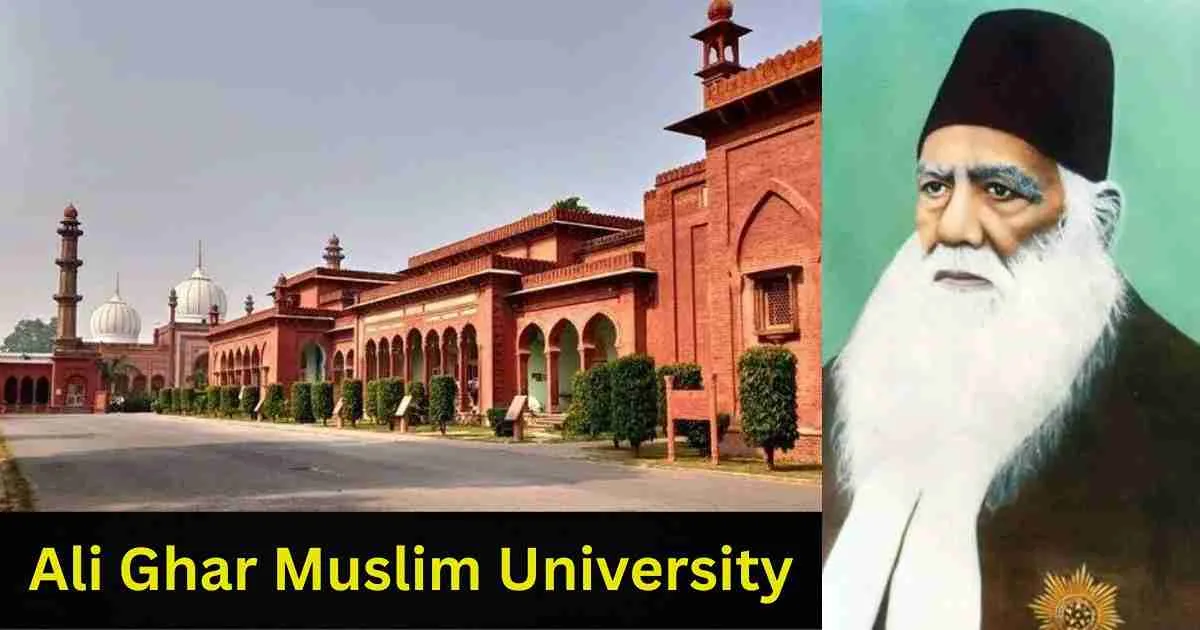
October 17 is the birthday of famous Islamic reformer, philosopher, educator, scholar and the founder of the Aligarh Muslim University, Sir Syed Ahmad Khan

Date of Birth: 17 October 1817

– Place: Delhi, Mughal Empire

– Ruling Monarch: Akbar II, the penultimate Mughal emperor (reigned 1806–1837)

At the time of Sir Syed’s birth, the Mughal Empire was a shadow of its former glory—its authority largely symbolic, with real power held by the British East India Company. Akbar II’s court was more ceremonial than sovereign, and Delhi had become a city caught between fading grandeur and colonial encroachment.Click Here To Follow Our WhatsApp Channel

Sir Syed’s birth under a declining Mughal regime deeply influenced his worldview. He witnessed firsthand the erosion of Muslim political power and the rise of British dominance. This backdrop shaped his reformist zeal—his push for modern education, scientific thinking, and Muslim upliftment through institutions like the Muhammadan Anglo-Oriental College (later Aligarh Muslim University).Sir Syed is considered as one of the most important architects of modern India.

Sir Syed was born in a family that had previously served the Mughal court for nearly two and a half centuries. He was descended from the family of Prophet Muhammad through his daughter Fatimah and Ali. As a child, he was brought up in a Sufi household by his maternal grandfather Khwaja Fariduddin who was among the descendants of the 12th Sufi scholar of Naqshbandi Tariqa, Khwaja Mohammad Yusuf Hamdani.

The Indian Uprising of 1857 was one of the major turning points in Syed Ahmed’s life. He foresaw the imperative need for the Muslims to acquire proficiency in the English language and modern sciences, if the community were to maintain its social and political clout, particularly in Northern India.

He began to prepare the road map for the formation of a Muslim University by starting various schools. He instituted Scientific Society in 1863, launched The Aligarh Institute Gazette in 1866, and founded the Madrasatul Uloom in Aligarh in 1875. The Madrasatul Uloom later became the Muhammadan Anglo-Oriental College in 1877.

He patterned MAO College after Oxford and Cambridge universities that he went on a trip to London in 1869. Later, the same MAO College turned into the Aligarh Muslim University in 1920. The year 2020 marks the 100 years of the prestigious Aligarh Muslim University.

Apart from education and social reforms, Sir Syed contributed a lot to the religious, legal, historical, and political disciplines of learnings. He wrote several books, journals, and articles on different subjects. Today, Sir Syed is not only celebrated by the Indians or Pakistanis but by the peoples from all around the world. He died on March 27, 1898, and lies buried next to the main mosque at AMU.