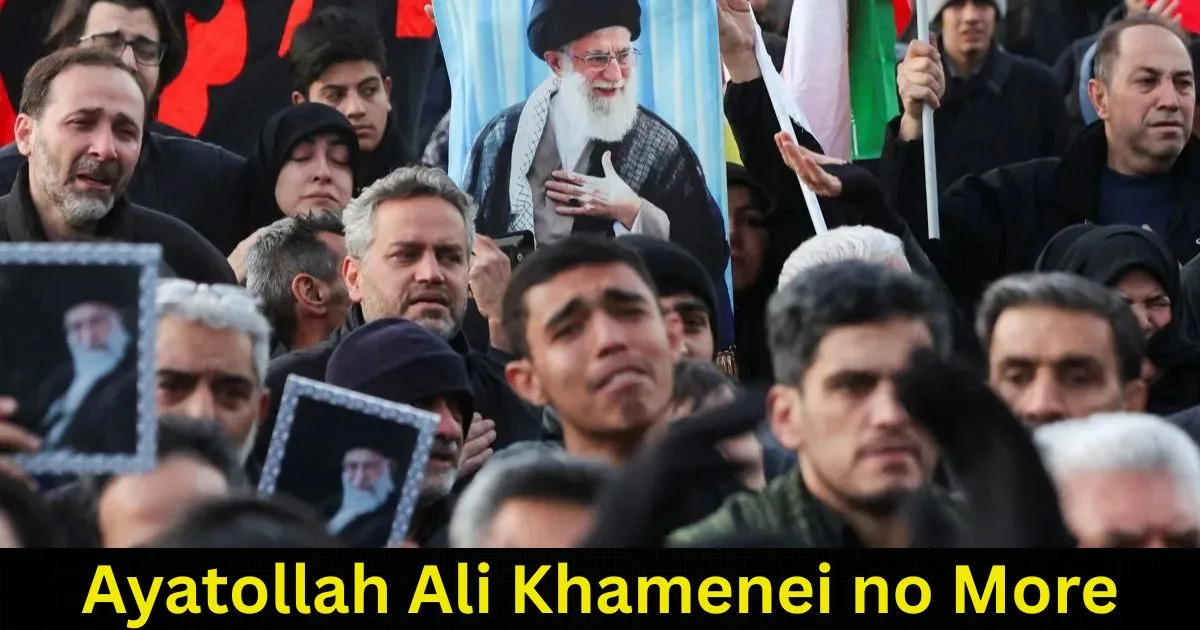
Ayatollah Ali Khamenei, the Supreme Leader of Iran who held ultimate authority over the Islamic Republic for nearly four decades, has been confirmed dead at the age of 86 following massive joint airstrikes carried out by the United States and Israel. The strikes, which began early Saturday local time (February 28, 2026), targeted key military, nuclear, and leadership sites across Iran, marking one of the most significant military escalations in the Middle East in recent history. Click Here To Follow Our WhatsApp Channel
Iranian state media, including the Islamic Republic of Iran Broadcasting (IRIB), Fars News Agency, and the official IRNA outlet, announced Khamenei’s death early Sunday, describing it as “martyrdom.” A state television presenter was visibly emotional, reportedly breaking down in tears while reading an official statement from Iran’s Supreme National Security Council. The announcement confirmed that Khamenei was killed in his office within his high-security compound in Tehran while “performing his assigned duties” during the initial wave of attacks.
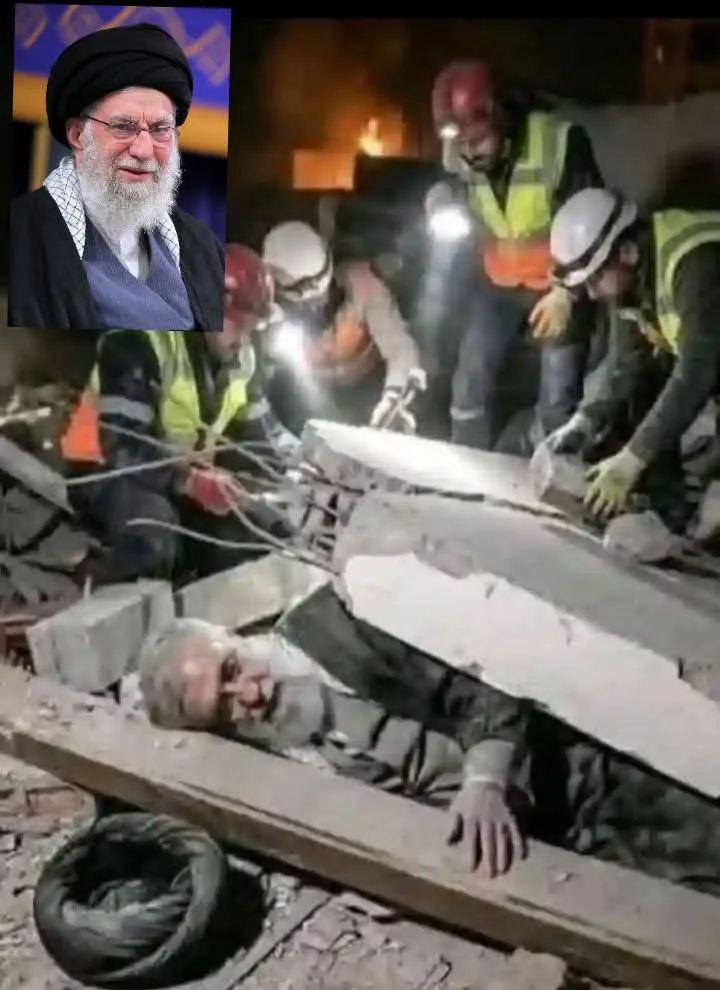
US President Donald Trump first broke the news on his Truth Social platform late Saturday, declaring: “Khamenei, one of the most evil people in history, is dead.” Trump framed the operation as delivering “justice” for victims of Iranian-backed actions and reiterated calls for regime change in Tehran, stating that “heavy and pinpoint bombing” would continue “uninterrupted throughout the week or as long as necessary.”
Israeli officials, including Defense Minister Israel Katz, described the campaign — dubbed “Operation Roaring Lion” by some sources — as having eliminated Khamenei in an opening strike, along with other senior figures. Reports indicate that multiple relatives of Khamenei, including a daughter, grandchild, daughter-in-law, and son-in-law, were also killed in the assault on his compound. Satellite imagery reviewed by international outlets showed extensive destruction at the site.
The strikes targeted not only leadership but also Iran’s nuclear facilities, military command centers, and other strategic assets, according to US and Israeli sources. The operation has drawn widespread international attention, with Russia condemning it as an “unprovoked act of armed aggression” and the UN Secretary-General expressing regret over missed diplomatic opportunities.
Iran’s Retaliation and Regional Fallout
In response, Iran’s military has launched waves of missiles and drones targeting Israel and US military bases across the region, including sites in Bahrain, Kuwait, Qatar, Jordan, the United Arab Emirates, and Iraq. Iranian officials have vowed the “most devastating” retaliation, with fresh strikes reported on Sunday. Air raid sirens sounded in Israel, and explosions were heard in Gulf cities such as Dubai and Doha.
The conflict has rapidly expanded beyond previous Iran-Israel exchanges, drawing in multiple countries and raising fears of a broader regional war.
Mixed Reactions Inside Iran
Public reactions in Iran remain sharply divided. State media and reports from cities like Tehran and Isfahan showed large crowds gathering in mourning processions, with black-clad participants chanting vows of revenge and solidarity. Iran’s parliament speaker stated the country had prepared for “all scenarios,” including leadership transitions.
However, some unverified reports and social media footage suggested celebrations in certain areas, including the toppling of statues associated with the regime, particularly among opponents who have long criticized Khamenei’s hardline rule, suppression of protests, and regional proxy conflicts.
Iran has declared a 40-day national mourning period, referring to Khamenei’s death as martyrdom.
Succession Uncertainty
Khamenei’s death leaves a significant power vacuum. He ruled Iran since succeeding Ayatollah Ruhollah Khomeini in 1989, overseeing the country’s transformation into a regional power while maintaining fierce opposition to the US and Israel. No clear successor has emerged immediately. Previous presumed heir Ebrahim Raisi died in a 2024 helicopter crash. Discussions have surfaced about a potential transition council or the role of figures like Khamenei’s son Mojtaba, though the process remains uncertain amid ongoing military pressure.
Iranian officials have indicated a transitional period is underway, with the president and other bodies managing affairs for now.
This fast-moving situation continues to evolve, with additional strikes reported and global powers monitoring closely. The killing of Khamenei represents a pivotal moment that could reshape Iran’s domestic politics, its nuclear ambitions, and the balance of power in the Middle East. Live coverage from major outlets including BBC, CNN, Reuters, AP, The Guardian, Al Jazeera, and others remains essential for the latest developments.
You Might Also Like:
At 13, This Kashmiri Boy Built 31 Apps and AI Tools
Delhi Court Convicts Kashmiri Separatist Asiya Andrabi in UAPA Case
Why Is Omar Abdullah Silent as a Kashmiri Shawl Seller Is Brutally Attacked in Uttarakhand?