Two terrorists were killed, and a CRPF jawan was martyred in an intense gunfight in the Kathua district, police reported on Wednesday.According to a police spokesperson, the encounter began on Tuesday evening in the village of Saida Sukhal, near Koota Morh of the Hira Nagar Police Station, and continued until Wednesday afternoon.
“One terrorist was neutralized on Tuesday evening, and the second terrorist was killed this afternoon. Tragically, one CRPF jawan also lost his life. The slain terrorists were part of a newly infiltrated group,” the spokesperson said.A civilian injured in the encounter is reported to be in stable condition and out of danger.
The identities of the slain terrorists have not yet been confirmed, but it is believed they infiltrated from across the border. A significant cache of arms and ammunition, including grenades, IEDs, and other war-like stores, was recovered from the terrorists.
Additional Director General of Police (ADGP) Jammu, Anand Jain-IPS, has been on the scene monitoring the operation since Tuesday. He stated that the operation has not been called off yet, as there may be more terrorists hiding in the area.Security forces remain vigilant and are conducting thorough searches to ensure the safety and security of the region.
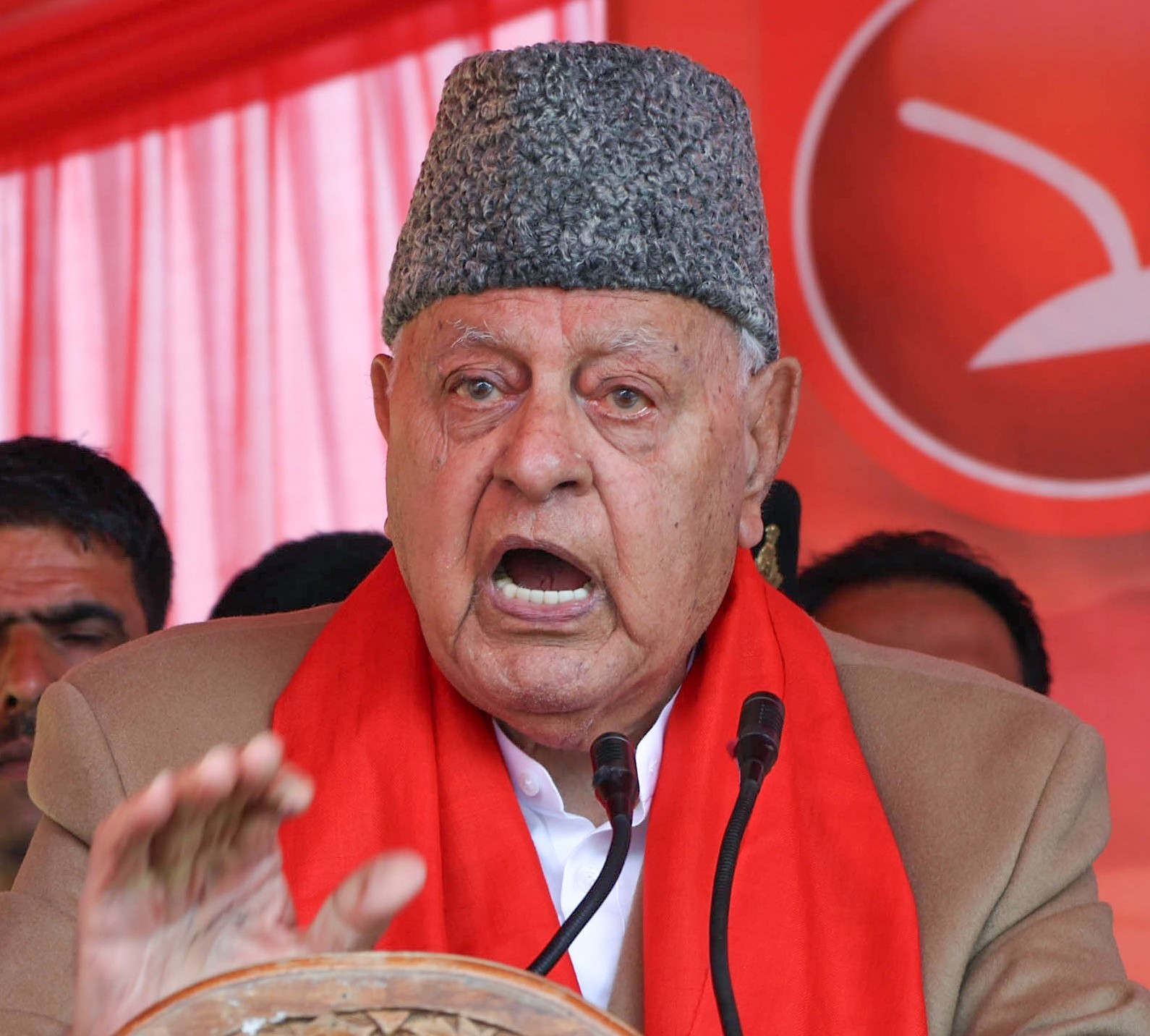
Jammu and Kashmir National Conference chief Farooq Abdullah has pitched for resuming talks with Pakistan, saying the new government in Pakistan “is willing to have a peaceful atmosphere with us” and India should “open the door to them”.In an interview with ANI, Farooq Abdullah, a former Jammu and Kashmir Chief Minister, also pitched for “reviving” the South Asian Association for Regional Cooperation (SAARC).
“We still have problems with our neighbour. These problems will not be solved by military action… Unless we talk to our neighbours, we cannot solve it. The terrorists are coming through borders, and they will continue coming. Whichever government will be there tomorrow, will have to face the same thing… We need to come out of these situations… We have a major Yatra coming (Amarnath Yatra). Any small incident that might take place in that will be blown up in the rest of the country. We Kashmiris are not responsible for these things,” Abdullah said.
He was responding to a query on the terror attacks in Jammu and Kashmir.“The government in Pakistan, I think they are wanting to have a peaceful atmosphere with us. Let’s open the door to them. And let us revive SAARC. SAARC was made for the good of this entire area,” he said.
At least nine people were killed and 42 others were injured in the attack on a bus carrying pilgrims from Shiv Khori shrine that took place on June 9, in Reasi district. The bus plunged into a gorge following the attack.
Five jawans and a sub-divisional special police officer (SDPO) were injured in the encounter that began after terrorists opened fire at a joint checkpost of police and Rashtriya Rifles at an army base in the Chattargala area on the Bhadarwah-Pathankot road in Doda on June 11 night.Abdullah said military action cannot solve problems and referred to the conflict between Russia and Ukraine and the war between Israel and Hamas. Answering a query on assembly elections in Jammu and Kashmir, Abdullah said polls will take place. “The election took place for the Parliament also when the incidents took place. Elections cannot be prevented by this.Former Pakistan Prime Minister Nawaz Sharif greeted Prime Minister Narendra Modi on his beginning third term in office after the victory of BJP-led National Democratic Alliance government in the Lok Sabha polls.
“My warm felicitations to Modi Ji (@narendramodi) on assuming office for the third time. Your party’s success in recent elections reflects the confidence of the people in your leadership. Let us replace hate with hope and seize the opportunity to shape the destiny of the two billion people of South Asia,” Sharif had posted on X.
Responding to the message, PM Modi said that the people of India have always stood for peace, security and progressive ideas. “Appreciate your message @NawazSharifMNS. The people of India have always stood for peace, security and progressive ideas. Advancing the well-being and security of our people shall always remain our priority,” PM Modi had said.
India has made it clear to Pakistan that talks and terror cannot go together. India has stated that it wants normal relations with all neighbouring countries including Pakistan and “for this environment free of terror and hostility is imperative”.Jaishankar, who took charge of his office for his second term as External Affairs Minister on Tuesday, had referred to Pakistan and said that India would want to find a solution “to the issue of years-old cross-border terrorism”.Shehbaz Sharif, brother of Nawaz Sharif, took oath as Prime Minister in March following the general elections in Pakistan.
Late last night, terrorists launched an attack on an army base in Doda, Jammu and Kashmir, marking the third such incident in as many days. A gunbattle is currently underway between the terrorists and security forces, according to police reports.
“An army and police joint checkpoint has engaged terrorists in the Chattargala area of Doda. The firefight is ongoing,” the police stated.
Initial reports indicate that two soldiers were injured in the shootout. This attack follows an incident earlier in the day where terrorists opened fire in Kathua district, resulting in one death and two injuries. Three days ago, terrorists attacked a bus carrying pilgrims, causing it to crash into a gorge and killing nine passengers.
Anand Jain, Additional Director General of Police for the Jammu zone, who is overseeing the anti-terrorist operation in Kathua, reported that the Chattargala area army base came under attack late last night. The terrorists opened fire on a joint team of police and Rashtriya Rifles. The encounter has since moved to the higher reaches of the area.
“The firing in the area continues, and further details are awaited,” Jain informed reporters.
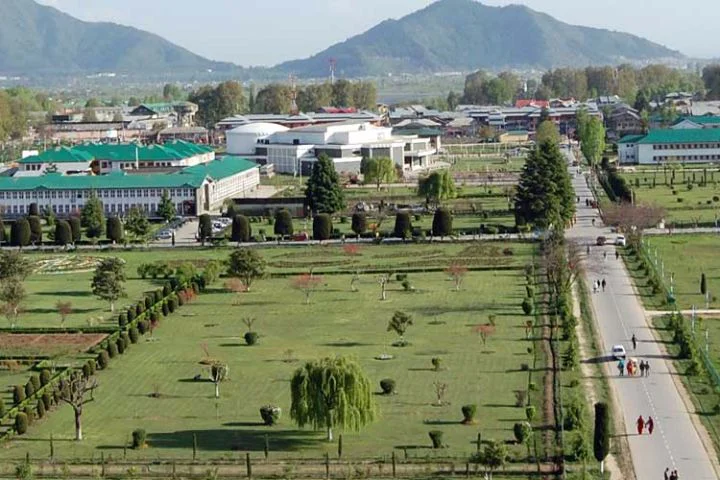
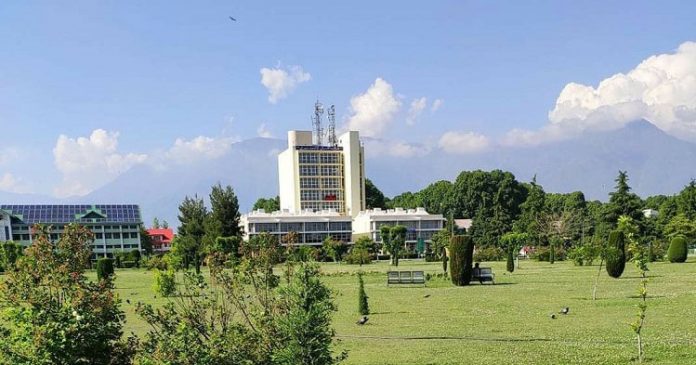
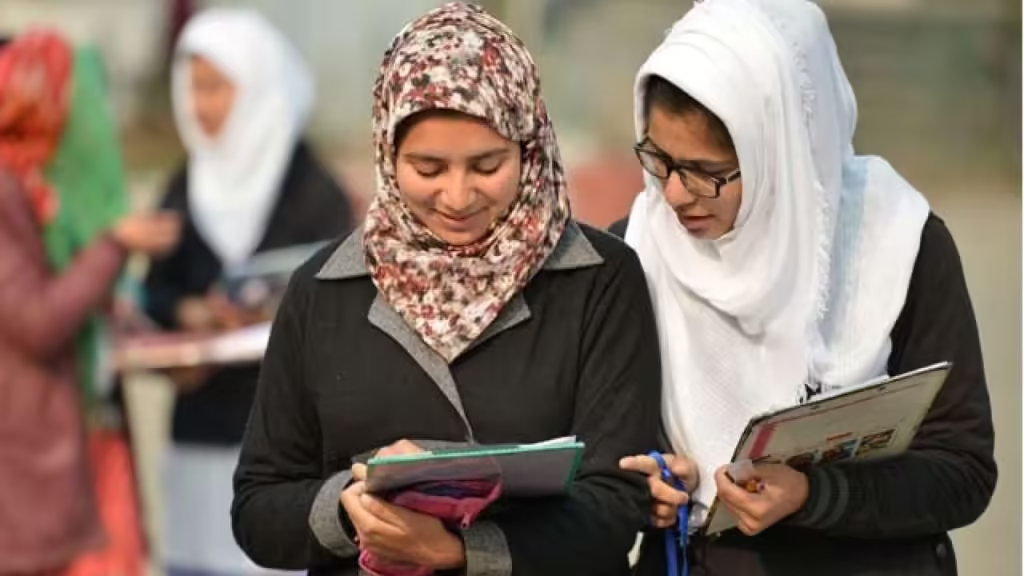
For the past 34 years, the people of Kashmir have faced immense challenges due to ongoing militancy. This prolonged conflict has deeply affected all aspects of life in the region, with education being one of the most significant areas impacted. Despite these adversities, the resilience and determination of Kashmiris to pursue education remain strong. Let’s delve into the struggles and triumphs of education in Kashmir amidst the backdrop of militancy.
The Impact of Militancy on Education
The ongoing conflict has had a profound effect on the educational landscape in Kashmir. Schools and colleges have often been caught in the crossfire, leading to frequent closures. This has disrupted the academic calendar and hampered students’ ability to learn consistently. Many educational institutions have been damaged or destroyed, making it difficult to provide a safe learning environment.
Psychological Effects on Students
Living in a conflict zone has severe psychological impacts on children and young adults. Exposure to violence, loss, and uncertainty can lead to stress, anxiety, and trauma, which in turn affect their ability to concentrate and learn. The constant state of unrest makes it hard for students to focus on their studies, and many suffer from mental health issues that are often unaddressed due to a lack of resources.
The Role of Educators
Teachers in Kashmir face unique challenges. They have to navigate through disrupted schedules, limited resources, and the psychological trauma of their students. Despite these hurdles, many educators remain dedicated to their mission of teaching. They often go beyond their professional duties, providing emotional support and guidance to their students. Their resilience and commitment are crucial in maintaining a semblance of normalcy in the educational process.
Community and Government Initiatives
In response to the challenges, various community and government initiatives have been implemented to support education in Kashmir. Local NGOs and international organizations have stepped in to rebuild schools, provide learning materials, and offer psychological support. The government has also taken steps to improve the situation by introducing schemes to ensure that education continues despite the disruptions. Online education platforms have been promoted, especially during times when physical attendance in schools is not possible.
The Rise of Online Education
The advent of online education has provided a significant boost to learning in Kashmir. With internet access becoming more widespread, students can now access educational resources and continue their studies from home. Online classes, digital textbooks, and e-learning platforms have become invaluable tools for ensuring that education does not come to a standstill, even during periods of heightened conflict.
Success Stories and Hope
Despite the adversities, there have been numerous success stories from the region. Many Kashmiri students have excelled academically, gaining admission to prestigious institutions both within India and abroad. These success stories serve as beacons of hope and inspiration for others, demonstrating that determination and hard work can overcome even the most daunting challenges.
The Importance of Education for Peace
Education plays a vital role in fostering peace and rebuilding societies affected by conflict. In Kashmir, education can be a powerful tool for promoting understanding, tolerance, and reconciliation. By educating the youth, we can equip them with the skills and knowledge needed to build a more peaceful and prosperous future. Investing in education is investing in peace, as it helps to break the cycle of violence and create opportunities for dialogue and development.
Conclusion
The last 34 years of militancy have undeniably taken a toll on education in Kashmir, but the spirit of learning has not been extinguished. The resilience of students, educators, and communities in the face of adversity is truly inspiring. By continuing to support educational initiatives and providing the necessary resources, we can help ensure that the children of Kashmir receive the education they deserve. Education is not just a means to personal growth; it is a pathway to peace and a brighter future for the entire region. Let us stand together to prioritize and protect the right to education for all, especially in conflict-affected areas like Kashmir.
Education is often seen as the key to a brighter future. It plays a crucial role in shaping individuals, communities, and entire nations. While it may seem like a simple process of going to school, learning involves much more than just reading books and passing exams. It’s about personal growth, understanding the world, and finding our place in it. Let’s explore why education is so important in human life.
Building Knowledge and Skills
At its core, education equips us with the knowledge and skills needed to navigate the world. From basic literacy and numeracy to advanced sciences and arts, learning opens our minds to a wealth of information. This foundation is essential for everyday tasks, such as reading a newspaper, calculating expenses, or understanding health information. Without education, even these simple tasks would be challenging.
Promoting Personal Growth
Education is not just about acquiring facts; it’s also about personal development. It helps us develop critical thinking, problem-solving skills, and the ability to communicate effectively. These skills are vital in making informed decisions and solving the problems we encounter in life. Moreover, education encourages curiosity and a love for learning, which can lead to a lifetime of exploration and discovery.
Enhancing Career Opportunities
One of the most tangible benefits of education is improved career prospects. Higher levels of education often lead to better job opportunities and higher salaries. In today’s competitive job market, having a good education can set you apart from others. It provides the credentials and knowledge needed to pursue a wide range of careers and adapt to the ever-changing job landscape.
Fostering Social Development
Education also plays a significant role in social development. It teaches us about different cultures, traditions, and perspectives, promoting empathy and understanding. Schools are often the first place where we learn to interact with others outside our family, making it a critical environment for developing social skills. Through education, we learn the importance of cooperation, respect, and working together towards common goals.
Empowering Individuals and Communities
An educated individual is often more empowered to make choices that positively impact their life and the lives of those around them. Education can break the cycle of poverty by providing people with the tools they need to improve their circumstances. When people are educated, they are more likely to participate in civic activities, understand their rights, and contribute to the community’s development.
Supporting Health and Well-being
Education also has a direct impact on health and well-being. Educated individuals are more likely to make informed health choices, understand medical instructions, and seek timely medical help. Education, especially for women, has been shown to reduce infant mortality rates and improve the overall health of families. Knowledge about hygiene, nutrition, and disease prevention can lead to healthier lifestyles and longer lives.
Driving Economic Growth
On a larger scale, education is a cornerstone of economic development. Countries with higher education levels tend to have stronger economies. Educated citizens are more productive, innovative, and capable of driving technological advancements. This, in turn, creates jobs, boosts economic growth, and improves the quality of life for everyone in the country.
Encouraging Equality
Education promotes equality by providing everyone with the opportunity to succeed, regardless of their background. It is a powerful tool for leveling the playing field and giving disadvantaged individuals the chance to improve their lives. Education helps to reduce social and economic inequalities by opening doors to better opportunities and fostering a more inclusive society.
Conclusion
In conclusion, education is essential for the growth and development of individuals and societies. It provides the knowledge and skills needed to face life’s challenges, promotes personal and social development, and opens doors to better career opportunities. It empowers people to make informed decisions, supports health and well-being, drives economic growth, and encourages equality. Investing in education is investing in a brighter future for all. So, let’s value and prioritize education, for it truly is the foundation of a better world.
In shadows deep, where dreams may hide, Education’s light, a steady guide. It opens doors, it clears the way, And turns the night to brightest day.
With every word, a world is born, Each lesson learned, a new dawn’s morn. The mind, once bound by ignorance’ chain, Finds freedom, and begins to reign.
It shapes the heart, it molds the soul, It makes us strong, it makes us whole. Through books and wisdom, we shall grow, And learn the things we did not know.
A path to hope, a bridge to peace, In education, all dreams increase. It teaches us to seek, to strive, To understand, to seek, to thrive.
Not just in facts, but in the grace, Of empathy and the human race. Through knowledge, we begin to see, A world that’s filled with harmony.
So cherish learning, seek the truth, No matter age, no matter youth. For in its hands, the world is bright, And education grants us sight.
More About Education
Education stands as a cornerstone of human progress, shaping lives and communities alike. It is far more than a formal process confined to classrooms; education fuels personal growth, societal harmony, and collective advancement. Its role in human life is both profound and multifaceted, touching every corner of existence and creating endless possibilities.
Through education, individuals gain the knowledge and skills necessary to navigate an increasingly complex world. From basic literacy to advanced disciplines, education provides a foundation for critical thinking, problem-solving, and innovation. It allows people to understand their surroundings, question the unknown, and explore opportunities that would otherwise remain hidden.
Beyond the acquisition of knowledge, education is a tool for self-discovery and empowerment. It helps individuals develop confidence, discipline, and moral integrity. Education inspires curiosity and encourages a lifelong pursuit of learning, offering tools to adapt to challenges and seize new chances as they arise.
On a societal level, education is a powerful equaliser. It bridges gaps across socio-economic divides and brings opportunities to those who might otherwise face barriers. When communities are educated, they flourish. People become more engaged in civic duties, fostering cooperation, reducing inequality, and building a fairer society. Education promotes understanding and empathy, teaching individuals to value diversity and embrace the richness of different perspectives.
Economically, education serves as a driving force for growth and stability. Skilled and knowledgeable workforces stimulate innovation and productivity, lifting industries and strengthening national economies. The ripple effects of education extend to better job prospects, improved health outcomes, and increased social cohesion, ensuring a brighter future for all.
Education also plays a critical role in addressing global challenges. From climate change to public health, informed citizens are better equipped to devise and implement sustainable solutions. It instils the values of responsibility and awareness, which are essential for preserving our shared world.
For individuals, education is not just a means to an end but a journey of transformation. It provides the tools to dream and achieve, to question and learn, and to understand the essence of what it means to be human. As society invests in education, it lays the groundwork for a more just, compassionate, and prosperous world.
The importance of education cannot be overstated. It is the key to unlocking potential, breaking down barriers, and building a brighter future for all. Every step taken to improve access to education is a step toward a more enlightened and empowered global community. Let us recognise its value and work collectively to ensure that its light reaches every corner of the world.
The bodies of four victims, including the two-year-old, killed in the terror attack in Jammu and Kashmir’s Reasi were brought to Jaipur by train on Tuesday.
The bodies of the deceased, namely Pooja Saini, a resident of Murlipura in Jaipur, her two-year-old son Livansh (Kuttu), Rajendra Saini and Mamta Saini, both residents of Chaumun in Jaipur, and one of the injured Pawan Saini, were brought to Jaipur.
Pawan Saini is Pooja Saini’s husband and Rajendra and Mamta Siani are Pooja’s uncle and aunt.
Eight members of a family hailing from Uttar Pradesh’s Kanpur were also injured in the attack. All eight injured are undergoing treatment at Narayan Hospital in Katra.
Speaking to ANI, the brother of Dinesh Gupta, one of the injured persons, said, “SDM contacted us and informed us about my brother being admitted to the ICU. He went on June 4 and was about to return on June 10. I talked to my brother. He is fine. A total of our 8 family members are admitted to the Narayana Hospital in Katra district.”
Meanwhile, the search operation is still underway in the forest area in and around the incident site. Vehicle checking is also underway.
According to officials, the J-K Police Special Operation Group, Indian Army and CRPF are present at the site.
At least nine people were killed and 42 others were injured in the attack on a bus carrying pilgrims from Shiv Khori shrine that took place on Sunday evening, June 9, in Reasi district. The bus plunged into a gorge following the attack.
The Jammu and Kashmir police have said that the terrorist group Lashkar-e-Taiba is believed to be behind the attack. JK police have formed 11 teams to investigate the attack.
A team from the National Investigation Agency (NIA) assessed the situation in Reasi on Monday and the NIA’s forensic team is working on collecting evidence. (ANI)
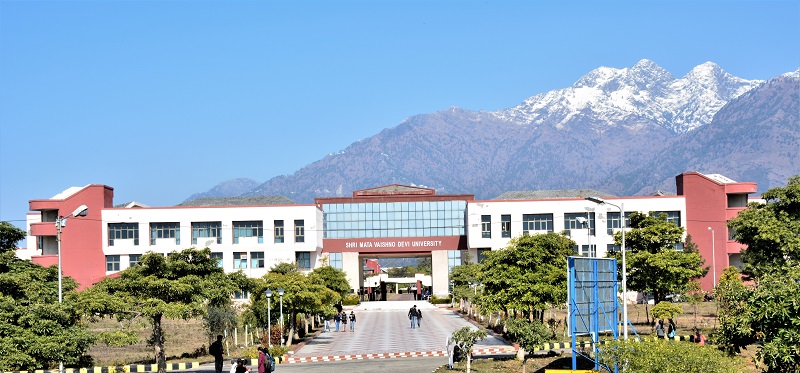
Universities and higher education institutions in India will now have the flexibility to admit students twice a year, similar to the admission process followed by universities abroad, according to University Grants Commission (UGC) Chairman Jagadeesh Kumar. This new policy will commence from the 2024-25 academic session, with two admission cycles in July-August and January-February.
“If Indian universities can offer admission twice a year, it will benefit many students,” said UGC Chairman Kumar on Tuesday. “For instance, those who missed admission in the July-August session due to delayed board results, health issues, or personal reasons can now apply in January-February. This biannual admission process will help maintain student motivation as they won’t have to wait a full year if they miss a cycle.”
Currently, UGC regulations allow higher education institutions (HEIs) to admit students only once per academic year, beginning in July-August. An academic session spans twelve months, from July-August to May-June.
The UGC had previously decided during its 571st commission meeting on July 25, 2023, to permit biannual admissions for Open and Distance Learning (ODL) and online modes starting January and July each year. In July 2022, 19,73,056 students enrolled, with an additional 4,28,854 joining in January 2023 through ODL and online programs.
Given the positive response and interest in ODL and online biannual admissions, the UGC, in its meeting on May 15 this year, made a policy decision to extend this option to regular mode programs. HEIs can now admit students twice a year, either in January-February or July-August, from the upcoming academic year.
Institutions that have the required infrastructure and teaching faculty can take advantage of this opportunity to increase student intake and offer new programs in emerging areas. Offering biannual admissions is not mandatory; it is a flexible option provided by the UGC for institutions seeking to expand their enrollment and program offerings. To implement this, HEIs must amend their institutional regulations accordingly.
“With biannual admissions in place, industries can also conduct campus recruitment twice a year, improving employment opportunities for graduates,” added Kumar. Biannual admissions will also help HEIs plan their resources, such as faculty, labs, classrooms, and support services, more efficiently, leading to better functional flow within the university.
Kumar noted that universities worldwide already follow a biannual admission system. If Indian institutions adopt this cycle, it could enhance their international collaborations and student exchanges, improving global competitiveness and aligning with global educational standards.
Biannual admissions can significantly increase the Gross Enrolment Ratio and help India become a ‘Global Study Destination,’ as envisioned in the National Education Policy (NEP) 2020. Kumar emphasized that HEIs adopting biannual admissions need to address administrative intricacies, plan for the efficient use of resources, and provide seamless support systems for students admitted at different times of the year.
“HEIs can maximize the benefits of biannual admissions only if they adequately prepare faculty members, staff, and students for the transition,” Kumar concluded.
Despite a forecast of a heatwave in the plains of Jammu and hot, dry conditions across the rest of Jammu and Kashmir, most regions experienced below-normal nighttime temperatures on Tuesday.
A meteorological department official stated that until June 17, the weather is expected to remain generally dry, although there is a slight chance of light rain or thunderstorms in isolated areas.
The official highlighted that a heatwave is anticipated in the plains of Jammu, while the rest of J&K will likely experience hot and dry weather.
From June 18 to 21, the weather is forecasted to be generally cloudy with the possibility of light rain or thunderstorms in isolated areas during the afternoon.
Regarding specific locations, the official provided the following temperature details:
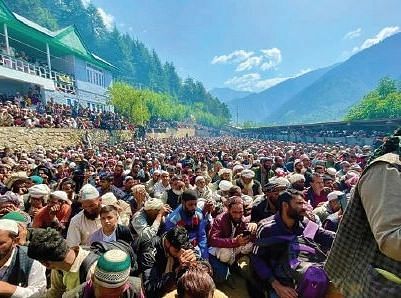
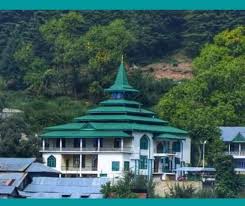
The Baba Nagri shrine, also known as Darbar Laar Sharief Wangat, boasts one of the largest free community kitchens, or ‘langar’, serving around 1,000 people daily. During Urs days, this number surges, with food being prepared for over 70,000 to 80,000 devotees.
Operating 24 hours a day, the langar is staffed by both management and numerous volunteers who tirelessly serve the many visitors. According to the shrine’s administration, this round-the-clock service ensures that devotees have access to free meals throughout the year.
Mian Mehar Ali, overseeing the arrangements, shared with Greater Kashmir that on Urs days, a special langar is organized, where food for thousands is prepared. Volunteers noted that special sweet rice, made with rice, ghee, and dry fruits, is served on these occasions.
Managing such a large-scale operation daily is no small feat, but the dedicated volunteers and about 100 permanent workers ensure everything runs smoothly, from cooking to timely delivery of food.
Baba Nagri shrine is one of the most revered sites for the Gujjar, Bakerwal, and Pahari communities in Jammu and Kashmir and beyond. Every year, tens of thousands of devotees gather at the shrine on June 7 and 8 to observe the annual Urs of Sufi saint Mian Nizamuddin Kiyanwi (RA), also known as Hazrat Baba Ji Sahib Larvi, who was a prominent 18th-century Sufi saint and social reformer.
Nestled at the base of a mountain in the picturesque village of Wangat, the shrine is surrounded by lush forests and becomes a focal point of religious activities year-round. On Urs days, the site transforms into a bustling hub for devotees.
The Mian family, the shrine’s custodians, are responsible for accommodating the thousands of visitors each year. The current Sajadh Nasheen, Mian Altaf Ahmad, inherited the position from his late father, Mian Bashir Ahmad Larvi, who succeeded Mian Nizamuddin Kiyanwi in overseeing the shrine.
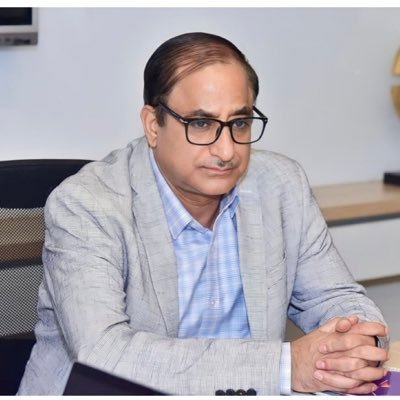
In a decisive move to enhance efficiency and uphold integrity, Ajaz Ahmad Bhat (IAS), Director of Sericulture J&K, suspended two employees and attached fifteen others on Monday. The suspended employees, a Sericulture Assistant and a Seed Examiner, were found negligent in their duties.
This decision followed a comprehensive review of their performance and adherence to departmental protocols. Director Bhat emphasized the importance of maintaining high standards in technical operations and development works, especially during the crucial silkworm rearing season. He noted that any lapse in duty could significantly impact the quality and yield of silk produced, highlighting the need for all officers and field functionaries to perform their roles with utmost diligence and precision.
“We cannot afford any negligence in our operations, especially during the silkworm rearing season. Every step of the process, from technical operations to fieldwork, must be executed meticulously. Our farmers and silkworm rearers depend on our support and guidance to achieve successful rearing outcomes,” Bhat stated.
He called for enhanced coordination and communication between the department’s officers, field functionaries, and silkworm rearers, stressing that close collaboration and proactive assistance are essential for addressing issues promptly and ensuring smooth operations throughout the rearing period.
The suspension of these employees underscores the department’s commitment to accountability and excellence. The Sericulture Development Department J&K remains dedicated to supporting silkworm rearers and advancing the sericulture industry in Jammu & Kashmir through unwavering diligence and professional conduct.