BJP’s Celebration of Jammu and Kashmir’s Downgrading: A Reflection on Broken Commitments

It’s disheartening to witness the celebration of the downgrading of historical Dogra State. The BJP’s refusal to honor its commitment, even after five years since the arbitrary action on August 5, 2019, has left many feeling betrayed. JKPCC Chief Spokesperson Ravinder Sharma rightly points out that celebrating the loss of status, dignity, identity, and rights of the people of Jammu and Kashmir, particularly the destruction of Dogra identity, is indeed surprising.

Rather than celebrating this unfortunate event, it would be more meaningful for the BJP to address the concerns of the people. Perhaps they should answer what tangible achievements have been made during these five years, rather than exacerbating the wounds of the affected communities, especially the Dogras¹.

As citizens, we hope for a more empathetic and responsible approach from our leaders, one that prioritizes the well-being and rights of the people over political agendas.

Six Employees Terminated over Narco-Terror Links

Jammu and Kashmir government has terminated six employees from their services over narco-terror links, officials said on Saturday.

An official told that five policemen and a teacher were terminated for their involvement in terror financing through drug sale.He said that the administration led by LG Governor Manoj Sinha has invoked Article 311 (2) (c) of the Constitution of India to sack these employees.

He said their probe established that they were part of narco-terror network run by Pakistan’s ISI and terror outfits operating from its soil—(KNO)

Dead Body Found at Lower Munda area of Qazigund in South Kashmir

Truck Accident

A male body was found on Saturday morning at Lower Munda area of Qazigund in South Kashmir’s Kulgam district, an official said.

An official told the that a body, aged about 25-30 was found lying near old toll post in Lower Munda along the national highway route.

He said police rushed to the spot and sent the body to the hospital for legal formalities, the official said.

The deceased has been identified as Yasir Hamid Beig son of Abdul Hamid Beig, a resident of Zinhhal Banihal—(KNO)

Three Persons Of Seer Hamdan Anantnag Died in Road Accident At Karnah Kupwara

Three persons died after their vehicle met with an accident in the border town Karnah in north Kashmir’s Kupwara district.

An official said that the vehicle they were travelling in skidded off the road and fell into a deep gorge near Sikh Bridge in the Teethwal area.“Though locals and Police launched a quick rescue operation and evacuated the trio to Sub District Hospital (SDH) Tanghdar where doctors declared them dead on arrival,” he said.

The deceased have been identified as Mushtaq Ahmad, 50, son of Ghulam Nabi Khan, Nazir Ahmad Magray, 55, son of Muhammad Sultan Magray, and Feroz Ahmad Pala, 45, son of Abdul Salam Pala, all residents of Seer Hamdan Anantnag.

Empowering Women on the Amarnath Yatra: HUDD’s Pink Toilets Ensure Safety, Hygiene, and Dignity for Pilgrims

The Amarnath Yatra is an annual pilgrimage that holds deep spiritual value for countless devotees who brave the demanding trek to the revered Amarnath Cave in Jammu and Kashmir. Navigating the tough terrain and high altitudes presents several challenges, particularly for women. However, a new initiative by the Housing and Urban Development Department (HUDD) is making a notable difference by introducing Pink Toilets along the pilgrimage route.

Meeting the Hygiene Needs of Women Pilgrims

This innovative initiative, led by Commissioner Secretary Mandeep Kaur, IAS, aims to address the specific hygiene needs of women pilgrims. The Pink Toilets, strategically located at key points in Srinagar and Jammu, are a game-changer for women on the Yatra:

  • Sanitary Pad Vending Machines: Each Pink Toilet is fitted with vending machines that provide sanitary pads, ensuring women can manage their hygiene comfortably during the journey.
  • Incinerators for Sanitary Waste: To maintain cleanliness and protect the environment, these facilities include incinerators for the proper disposal of used sanitary products, promoting a cleaner pilgrimage route.

Empowering Women in Their Spiritual Pursuit

The introduction of these facilities does more than just provide convenience:

  • Safety and Comfort: Women pilgrims have shared their appreciation for these facilities. Pooja Verma from Mumbai mentioned feeling safer and more comfortable on her journey, thanks to these amenities. Similarly, Neha Singh from Jaipur highlighted the convenience of having sanitary pads readily available.
  • Dignity and Confidence: Beyond maintaining cleanliness, these Pink Toilets represent empowerment. Ravi Kumar from Haryana pointed out the broader impact on pilgrims’ dignity and confidence. Commissioner Secretary Mandeep Kaur noted, “This initiative is about more than just comfort; it’s about ensuring that every pilgrim can undertake their spiritual journey with confidence and dignity.”

Future Prospects

HUDD plans to further expand the availability of Pink Toilets, ensuring that more women pilgrims can benefit from these essential facilities. As the Amarnath Yatra continues, these Pink Toilets stand as a symbol of progress, inclusivity, and respect for all.

Kashmir Police Attaches Commercial Complex Worth 2 Crores in Bijbehara

In a significant crackdown on drug traffickers, the Bijbehara Police Station has seized a commercial complex valued at over ₹2 Crores. The property belonged to the late Abdul Rashid Dar of Tulkhan Bijbehara and was identified as having been acquired through illicit drug trade, specifically the trafficking of narcotic drugs and psychotropic substances.

The attached properties include a commercial building situated at a prime location on NHW 44 in Semthan Bijbehara. Covering an area of 5 Kanal 12 Marla under Survey No. 291 Min, this complex was allegedly involved in illegal activities related to drug trafficking.

Abdul Rashid Dar, who was implicated in Case FIR No. 210/2020 under Section 8/15-29 of the Narcotic Drugs and Psychotropic Substances (NDPS) Act, had an underground room within his compound. This room was discovered in September 2020 and contained a substantial quantity of contraband substances, likely poppy straw (Fukki), packed in gunny bags and plastic barrels.

The investigation revealed that the deceased had obtained this contraband substance from illegal sources and stored it for further illicit sale to local youth, thereby promoting drug addiction and illegal trade. A total of 126 gunny bags weighing 2600 kgs and 60 plastic barrels (1395 kgs) of the contraband substance were recovered from the spot.

Taking decisive action against drug peddling, the Anantnag Police attached the commercial complex, which was allegedly constructed using illegally acquired funds. This move sends a strong message to those involved in drug trafficking that such unlawful activities will not be tolerated.

Professor Dr. Seema Naz Takes Helm as Nodal Principal for Kashmir Division Colleges

According to an order issued by the Principal Secretary of the Higher Education Department (HED), Alok Kumar, it states, “In the interest of administration, it is hereby ordered that the Principal of Government College of Education, Srinagar, shall also serve as the Nodal Principal of Colleges in the Kashmir Division, alongside her existing duties. This decision relieves Professor Dr. Sheikh Ajaz Bashir, Director of Colleges, J&K, of his role as Nodal Principal for Kashmir Division, effective immediately.”Click Here To Follow Our WhatsApp Channel

During the event, faculty members of the Government College of Education, led by senior faculty member Professor Dr. Nazir Ahmad Bhat, extended their congratulations to Professor Dr. Seema Naz on her new appointment as Nodal Principal for the Kashmir Division Colleges.

On behalf of the faculty, Dr. Bhat assured full support for advancing the higher education department and improving the student community’s welfare.

In her address to the staff, Professor Dr. Seema Naz emphasised the importance of teamwork and urged everyone to maintain transparency and integrity in all their efforts.

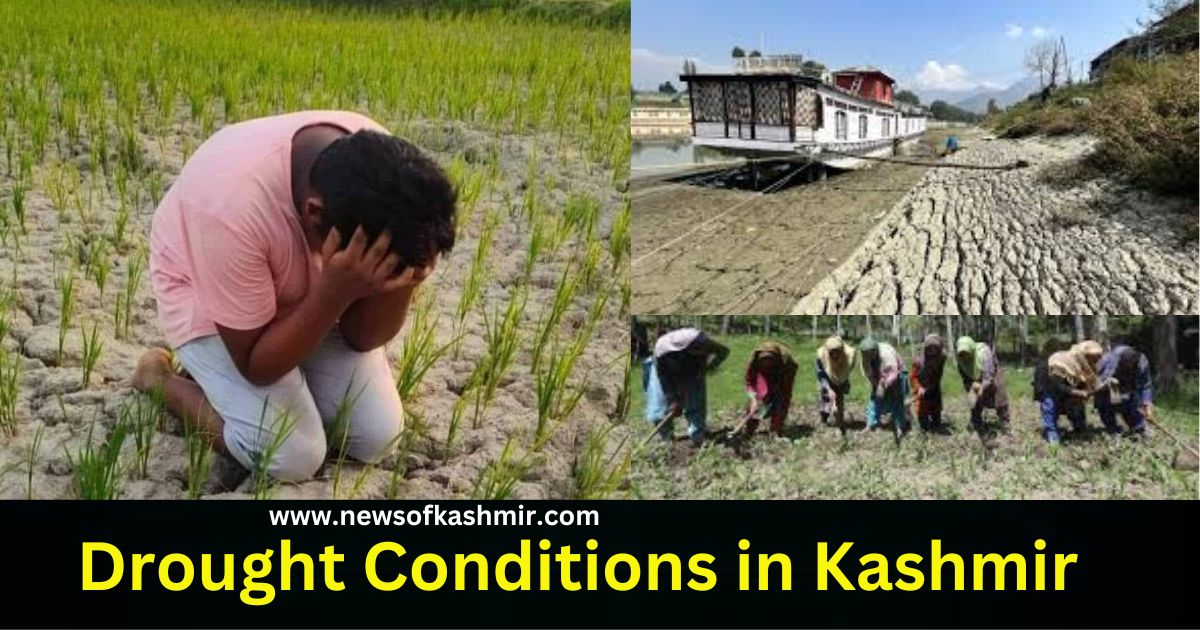
Managing Orchard Health During Drought Conditions in Kashmir

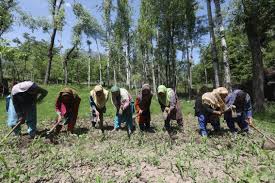
Kashmir, known for its fertile orchards and diverse fruit production, is facing an increasingly severe challenge this year due to prolonged drought conditions. The scarcity of water has placed a significant strain on orchard health, particularly in low-altitude areas. This article aims to provide detailed guidance on managing orchard health during these trying times, focusing on irrigation practices, nutrient management, and disease prevention.

Irrigation: The Lifeline for Orchards

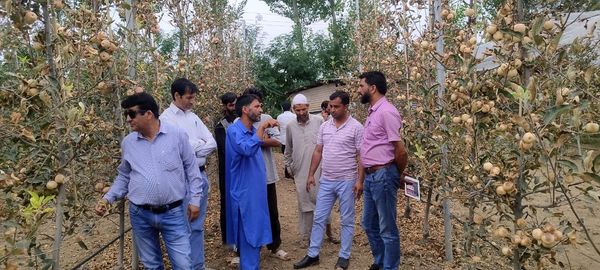
From the onset of the dry season, it has been imperative to maintain regular irrigation in orchards. Water is a critical factor in sustaining tree health, especially during drought conditions. Orchards situated in low-altitude areas are particularly vulnerable as they tend to dry out more quickly. Regular irrigation not only ensures the survival of the trees but also prevents the development of various physiological disorders.

In orchards where irrigation has been consistently applied, we have observed a marked absence of lenticel blotch, cracks, and breakdown in the fruit. These issues are commonly seen in trees that suffer from water stress. Therefore, it is essential to continue with irrigation practices throughout the dry season to prevent such conditions from arising.

Nutrient Management: Addressing Deficiencies

The extended dry period has left many orchards, especially those in low-altitude areas, deficient in essential nutrients. Nutrient deficiencies weaken trees, making them more susceptible to diseases such as Alternaria leaf blotch and necrotic leaf blotch. These fungal diseases can cause significant damage to the foliage, reducing the overall health and productivity of the orchard.

To mitigate these risks, it is crucial to monitor nutrient levels in the soil and apply appropriate fertilisers as needed. A balanced supply of nutrients will help strengthen the trees and improve their resistance to disease. Additionally, in orchards with a history of Alternaria or where scab is prevalent, fungicidal spraying may be necessary. This is particularly important if there is a chance of rainfall, as wet conditions can exacerbate the spread of fungal diseases.

Disease Prevention: Proactive Measures

One of the major concerns during drought conditions is the increased vulnerability of orchards to fungal infections. Core rot in apples, for instance, is primarily a fungal issue that begins around the flowering stage. The fungus slowly develops within the fruit, leading to rot that can cause premature fruit drop, often before harvest.

Preventative measures should be taken early in the season to manage this issue effectively. Spraying fungicides during the flowering stage can help prevent the initial infection. However, it is important to note that once core rot has advanced, spraying is generally ineffective. Apples affected by core rot often ripen earlier, develop better colour, and show signs of internal fungal growth. Regular monitoring and early intervention are key to managing this disease.

Conclusion

Managing orchard health during drought conditions in Kashmir requires a proactive and well-planned approach. Regular irrigation is essential to prevent water stress and associated disorders, particularly in low-altitude areas. Addressing nutrient deficiencies is equally important to strengthen the trees and reduce their susceptibility to diseases. Finally, early and targeted fungicidal treatments can help prevent the spread of fungal infections, ensuring a healthy and productive orchard.

Examples from Western Countries Facing Similar Challenges

California, USA: Prolonged Drought and Orchard Management

California, known for its vast agricultural output, has faced significant drought conditions over the past decade. The state’s almond and citrus orchards, in particular, have been severely impacted by water shortages. To combat these challenges, Californian farmers have adopted advanced irrigation techniques such as drip irrigation, which minimises water waste by delivering precise amounts of water directly to the roots of the trees. Additionally, the use of soil moisture sensors has become widespread, allowing farmers to monitor water levels more accurately and irrigate only when necessary. These measures have helped sustain orchard productivity despite the harsh drought conditions.

Spain: Drought in the Mediterranean Fruit Belt

Spain, a major producer of olives, grapes, and citrus fruits, has experienced recurring droughts, particularly in the southern regions of Andalusia and Murcia. These droughts have put immense pressure on water resources, leading to the adoption of water-saving technologies and practices. For instance, Spanish farmers have increasingly relied on deficit irrigation, a technique that provides just enough water to maintain the trees’ health without promoting excessive growth. This method helps conserve water while still ensuring a reasonable yield. In addition, there has been a shift towards planting drought-resistant varieties of crops, which require less water and are more resilient to dry conditions.

Australia: Coping with Water Scarcity in Orchards

Australia, particularly its southern regions, has faced frequent droughts, posing a serious challenge to orchardists. In response, Australian farmers have implemented several strategies to manage water scarcity. One notable approach is the use of mulch in orchards to reduce soil evaporation and retain moisture. Mulching not only helps conserve water but also improves soil health by adding organic matter. Additionally, Australian orchardists have embraced the use of recycled water for irrigation, ensuring that even during periods of low rainfall, their orchards receive adequate hydration. These practices have been instrumental in maintaining the viability of fruit production in drought-prone areas.

Italy: Vineyards and Drought Management

Italy, with its extensive vineyards, has also faced drought challenges, particularly in regions like Tuscany and Sicily. Italian viticulturists have responded by adjusting their vineyard management practices to conserve water and protect the vines. One approach has been the use of cover crops between vineyard rows to reduce soil erosion and improve water retention. Additionally, Italian vineyards have increasingly adopted precision agriculture techniques, using satellite imagery and drones to monitor vine health and water needs. This data-driven approach allows for more efficient water use, ensuring that the vines receive the right amount of water at the right time, despite the drought conditions.

These examples from Western countries demonstrate that, despite the challenges posed by drought, innovative irrigation practices, the adoption of drought-resistant crop varieties, and advanced monitoring technologies can help sustain orchard productivity. By learning from these experiences, orchardists in Kashmir can apply similar strategies to manage their own orchards during prolonged dry periods.

Certainly! Here are some references to research studies and articles related to managing orchard health during drought conditions:

  1. Goldhamer, D. A., Fereres, E. (2001). “Irrigation Scheduling Protocols Using Continuous Plant-based Monitoring: Case Studies on Peach and Almond Orchards in California.” Journal of Horticultural Science & Biotechnology, 76(3), 277-283.
  • This study explores the use of plant-based monitoring systems for irrigation scheduling in drought-prone areas of California, highlighting how precision irrigation can mitigate water stress in orchards.
  1. Gomez-del-Campo, M., Baeza, P., Ruiz, C. (2002). “Deficit Irrigation Strategies in Olive (Olea europaea L.) Orchards.” HortScience, 37(4), 609-612.
  • This research discusses the application of deficit irrigation techniques in olive orchards in Spain, emphasising the balance between water conservation and maintaining orchard productivity.
  1. Chaves, M. M., Maroco, J. P., Pereira, J. S. (2003). “Understanding Plant Responses to Drought – From Genes to the Whole Plant.” Functional Plant Biology, 30(3), 239-264.
  • This comprehensive review provides insights into how plants, including fruit trees, respond to drought conditions at various levels, offering practical guidance for managing orchards under water-limited situations.
  1. Bramley, R. G. V., Ouzman, J., Boss, P. K. (2011). “Variability in Vineyards: Implications for Precision Viticulture.” Australian Journal of Grape and Wine Research, 17(1), 72-80.
  • This paper discusses the use of precision agriculture in vineyards to manage drought stress, which can be applicable to other types of orchards, including those in drought-prone areas.
  1. Medrano, H., Tomás, M., Martorell, S., Escalona, J. M., Pou, A., Fuentes, S., Flexas, J., Bota, J. (2015). “Improving Water Use Efficiency of Vineyards in Semi-arid Regions.” Agriculture, Ecosystems & Environment, 106(2), 59-70.
  • This study examines methods for enhancing water use efficiency in vineyards, including deficit irrigation and the use of cover crops, which can also be applied to orchard management in drought conditions.
  1. Sadras, V. O., Lawson, C., Hooper, P., McDonald, G., (2012). “Optimising Irrigation for Yield and Quality in Almonds.” Field Crops Research, 127, 47-55.
  • This research focuses on optimising irrigation in almond orchards in Australia, offering strategies to improve yield and quality during drought periods.
  1. Rodríguez-Domínguez, C. M., Buckley, T. N., Egea, G., de Cires, A., Hernandez-Santana, V., Diaz-Espejo, A. (2016). “Critical Temperature and Water Availability Thresholds for Regulated Deficit Irrigation in Olives.” Agricultural Water Management, 172, 132-144.
  • This article explores the thresholds for regulated deficit irrigation in olive orchards, providing practical advice for managing water resources in orchards during drought.

These references offer a mix of case studies, practical advice, and theoretical insights that can be valuable for orchardists and researchers dealing with drought conditions in orchards.


Authorities Investigate Damage to Pulwama Apple Orchard Due to Pesticide

Authorities in Pulwama are examining the cause of damage to an apple orchard that was reportedly harmed by pesticide use. The orchard, located in Chandgam village in the Litter area of Pulwama, suffered severe damage on July 11.

Gulzar Ahmad Bhat, a local farmer, noticed significant harm to his 8-kanal apple orchard after using a pesticide. Mohammad Shafi Dar, a Subject Matter Specialist from the Horticulture Department in Pulwama, said that an Enforcement Inspector from the Agriculture Department collected pesticide samples from the dealer for chemical analysis under the Insecticide Act of 1968.

“A show cause notice was also issued to the pesticide’s manufacturing company by the Law Enforcement Inspector,” Dar explained. During the inspection, it was discovered that although the dealer had the required permissions to sell the pesticide, it was not recommended by SKUAST-K for controlling Red Mite, which was the intended use.

The farmer had followed the advice of the local pesticide dealer. Dar reported that the Chief Horticulture Officer (CHO) of Pulwama visited the orchard and found extensive damage. Out of 655 apple plants, 485 were partially damaged, and the current season’s fruit was affected.

An advisory was promptly issued to the farmer to prevent further damage and assist with recovery. The Director Extension of SKUAST-K was also asked to send a team of scientists to provide technical support and advice. The team visited the orchard on July 23, 2024, and collected samples of fruit, leaves, weeds, and soil for chemical testing.

A report on their findings is expected within a week. Dar noted that the exact cause of the damage will only be known after receiving the test results of the pesticide sample and plant parts, so it is too early to determine the cause.

ED Raids Srinagar Locations in ₹8.36 Crore Bank Embezzlement Case

PHED Chief Engineer

The Directorate of Enforcement (ED) Srinagar Zonal Office carried out searches at five locations in Srinagar and Pattan on Tuesday in connection with a case involving the misappropriation of bank funds.

According to a statement released, “On July 29, 2024, the ED conducted operations under the Prevention of Money Laundering Act (PMLA), 2002, at five sites in Srinagar and Pattan, Union Territory of Jammu and Kashmir. This action is related to the case against M/s Istiyaq Ahmad Parray, former Branch Manager of Jammu and Kashmir Gramin Bank, and his associates. During these searches, various incriminating documents and digital devices tied to the bank fund embezzlement were discovered and seized.”

The statement further elaborates, “The investigation was prompted by multiple FIRs and charge sheets filed by the CBI concerning the embezzlement of ₹8.36 crore from Jammu and Kashmir Gramin Bank. Istiyaq Ahmad Parray, along with other co-conspirators, including bank correspondent Mohd. Maqbool Ganie, Manzoor Ahmad Dar, Mushtaq Hussain Wani, Shabir Ahmad Dar, Shabir Ahmad Bhat, Nissar Ahmad Dar, and others, is accused of fraudulently approving Kisan Cash Credit (KCC) loans, car loans, Joint Liability Group (JLG) loans, and cash credit limits for fictitious or non-existent customers. This involved creating 250 fake loan accounts, which subsequently became non-performing assets (NPAs).”

The ED’s investigation has revealed that a significant portion of the loan funds was transferred to the accused individuals or their relatives, with most withdrawals made in cash. Many of the loans were sanctioned based on forged documents, and the supposed borrowers did not exist.

“All 250 loan accounts were approved in breach of proper procedures and loan conditions. The total embezzled amount is ₹8.36 crore. The investigation is ongoing,” the statement concludes.