In a bombshell revelation that has reignited debates over regional inequities in Jammu & Kashmir, official government figures tabled in the Legislative Assembly show Jammu division overwhelmingly dominating reserved category certificates across nearly all segments. Click Here To Follow Our WhatsApp Channel
The data, presented in response to a cut motion by Peoples Conference president and Handwara MLA Sajad Gani Lone, highlights glaring imbalances in the issuance of certificates for Scheduled Tribes (ST), Scheduled Castes (SC), Other Backward Classes (OBC), Reserved Backward Areas (RBA), Actual Line of Control (ALC), International Border (IB), and related categories — as reported by Kashmir News Observer (KNO) and corroborated by multiple outlets including Greater Kashmir and Kashmir Life.
Key highlights from the government data:
Scheduled Tribes (ST): Out of 749,970 total certificates issued, Jammu secured a massive 693,781 (over 92.5%), while Kashmir received only 56,189 (7.4%). This reflects the concentration of tribal communities (like Gujjars and Bakerwals) in Jammu’s hilly and border areas.
Scheduled Castes (SC): The gap is even wider — more than 98% in Jammu! Of 141,419 certificates, 139,664 went to Jammu and just 1,755 to Kashmir (1.24%).
Reserved Backward Area (RBA): The only near-balanced category, with Jammu at 50.5% (50,982 out of 100,848) and Kashmir at 49.4% (49,866).
Actual Line of Control (ALC): Jammu holds 93.6% (6,732 out of 7,192), Kashmir 6.3% (460).
International Border (IB): 100% to Jammu — all 6,732 certificates issued there, with zero in Kashmir.
Other Backward Classes (OBC): Jammu leads with 59.8% (78,324), Kashmir at 40.2% (52,652).
These figures underscore long-standing grievances about how reservation benefits — crucial for jobs, education, and welfare schemes — appear disproportionately skewed toward the Jammu division, potentially due to demographic distributions, certification processes, or historical factors.
Sajad Lone, who raised the issue through his cut motion, has long argued that such disparities reflect systemic issues, with numbers now “vindicating” those claims as per reports from KNS and others.
The data comes amid ongoing discussions on reservation policy reforms in J&K, including a Cabinet sub-committee report already forwarded to the Centre for review.
The Jammu and Kashmir government shared an update on Wednesday regarding the region’s power upgrades. So far, more than 12.36 lakh smart meters have been set up across the Union Territory as part of various government schemes.
The details came to light during a legislative session where the government provided a breakdown of the progress made by the two main power corporations: Click Here To Follow Our WhatsApp Channel
Jammu Division (JPDCL): 6,27,492 meters installed. Jammu district leads the count with over 3 lakh meters, followed by Rajouri and Samba.
Kashmir Division (KPDCL): 6,09,015 meters installed. Srinagar has the highest number at over 2.39 lakh, with Baramulla and Anantnag also seeing significant progress.
In addition to home meters, the government has installed 1,600 feeder meters to better track electricity distribution at the source.
Who is behind the project?
The project is being managed by RECPDCL and executed by several private companies, including Techno Electric and Anvil Cables. The meters themselves are sourced from well-known manufacturers like Schneider Electric and Genus.
Are these meters unique to J&K?
Addressing concerns about the technology, the government clarified that these aren’t “special” meters just for J&K. They follow the exact same national standards (set by the BIS and CEA) used across the rest of India.
Police on Tuesday said they have taken action after receiving complaints about cheating of local shopkeepers through misuse of QR codes for digital payments in Awantipora, South Kashmir.
A police spokesperson said that during an inquiry led by SHO Police Station Awantipora, Inspector Aijaz Ahmad, it was found that Sameer Ahmad Hajam, son of Shabir Ahmad Hajam and a resident of Boh, Awantipora, was involved in the fraud.
Police said the accused cheated shopkeepers by showing fake or forged payment confirmations through QR codes and dishonestly taking goods and money. He has now been arrested in the case. Click Here To Follow Our WhatsApp Channel
Police have started legal action as per the law. Further investigation is going on to find out the full details of the fraud and whether other people were involved.
Police have advised shopkeepers and the public to always check that the payment has been successfully credited to their bank account before giving goods to customers. They also asked people to report any suspicious activity to the nearest police station.
Police said they remain committed to protecting citizens from cyber and digital fraud.
Jammu and Kashmir Chief Minister Omar Abdullah on Tuesday said he is very worried about the India-US trade deal. He believes it could harm the Union Territory’s economy, which depends heavily on fruit and dry fruits.
Speaking to reporters, Omar Abdullah said the deal gives “no benefit” to Jammu and Kashmir and will instead cause losses. He explained that if American almonds, apples, saffron and kiwis are allowed to enter India without import duty, local farmers will struggle to compete. Click Here To Follow Our WhatsApp Channel
“Our economy depends on tree nuts, dry fruits, fresh fruits and dairy products. We do not have a marine industry. If these products come from America without duty, Jammu and Kashmir will definitely suffer,” he said.
When asked about his recent controversial remarks, the Chief Minister said he would not apologise. He said he was ready to withdraw or change his statement at the time, but he was not given a chance to speak.
“It is already on record. When they did not allow me to speak, there was no need to apologise,” he said.
Omar Abdullah also replied to criticism from the Bharatiya Janata Party (BJP) about nationalism. He referred to the Leader of the Opposition leaving a Republic Day event early.
“The one who teaches us about patriotism could not attend the full function. First explain that to me,” he said.
He also rejected claims that he was forced to help organise the Amarnath pilgrimage. He said the local Kashmiri community has always played an important role in the yearly yatra.
“No, I was not forced. Kashmiris have always carried pilgrims to the cave. Without Kashmiris, the Yatra is not possible. We have always supported this Yatra and will continue to do so,” he said.
Speaking about recent comments from Pakistan regarding cricket matches with India, Omar Abdullah advised against making empty threats.“Those who do not have the strength to stand by their threats should not threaten,” he added.
Hey there, if you’re like me, you’ve probably heard all sorts of stories about Kashmir – the breathtaking beauty, the snow-capped mountains, and yeah, the occasional headlines about unrest. But let’s cut through the noise: as of early 2026, Kashmir is indeed safe for tourists, especially if you stick to the popular spots and plan smart. I’ve dug into the latest updates, and while no place is 100% risk-free, the valley is welcoming visitors with open arms, stronger security, and a booming tourism scene. Millions flocked here in recent years without a hitch, and things are looking up after a rough patch in 2025. Let’s break it down with all the details you need to know. Click Here To Follow Our WhatsApp Channel
The Current Safety Situation in Kashmir
First off, the ground reality in 2026 is pretty stable, particularly in the main tourist hubs. After a tragic incident in Pahalgam’s Baisaran Valley in April 2025 that shook things up and slowed tourism for a bit, the Jammu and Kashmir government ramped up security big time. We’re talking more police patrols, CCTV in key areas, dedicated tourist helplines (like 8899941010 or 8899931010), and even joint operations with forces like the CRPF to keep things smooth. No major terror incidents have hit the core tourist zones in recent years, and places like Srinagar, Gulmarg, Pahalgam, and Sonamarg are fully operational and well-protected.
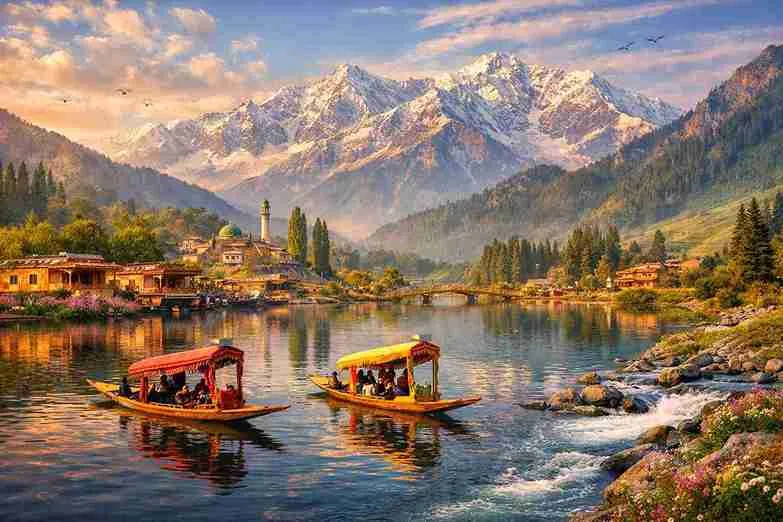
Beautiful scenic view of Dal Lake, Jammu and Kashmir, India
Tourism is exploding – over 2.36 crore (that’s 23.6 million) visitors hit the valley in recent times, including thousands of foreigners, and reports from travelers are overwhelmingly positive. Locals are super welcoming; tourism is their lifeline, so they go out of their way to make you feel at home. Even in winter, with New Year crowds packing hotels in Gulmarg and Pahalgam at 100% occupancy, security is on high alert along highways, borders, and hotspots to ensure everything stays peaceful.
That said, Kashmir’s history means it’s still a sensitive region. Sporadic violence can happen, mostly away from tourist areas, like along the Line of Control (LOC) with Pakistan. But for visitors, the focus is on safety: no travel restrictions for Indian citizens in main spots, and foreigners don’t need special permits for these either. If you’re an international traveler, just check your country’s advisories – more on that below.
Best Places to Visit in Kashmir
Kashmir isn’t just safe; it’s stunning. Here’s a rundown of the top spots that are must-sees, all in well-monitored tourist circuits. The best time to go? Spring (March-May) for tulips, summer (June-August) for mild weather, autumn (September-November) for golden hues, or winter (December-February) for snow adventures.
Srinagar: The Heart of the Valley
Start here – it’s the gateway and super safe for families or solo travelers. Cruise on Dal Lake in a colorful shikara boat, wander the Mughal Gardens like Nishat and Shalimar, or shop for pashmina shawls in the old city. The vibe is relaxed, with houseboats offering cozy stays. Pro tip: Visit in the evening for a sunset over the lake; it’s magical.
Gulmarg: Adventure Central
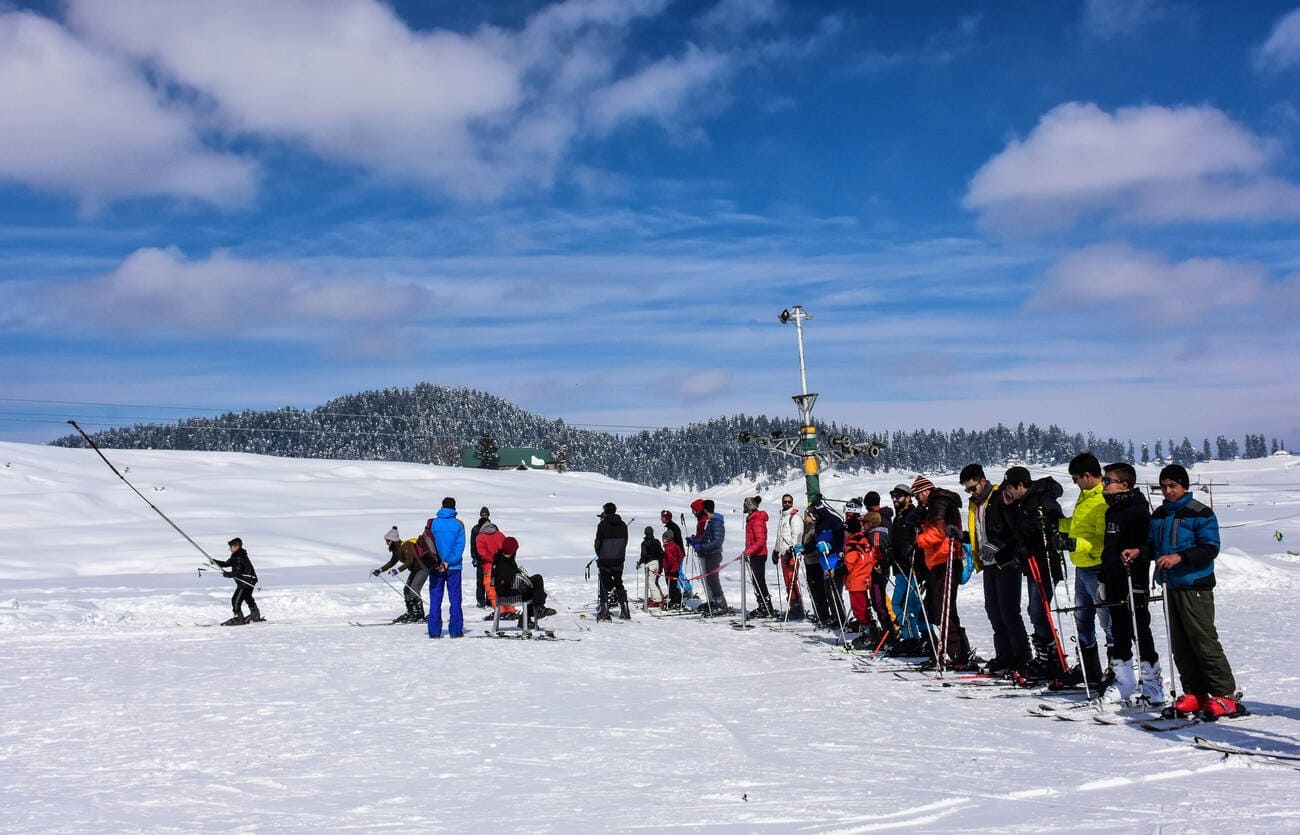
If you love snow, this is your spot. Known for the world’s highest gondola ride (up to 3,979 meters), it’s a ski paradise in winter and a meadow-filled hike haven in summer. Skiing, golfing, or just pony rides – it’s all here, and security is tight with patrols everywhere. It’s one of the safest adventure zones, drawing crowds year-round.
Pahalgam: Nature’s Retreat
Recovering strong after 2025, Pahalgam is back with its charm intact. Think pine forests, the gushing Lidder River, and valleys like Betaab and Aru – perfect for trekking, fishing, or picnics. It’s a bit more off-the-beaten-path but still secure with checkpoints and tourist police. Go for a day trip or stay in a cozy cottage; the fresh air will recharge you.
Sonamarg: The Golden Meadow
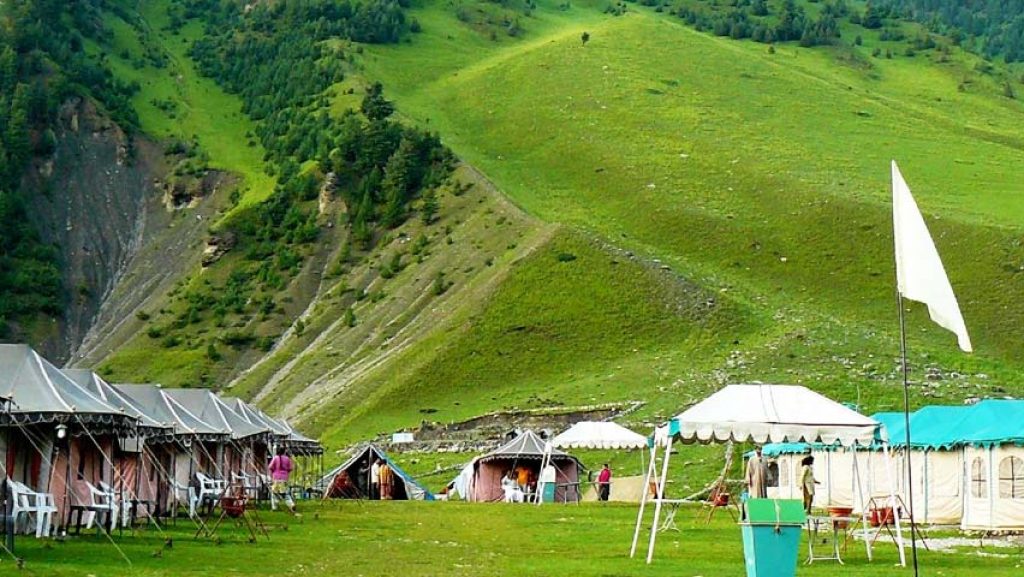
For raw beauty, head to Sonamarg. It’s all about glaciers like Thajiwas, rolling meadows, and horseback rides through pine-clad hills. Summer brings wildflowers, winter snow – and it’s well-patrolled, making it ideal for short hikes or photography. Don’t miss the drive from Srinagar; the views are epic.
Other gems include Doodhpathri for its milky streams and Yusmarg for quiet picnics, but stick to guided tours if venturing further.
Safety Tips for Your Trip
To make your visit smooth and worry-free:
Stick to Tourist Zones: Avoid border areas or remote spots near the LOC. Main routes like Srinagar-Gulmarg-Pahalgam are the safest.
Plan with Pros: Book through registered tour operators or the J&K Tourism Department. Use prepaid taxis or union cabs from the airport.
Stay Informed: Monitor local news, download apps like the J&K Tourist Police one, and register with your embassy if international. Carry ID at all times.
Health and Weather Prep: Winters can be harsh (pack layers), and altitudes high – acclimatize slowly. Get travel insurance covering medical evac.
Respect Local Customs: Dress modestly, especially in old Srinagar, and be polite – Kashmiris are hospitable, but sensitivity goes a long way.
Scam Watch: Beware of touts at airports or markets; negotiate prices upfront.
Solo or Family Travel: It’s fine – many women and families visit solo. Just travel during daylight and in groups if possible.
Wrapping It Up
So, yes, Kashmir is safe for a visit in 2026 if you play it smart. It’s not just about the scenery; it’s the warm people, rich culture, and that sense of peace amid the peaks. Whether you’re chasing snow in Gulmarg or chilling by Dal Lake, you’ll leave with memories for life. Just plan ahead, stay aware, and embrace the adventure. Safe travels – Kashmir’s waiting!
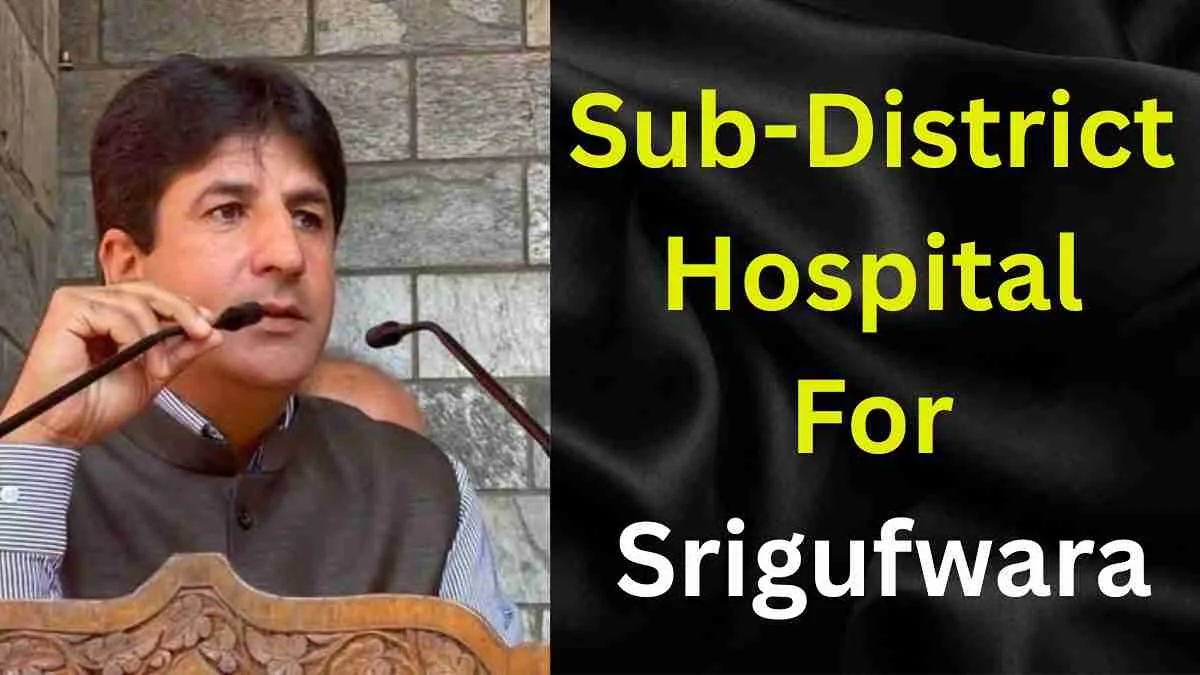
Dr. Bashir Ahmad Veeri, MLA from Srigufwara–Bijbehara constituency, on Tuesday raised a strong demand in the Jammu and Kashmir Assembly for the upgradation of healthcare facilities in his constituency, particularly seeking district hospital status for Bijbehara and the establishment of a sub-district hospital in Srigufwara.
Speaking during the ongoing Assembly session, Dr. Veeri highlighted the growing healthcare needs of the area and said existing facilities were inadequate to cater to the increasing patient load. He stressed that upgrading Sub-District Hospital Bijbehara to a district-level hospital would reduce the burden on tertiary hospitals and ensure timely medical care for people of South Kashmir. Click Here To Follow Our WhatsApp Channel
The legislator also called for a dedicated sub-district hospital in Srigufwara to strengthen healthcare delivery at the grassroots level, especially in emergencies. Emphasizing that healthcare is a basic necessity, Dr. Veeri urged the government to reflect these demands in the current budget and take concrete steps for early implementation.
His demands were welcomed by local residents, who have long been seeking improved medical infrastructure in the region.
One dead and two injured after an e-rickshaw plunged into a 200ft ravine near Nachilana. Rescue ops by locals, Army, and Police.
A fatal accident occurred on the Nachlana–Khari road Tuesday evening. An electric auto-rickshaw lost control, resulting in the passing of 60-year-old Ghulam Hassan Sohil. Two others, including the driver, are currently being treated at GMC Anantnag.Click Here To Follow Our WhatsApp Channel
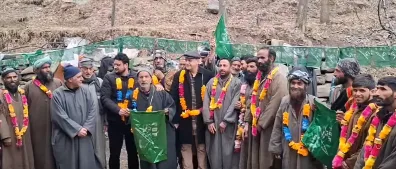
Dozens of workers from the National Conference (NC) joined the Peoples Democratic Party (PDP) today in the Lehandajan Sallar area of Pahalgam constituency.The joining ceremony took place in the presence of Dr Shabir Siddiqui, who serves as the PDP’s constituency in-charge for Pahalgam.
This move is part of a pattern seen in recent months where grassroots workers from parties like NC and others have been shifting to PDP in different parts of south Kashmir. Such events often happen during workers’ meetings or public gatherings organised by local leaders. Click Here To Follow Our WhatsApp Channel
Dr Shabir Siddiqui has been actively holding meetings and welcoming new members in Pahalgam to build stronger support at the ground level. For example, similar joinings have taken place in nearby areas, with groups coming together to discuss party strengthening and local issues.
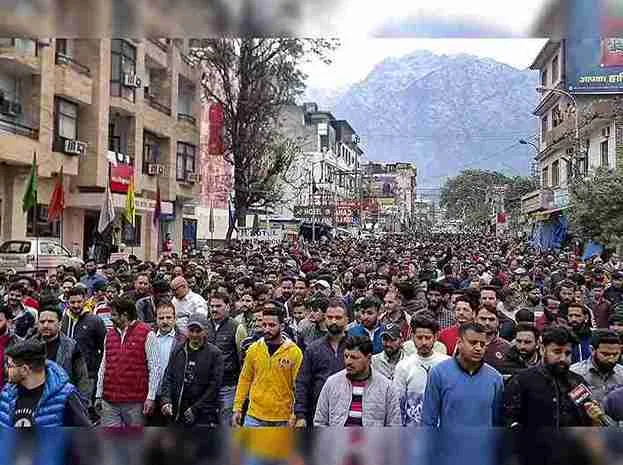
A large protest took place in Katra against the planned ropeway project for Shri Mata Vaishno Devi shrine. People gathered to strongly oppose the idea and made it clear they will keep protesting until the plan is dropped completely.
The demonstrators shouted slogans against the Bharatiya Janata Party (BJP). They said the project is moving ahead without properly listening to local people’s worries. Protesters promised to fight the ropeway “tooth and nail” – meaning with full determination. They added that they will not back any political party’s decision if it goes against the interests of ordinary people.Click Here To Follow Our WhatsApp Channel
During the protest, speakers praised Deputy Chief Minister Surinder Choudhary and Bani MLA Rameshwar Singh. They thanked both leaders for standing with the local community and speaking out against the ropeway.
The crowd also criticised BJP MLA Baldev Sharma. They claimed he has personal interests in the project and said such private gains should not decide things that affect people’s jobs and daily lives.
People at the rally explained that the ropeway would harm traditional businesses in Katra. Many families depend on shops, hotels, pony rides, and other small services linked to pilgrims visiting the shrine on foot or by road. They fear the ropeway would take away customers and reduce employment in the area.
Speakers called on the government to think again. They asked for proper talks with all local groups – shopkeepers, pony owners, hoteliers, and others – before making any final decision.
The protest stayed peaceful from start to finish. The organisers warned that if their demands are ignored, they will hold more demonstrations in the coming days.
The event was reported by Kashmir News Trust (KNT). This protest shows how strongly locals feel about protecting their livelihood and the way pilgrims have visited the holy shrine for years.
Politics in Kashmir is loud, emotional, and often bitter. Public speeches are filled with sharp attacks, harsh language, and constant blame. On television debates, in press conferences, and across social media, political leaders appear locked in permanent conflict. For the common Kashmiri, the message seems clear: these leaders are sworn enemies.
But that perception tells only half the story
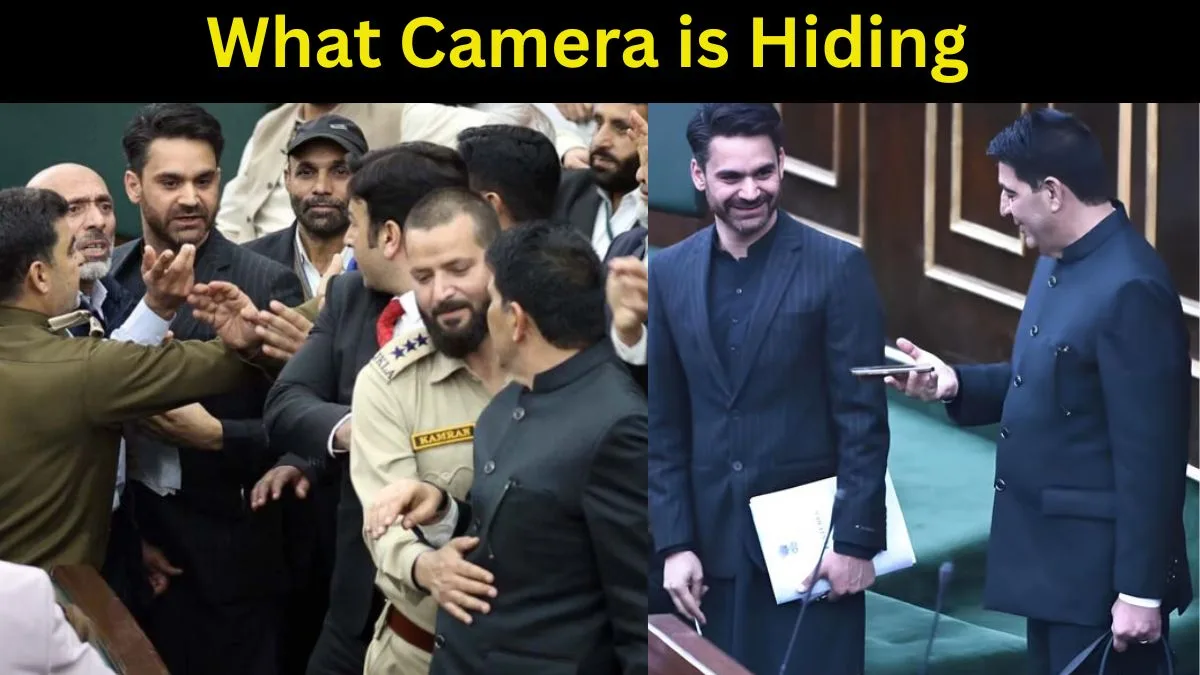
Behind the curtains of public politics lies a quieter, rarely discussed reality. Kashmiri politicians, despite their fierce public rivalry, are often connected by personal respect, shared culture, and long-standing relationships. Away from cameras, they attend each other’s family events, offer condolences during times of loss, and extend support in moments of difficulty. In private spaces, political bitterness gives way to human connection.
This is not unique to Kashmir; it is a global political phenomenon. However, in a conflict-sensitive region like Jammu and Kashmir, the gap between public posturing and private conduct carries deeper consequences.
In public, leaders from different parties exchange strong statements, sometimes appearing incapable of sitting together. Yet in private settings—Ramadan iftar gatherings, weddings, funerals, and informal meetings—the scene is very different. They share traditional meals like wazwan, drink tea, laugh, recall old memories, and discuss issues affecting the people. These moments are real, but they are carefully kept away from public view.
The reason is political necessity. A visible display of warmth toward rivals risks alienating loyal supporters. Political survival demands a strong image of opposition, even if personal relations remain intact. As a result, political rivalry is performed on stage, while human bonds remain hidden.
The cost of this performance is paid by the people
Many ordinary Kashmiris, with their deep emotions and trusting nature, take political rhetoric at face value. They internalize the anger they see and begin to view fellow citizens through the same lens of hostility. Political rivalry at the top slowly translates into social division at the grassroots.
This is where the danger lies
Kashmiri politicians understand the difference between political competition and personal enmity. The public, however, is rarely shown this distinction. When leaders shout in public but reconcile in private, society is left carrying unnecessary bitterness, suspicion, and division.
It is important to state this clearly: Kashmiri leaders are not personal enemies of one another. Their disagreements revolve around power, policy, and votes—not hatred. Outside political platforms, many share a sense of brotherhood shaped by common culture, history, and social ties.
Recognizing this reality does not weaken democracy; it strengthens it. Disagreement is essential in politics, but manufactured hostility should not poison social harmony. In a region that has endured decades of pain and division, people deserve honesty, not theatrical hatred.
Politics may demand loud voices and sharp words, but Kashmir’s soul lies in its humanity, warmth, and shared traditions. True unity does not always require public displays of friendship. Yet when political theatre begins to divide society, it becomes necessary to remind ourselves: enemies on stage are often brothers at heart.