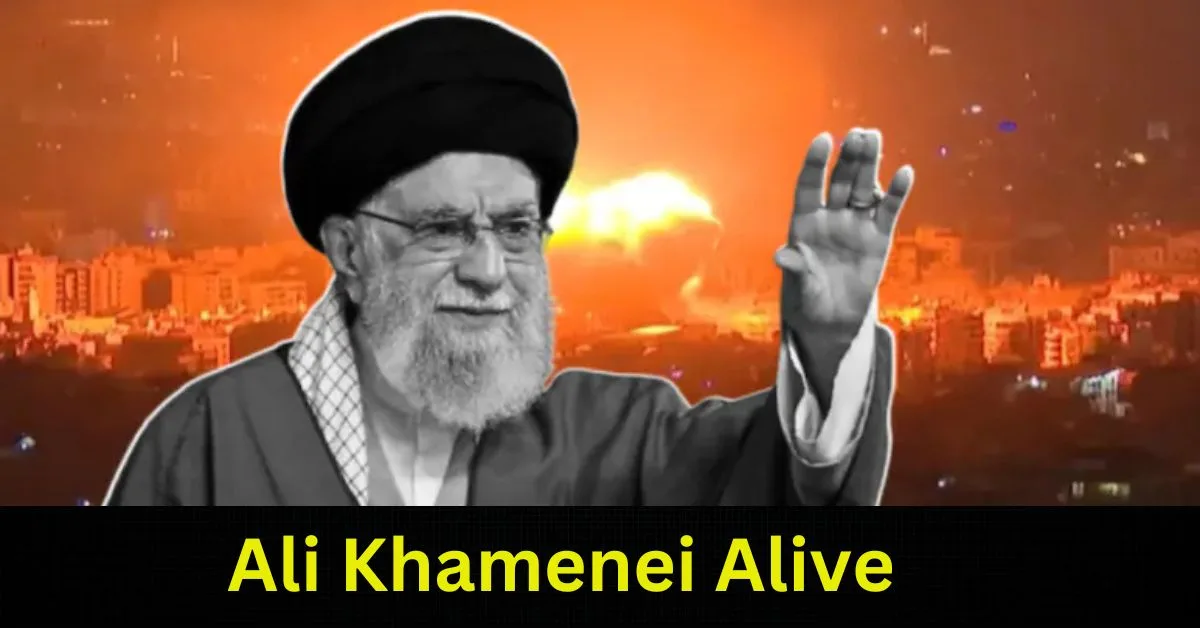
Tensions in the Middle East sharply increased after joint airstrikes by the United States and Israel reportedly targeted key Iranian military and strategic sites. Soon after the attacks, rumours spread on social media and some international outlets that Iran’s Supreme Leader, Ali Khamenei, may have been killed or seriously injured. Click Here To Follow Our WhatsApp Channel
However, Iran has strongly denied these claims.
Iran Rejects Death Rumours
Iran’s Foreign Minister, Abbas Araghchi, clearly said that Khamenei is alive. In an interview with an American news channel, he stated:
“As far as I know, Khamenei is still alive. President Masoud Pezeshkian is alive. All high-ranking officials are alive and managing the situation.”
Araghchi admitted that Iran may have lost “one or two commanders” in the strikes, but he said the country’s leadership structure remains strong and operational.
What Happened in the Strikes?
According to Iranian officials, the airstrikes hit military bases, missile facilities, and nuclear-related sites. Some reports also suggested that areas near Khamenei’s compound in Tehran were targeted.
Satellite images shared by different media outlets showed smoke and visible damage around certain high-security zones. This led to immediate speculation that senior leaders, including Khamenei, might have been among the targets.
Israeli media reports, quoting unnamed sources, claimed there were “growing indications” that the 86-year-old Supreme Leader had been injured or killed. Some reports even suggested that disrupting Iran’s command system was one of the main aims of the operation.
But Iranian authorities have dismissed these claims as propaganda.
Leaders Moved to Secure Locations
Araghchi explained that senior Iranian leaders had been shifted to secure places before the strikes. He said such precautions are common when there is a serious threat.
Iranian state media also reported that Khamenei is expected to deliver a speech or a recorded message soon. If this happens, it will further confirm that he survived the attacks.
So far, there has been no live public appearance, but officials insist that the leadership is fully in control.
Growing Regional Tensions
The strikes are part of a larger conflict between Iran and Israel, which has been worsening in recent years. The United States has also increased its involvement.
In Washington, President Donald Trump addressed the nation, saying the operation was necessary to counter what he described as Iranian threats. He also reportedly offered protection to members of Iran’s Islamic Revolutionary Guard Corps (IRGC) if they choose to stand down.
Iran has responded by launching missile attacks on US bases in the region. Tehran says it has the right to defend itself but also claims it does not want to target Gulf countries or start a wider war.
Risk of Wider Conflict
The situation remains very tense. Several countries in the region have closed parts of their airspace. Flights have been cancelled, and global markets are reacting with concern.
Experts warn that if the fighting continues, it could lead to a larger regional conflict involving multiple countries. Such a conflict would not only affect the Middle East but could also impact global peace, oil supplies, and international trade.
What Happens Next?
At this moment, the most important question is whether tensions will calm down or grow further. Much depends on Iran’s next moves and whether Israel and the United States continue their military actions.
For now, Iranian officials firmly say that Ali Khamenei is alive and leading the country. They describe the death reports as false and politically motivated.
The world is watching closely as events unfold in a region already facing deep instability.
You Might Also Like:
At 13, This Kashmiri Boy Built 31 Apps and AI Tools
Delhi Court Convicts Kashmiri Separatist Asiya Andrabi in UAPA Case
Why Is Omar Abdullah Silent as a Kashmiri Shawl Seller Is Brutally Attacked in Uttarakhand?