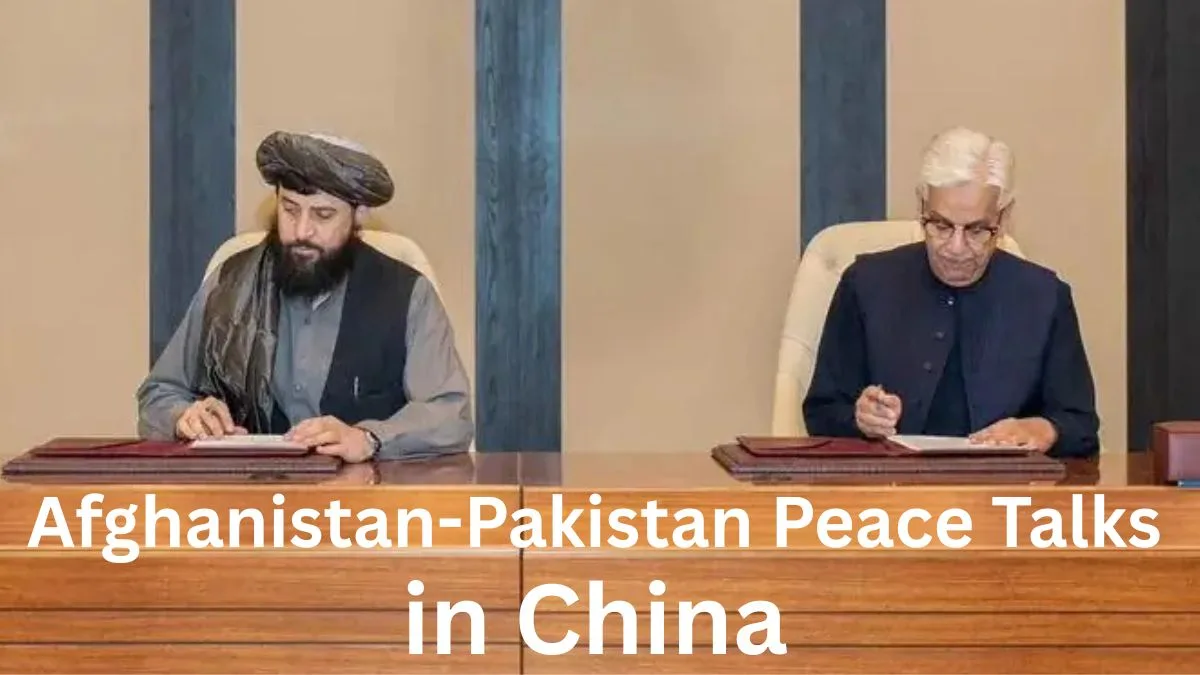
Peace talks between Afghanistan and Pakistan, held in China, have been described as “constructive” by Afghanistan’s Foreign Ministry, offering a small sign of hope amid ongoing border tensions.
The talks began last week in the Chinese city of Urumqi, following an invitation from Beijing to help reduce escalating violence between the two neighbours. Click Here To Follow Our WhatsApp Channel
Conflict Has Caused Heavy Losses
The fighting, which started in February, has resulted in hundreds of deaths and large-scale displacement.
According to the United Nations, around 94,000 people have been displaced, while nearly 100,000 people in two Afghan border districts remain cut off due to continued clashes.
The situation has raised serious concerns globally, especially as militant groups like al-Qaeda and the Islamic State still operate in the region.
Diplomatic Efforts and Mediation
Afghanistan’s Foreign Minister Amir Khan Muttaqi met China’s ambassador and thanked Beijing for hosting the talks.
He also appreciated the support of countries like Saudi Arabia, Turkey, Qatar, and the UAE for their role in mediation.
Officials said discussions so far have been positive, and there is hope that minor disagreements will not slow down progress.
Tensions Continue Despite Talks
Despite ongoing negotiations, clashes have not fully stopped.
Afghanistan has accused Pakistan of continued cross-border shelling, resulting in civilian casualties. Pakistan has not publicly responded to these claims.
At the same time, Pakistan has repeatedly accused Afghanistan of allowing militant groups, especially Tehrik-e-Taliban Pakistan (TTP), to operate from its territory — a claim Kabul denies.
Pakistan’s Military Stance
Pakistan’s military leadership, led by Army Chief Field Marshal Asim Munir, has said counterterrorism operations will continue until militant safe havens are eliminated.
Officials stated that any threats linked to “external sponsors” will be dealt with firmly.
Background of the Conflict
The recent escalation is considered one of the most serious between the two countries in recent years.
The clashes began after Afghanistan launched cross-border attacks in response to Pakistani airstrikes inside its territory. These events also disrupted a previous ceasefire brokered by Qatar in October.
A major incident on March 17 reportedly saw a Pakistani airstrike hit a facility in Kabul, with Afghan officials claiming over 400 deaths. Pakistan denied targeting civilians, stating its strikes were aimed at military sites.
What Lies Ahead
While the peace talks in China offer some hope, the situation on the ground remains tense.The coming days will be crucial in determining whether diplomacy can reduce violence or if the conflict will continue to escalate.For now, the region remains on edge, with both sides maintaining strong positions while negotiations continue.
You Might Also Like:
US Rescues Downed Pilot from Iran in High-Risk Operation, Trump Declares “We Got Him”
Dr.Fatemeh Ardeshir-Larijani Ousted from Emory, Visa Revoked After Protests Over Iran Links