
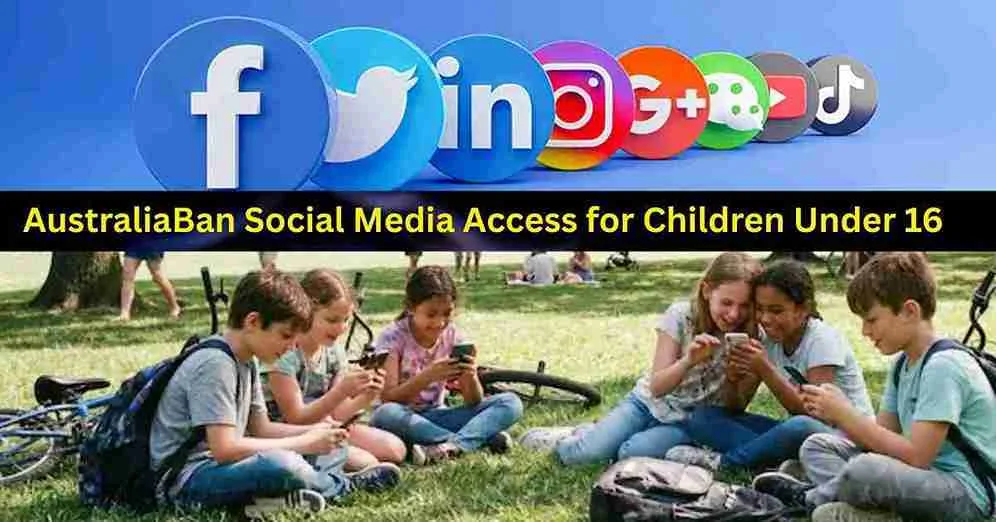
Australia has officially become the first country in the world to enforce a nationwide minimum age of 16 years for using major social media platforms. The new rules came into effect on 10 December 2025, marking a major shift in how governments regulate online spaces for children.
The law, known as the Online Safety Amendment (Social Media Minimum Age) Act 2024, was passed in late November 2024. It requires major platforms—including TikTok, Instagram, Facebook, YouTube, Snapchat, X (Twitter), Threads, Reddit, Twitch, and Kick—to take “reasonable steps” to stop children under 16 from creating or keeping accounts.Click Here To Follow Our WhatsApp Channel
If platforms fail to follow the law, they could face huge penalties of up to A$49.5 million (about USD 33 million).

Why Australia Introduced This Law
Prime Minister Anthony Albanese described the new law as a “landmark moment” for families. He said that the government wants to give parents more control and protect children from growing online risks such as:
- Cyberbullying
- Online addiction
- Predatory behaviour
- Exposure to violent or inappropriate content
- Mental health impacts caused by social media pressure
The law has received strong public support, especially from parents and child safety groups.

How Platforms Are Enforcing the Rule
To follow the law, companies must verify users’ ages. Many platforms have started to introduce:
- Facial age estimation technology
- ID-based age checks
- Automated account detection
- Manual review systems
Some platforms, like Meta (Instagram, Facebook, Threads), even began removing underage accounts earlier in December 2025.
Importantly, children and parents will not be punished. Only platforms are held responsible for allowing underage users.
Criticism and Concerns
While many support the law, some groups have raised concerns:
- Privacy risks: Age-verification tools may collect sensitive data.
- Enforcement difficulties: Tech experts say children might still find ways around the checks.
- Impact on vulnerable youth: Some young people—especially those in rural areas or LGBTQ+ teens who rely on online communities—may feel isolated.
- Possible overreach: Digital rights groups argue that the law gives too much power to the government and tech companies to monitor users.
There have already been “teething problems”, with some under-16 accounts still active or bypassing barriers. However, the government and the eSafety Commissioner say these systems will improve over time.
Global Reaction
Australia’s move is being closely watched around the world. Countries such as Malaysia, Denmark, Norway, and several EU nations are considering similar age restrictions. If the model succeeds, it could inspire more countries to adopt stronger child-safety regulations online.
A New Phase of Online Safety
With this law, Australia has positioned itself as a global test case for age-based internet regulation. Supporters believe it will create a safer digital world for children. Critics warn that it may raise new challenges around privacy and access.
Either way, the law marks a historic shift—and signals that governments are becoming more willing to regulate big tech to protect young users.
You Might Also Like:
Islam’s Unique Civilisation: Unity of Faith, Culture and History
Nawada Man Forced to Push Mother’s Body on Stretcher for 2 km After Ambulance Denied
Is Crowdfunding and Taking Loans Allowed in Islam? Understanding Help, Tawakkul and Riba